Ships on moving sea — History & Facts
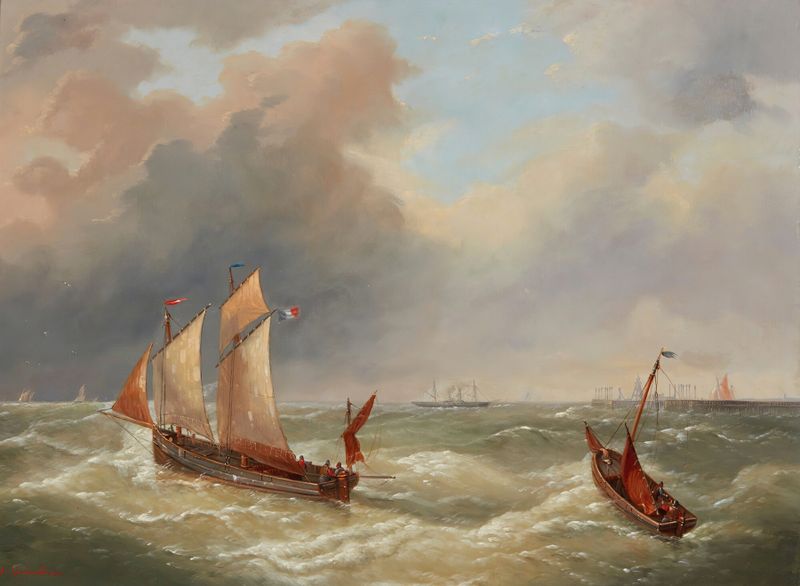
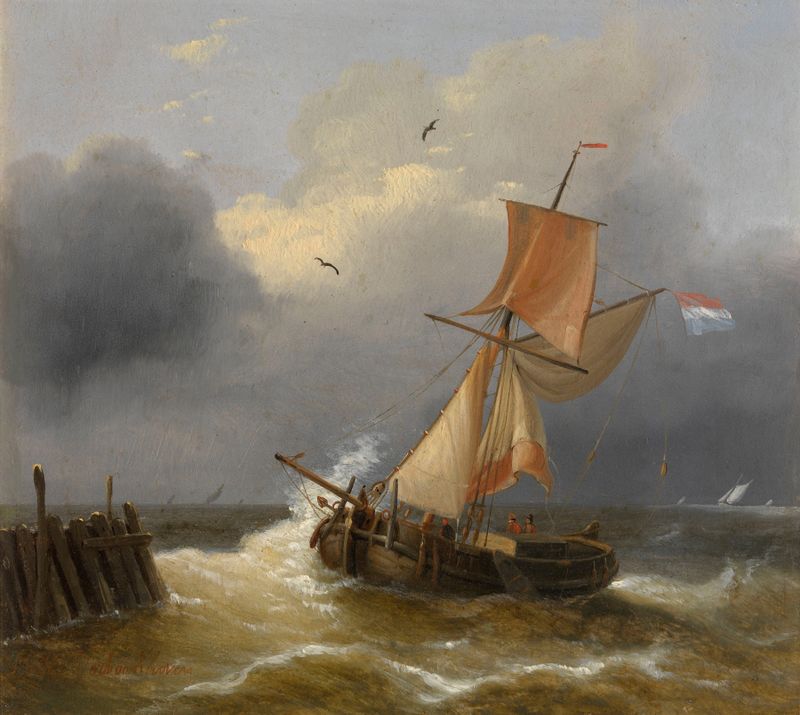
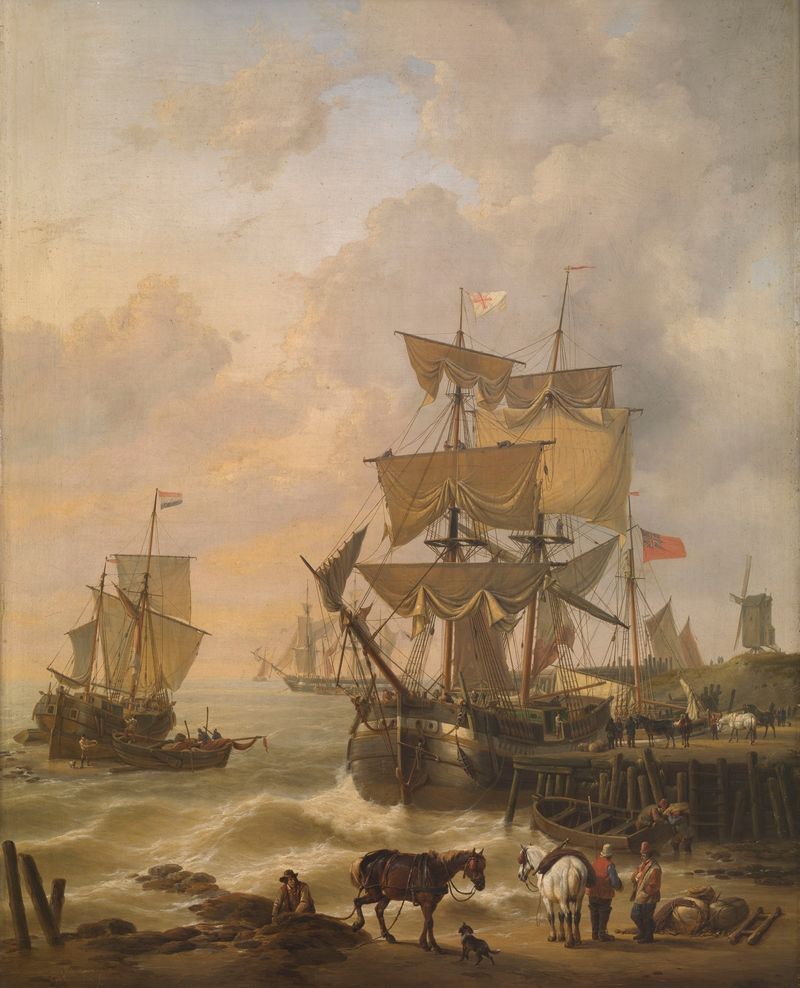
What secret hides in the quiet of the canvas? Beneath the gentle swell of waves, a world unfolds—one where silence holds profound meaning and reveals the beauty of fleeting moments. Look to the lower right at the delicate interplay of blues and greens, where shimmering waves dance beneath a muted sky. Notice how the brushstrokes reveal the texture of the water, capturing its movement with a rhythmic fluidity that invites the eye to roam freely across the surface. The light, diffuse yet penetrating, plays upon the masts of distant ships, creating a striking contrast between the serenity of the sea and the untamed energy of nature. The artwork offers more than just a tranquil vista; it speaks to the tension between calm and chaos.
The ships, seemingly at rest, hint at the vastness of the ocean, suggesting both adventure and isolation. Each vessel is a silent participant in a larger narrative, representing the duality of existence—where moments of stillness coexist with the inevitability of change. This subtle dance between peace and disturbance resonates with the viewer, inviting reflection on the nature of journey and destination. In this period, Charles Louis Verboeckhoven created works that reflected his fascination with the sea and its moods.
Active primarily in the 19th century, he was influenced by Romanticism, which prioritized emotion and natural beauty. At an undefined moment in his career, he captured the essence of his maritime surroundings, amid a growing interest in landscape painting that emphasized atmospheric effects and the sublime qualities of nature.