Silver Birch and Beech Wood in Autumn — History & Facts
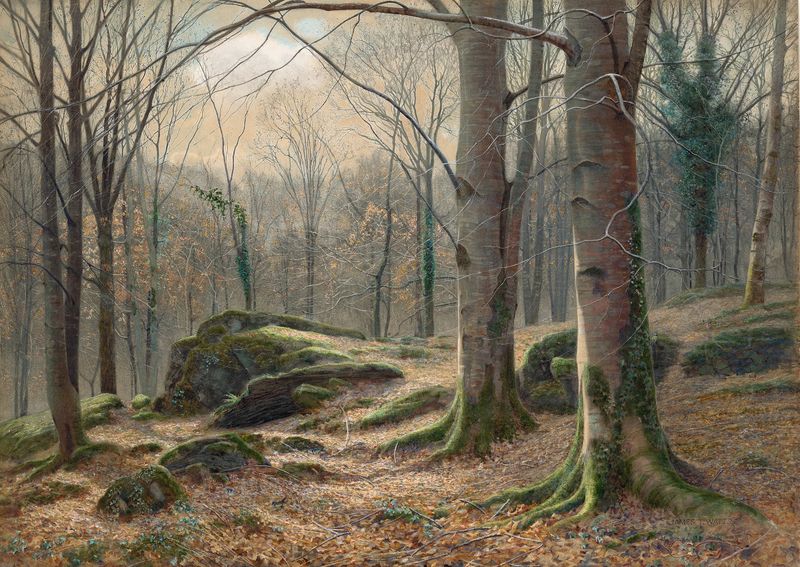
Did the painter know this moment would outlive them? In Silver Birch and Beech Wood in Autumn, the interplay of delicate foliage and sturdy trunks beckons contemplation of nature’s fleeting beauty and the enduring truths captured on canvas. Focus on the left where the silver birch stands tall, its pale bark shimmering against the warm hues of autumn leaves. The intricate layering of brush strokes creates a textured canopy, inviting the viewer to trace the limbs with their eyes. Notice how the golden light filters through, casting soft shadows on the forest floor, which appears alive with whispers of fallen leaves—a serene yet vibrant depth achieved through Watts’ skillful manipulation of color and light. The juxtaposition of the fragile birch and the robust beech suggests resilience amid transience.
Each leaf, both vibrant and fading, carries a story of change, echoing the passage of time. This tension between life and decay is palpable, prompting reflections on the cycle of nature and perhaps the artist's own contemplation of legacy. The soft, warm palette envelops the viewer in nostalgia, while the stillness of the woods evokes a profound sense of peace. Completed between 1853 and 1931, the work reflects Watts’ deep appreciation for the English countryside, crafted during a period of significant transition in art.
As the Impressionist movement began to influence British painters, Watts stood at the crossroads, merging realistic detail with an emerging appreciation for expressive color. He sought to capture the essence of nature, translating the ephemeral moments of beauty into lasting art that would resonate through time.