
Sketch for The Revolt of Cairo — History & Facts
In that space between silence and celebration, color emerges as the voice of protest and passion. It vibrates through the canvas, whispering the hidden cries of those who have fought against oppression, capturing the essence of a moment that transcends time and place. Look closely at the left side of the canvas, where deep hues of red and purple swirl together, evoking both chaos and fervor. The figures are rendered with an intensity that draws the eye, each gesture a testament to their resolve.
Notice how the contrasts of light and shadow create a palpable tension, offering glimpses of hope amidst despair. The careful brushstrokes breathe life into the composition, captivating the viewer in an emotional embrace. Within the frenetic scene lies a study of contrasts: the fragility of human life juxtaposed with the fierceness of rebellion. The distinct expressions on the faces convey a spectrum of emotion—fear, determination, and an innate yearning for freedom.
As you observe the bodies intertwining in a dance of struggle, consider the significance of their positioning; they embody unity amidst discord, a poignant reminder of collective resilience against tyranny. Around 1810, the artist was navigating a turbulent artistic landscape influenced by Neoclassicism and Romanticism. Creating this evocative work during a time of political upheaval in France, Girodet was deeply engaged with themes of liberty and revolution. While the world outside shifted dramatically, he channeled his vision into art that spoke to the spirit of his era, capturing both the tumult of the moment and the enduring power of the human soul.
More Artworks by Anne-Louis Girodet de Roussy-Trioson
Browse all →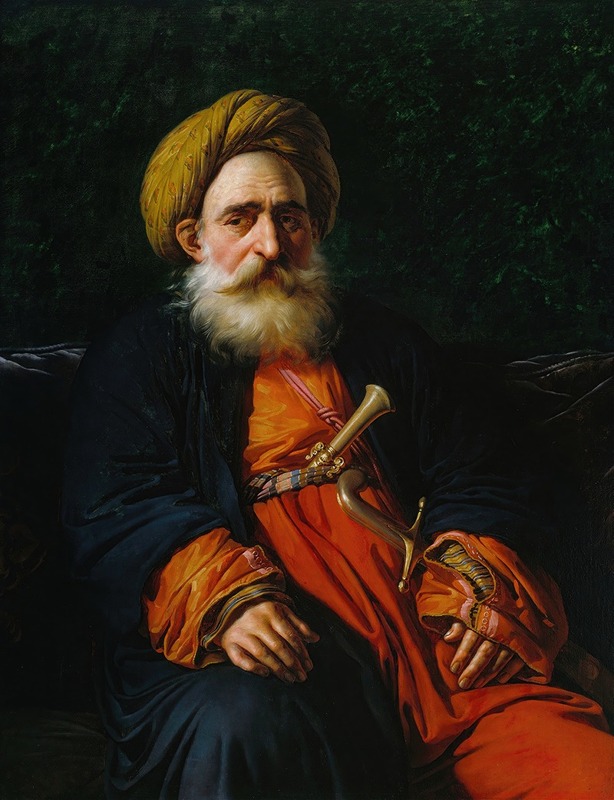
More Historical Art
Browse all →
The Night Watch Militia Company of District II under the Command of Captain Frans Banninck Cocq
Rembrandt van Rijn

Lincoln Memorial
Henry Bacon

The Third of May 1808
Francisco de Goya

Isaac and Rebecca, Known as ‘The Jewish Bride’
Rembrandt van Rijn

The Charge of the Mamelukes (1814)
Francisco de Goya

De vier ruiters van de apocalyps
Albrecht Dürer