
Skirmish — History & Facts
In every stroke of the artist's hand lies a flicker of hope, a testament to resilience amid tumult. Look closely at the swirling forms in the center; notice how the figures intermingle, caught in a dance of conflict and resolution. The bold strokes and rich colors evoke a sense of urgency, yet also a beauty that transcends the chaos. Darkened hues of browns and deep greens contrast sharply with flashes of vibrant reds, suggesting both violence and the spark of life.
The eye is naturally drawn to the chaotic interplay of weapons and limbs, but the subtlety of movement reveals an underlying rhythm to the skirmish, as if harmony waits just beyond the tumult. Amid the fray, one can discern contrasts that speak to the human condition—the struggle between despair and hope. The way figures reach toward one another, despite the chaos, hints at an unyielding desire for connection and peace. Those hands, though bloodied, are poised with grace, capturing the fragility of life in the face of adversity.
The tension between the stark reality of battle and the underlying beauty of shared experience resonates deeply, inviting the viewer to reflect on the dualities of existence. During the uncertain times of the early 17th century in the Netherlands, when Skirmish was likely painted, Pieter Meulener was continually influenced by the political strife and social upheaval surrounding him. The art scene was evolving, marked by a shift from religious themes to more secular subjects, often reflecting the complexities of human emotion and experience. In this era, artists were seeking new ways to communicate the tumult of their surroundings, and Meulener's work stands as a poignant contribution to that exploration.
More Artworks by Pieter Meulener
Browse all →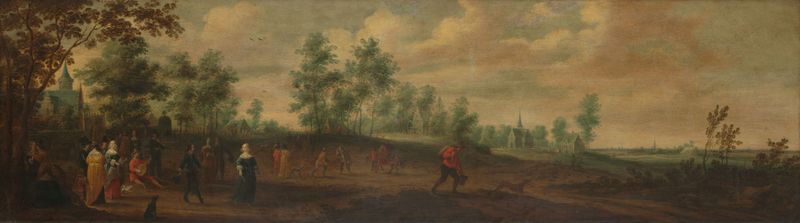
More Historical Art
Browse all →
The Night Watch Militia Company of District II under the Command of Captain Frans Banninck Cocq
Rembrandt van Rijn
Lincoln Memorial
Henry Bacon
The Third of May 1808
Francisco de Goya

Isaac and Rebecca, Known as ‘The Jewish Bride’
Rembrandt van Rijn
The Charge of the Mamelukes (1814)
Francisco de Goya

De vier ruiters van de apocalyps
Albrecht Dürer