Sneeuwlandschap — History & Facts
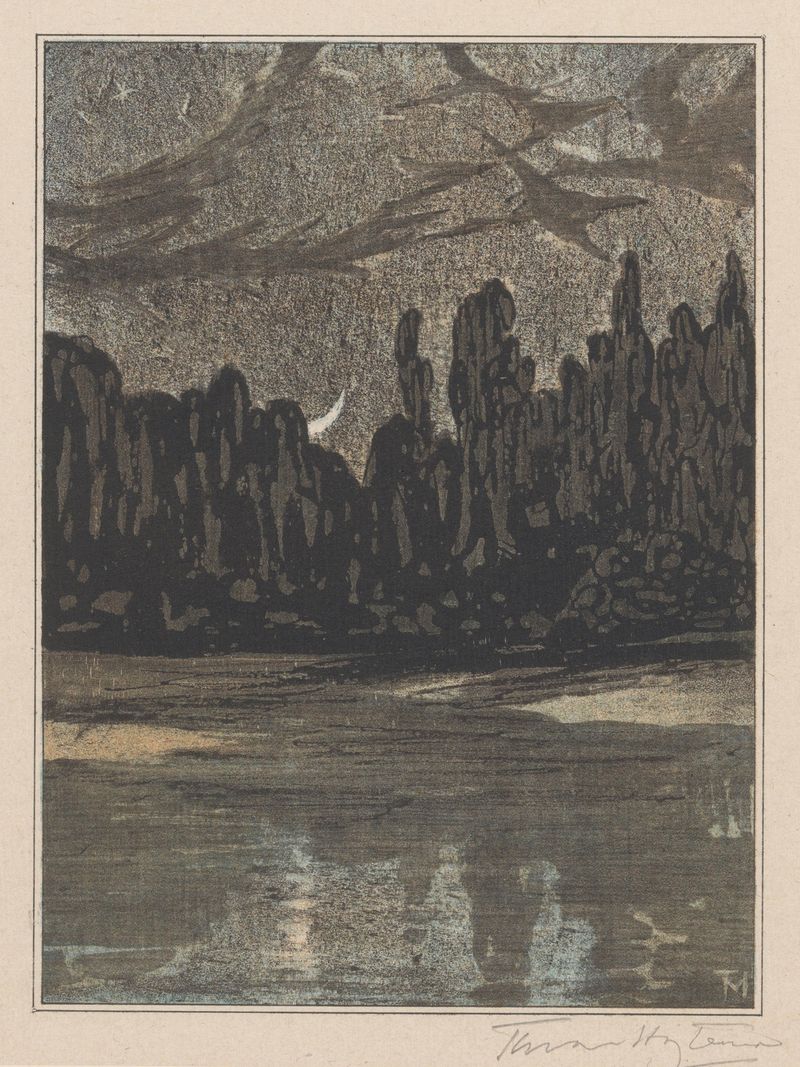
When did color learn to lie? In the muted embrace of Sneeuwlandschap, the scene captures the essence of winter’s truth wrapped in a deceptive tranquility. Each brushstroke offers a narrative of nature’s resignation, challenging the viewer to unravel the layers of beauty and desolation hiding beneath an icy veneer. Look to the left, where the stark silhouettes of trees stand like sentinels against the soft, cascading snow. The gentle gradients of white are punctuated by subtle hints of blue and gray that imbue the landscape with an ethereal light.
Notice how the horizon blurs, merging the ground with the sky, as if time has paused. Van Hoytema employs delicate strokes to articulate the texture of snow, creating a soft, almost dreamlike quality that invites contemplation. Beneath the serene surface, an emotional tension emerges. The coldness of the landscape speaks to a deeper sense of isolation and longing, as if the viewer is peering into a world untouched by human warmth.
The faint traces of a path lead the eye into the unknown, evoking questions about journeys untaken and the stories left behind. Each element communicates the legacy of the season: beauty entwined with bittersweet solitude. Theo van Hoytema painted Sneeuwlandschap in 1895 while living in the Netherlands, during a time of artistic transition that embraced Impressionism's influence. This period saw him exploring themes of nature and light, reflecting both his personal experiences and the broader shifts in the art world as artists began to experiment with color and form in innovative ways.