Nachtelijk landschap met trekvogels — History & Facts
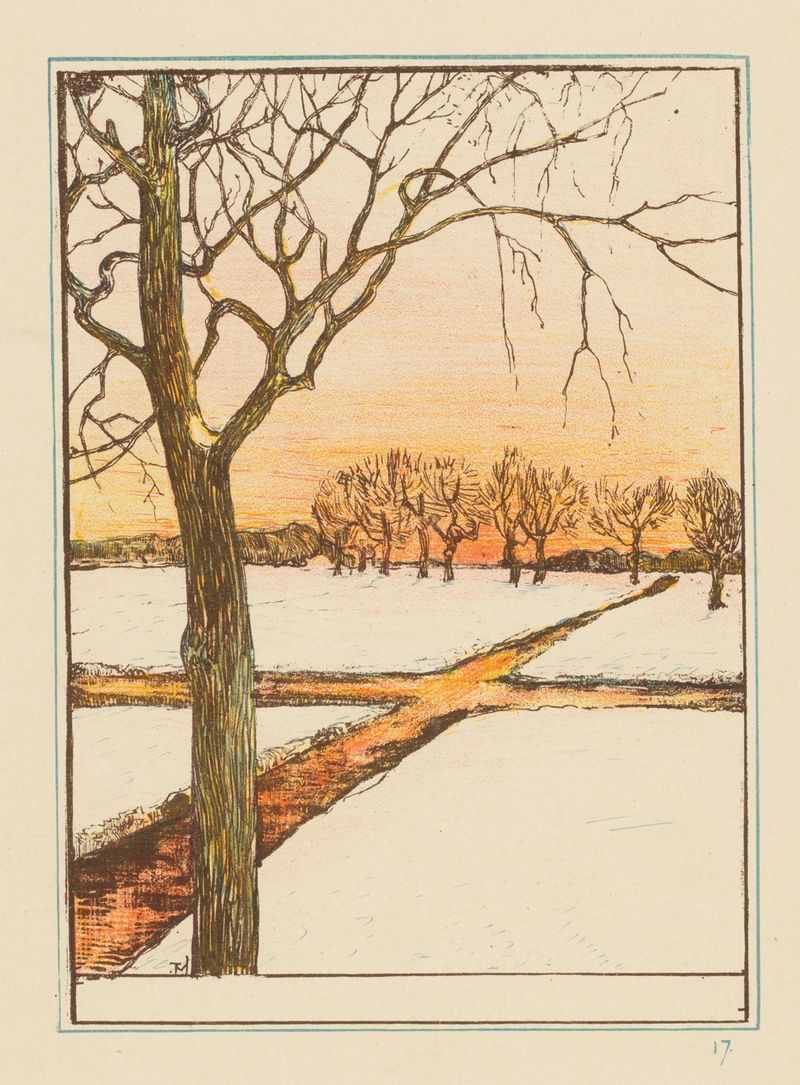
What secret hides in the quiet of the canvas? Beneath the serene surface of a twilight landscape, whispers of hope beckon like distant stars illuminating the night. Look to the lower left corner to see the gentle curve of the land, a whispering contour that invites your gaze across the canvas. The silhouettes of migratory birds, rendered with delicate precision, punctuate the sky, their formation suggesting both departure and arrival. The muted palette of deep blues and grays gives the scene a dreamlike quality, while soft brushwork evokes a sense of tranquility, as if time itself has paused to embrace the quietude of nature. In the gathering dusk, contrasts emerge: the darkness of the impending night juxtaposed with the lingering light of the horizon.
This interplay heightens the emotional resonance, suggesting a transition—perhaps one from uncertainty to optimism. The birds, symbols of freedom and renewal, carry within them the promise of new beginnings, their flight embodying a collective aspiration that resonates deeply within the human spirit. Created between 1878 and 1907, this work emerged during a pivotal time for its creator, who sought to capture the natural world’s beauty and complexity. Van Hoytema was deeply influenced by the Symbolist movement, which emphasized emotional depth and inner experience, striving to bridge the gap between reality and the ethereal.
His exploration of nature during this period reflects both personal introspection and a broader artistic shift, laying the groundwork for new expressions of hope and serenity within the landscape genre.