
Somerindyck House, from ‘Scenes of Old New York’ — History & Facts
Could a single brushstroke hold eternity? In the hands of an artist, destiny is crafted, capturing fleeting moments that echo through time. Focus on the foreground, where the stately Somerindyck House stands resolutely beneath a wash of soft, golden light. Notice how the play of shadows dances along the façade, highlighting intricate details of the architecture. The artist employs a delicate palette that ranges from deep ochres to muted greens, evoking the textured vibrancy of a bygone era.
Each stroke articulates the harmony between nature and man, inviting the viewer to step into this historical tableau. Beneath the tranquil surface, one can sense the tension between permanence and transience. The house, a symbol of stability, contrasts with the ephemeral quality of the surrounding landscape, hinting at the inevitable passage of time. The distant trees seem to bend with an unseen breeze, a reminder of nature’s persistence, while the tranquil water reflects both the structure and the sky, blurring the lines between reality and reflection.
Such contrasts draw us into a contemplation of legacy, memory, and what it means to endure. In 1870, Henry Farrer painted Somerindyck House while living in New York, a city in the throes of transformation due to the Industrial Revolution. This period was marked by rapid urban development and a growing appreciation for the picturesque landscapes of America. Farrer’s intention was not only to document the architectural heritage of New York but also to capture the charm of old worlds amidst the tides of change, conveying a sense of nostalgia for a simpler past.
More Artworks by Henry Farrer
Browse all →
St. Paul’s Chapel, New York, from ‘Scenes of Old New York’
Henry Farrer

Evening, New York Harbor
Henry Farrer
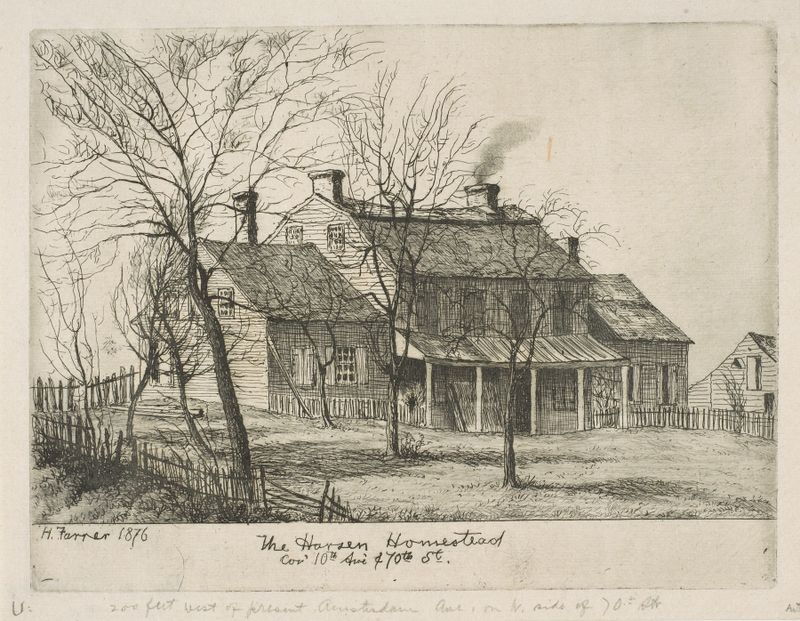
The Harsen Homestead, Corner of 10th Avenue and 70th Street, from ‘Scenes of Old New York’
Henry Farrer

Old House, Corner of Peck Slip and Water Street, from ‘Scenes of Old New York’
Henry Farrer
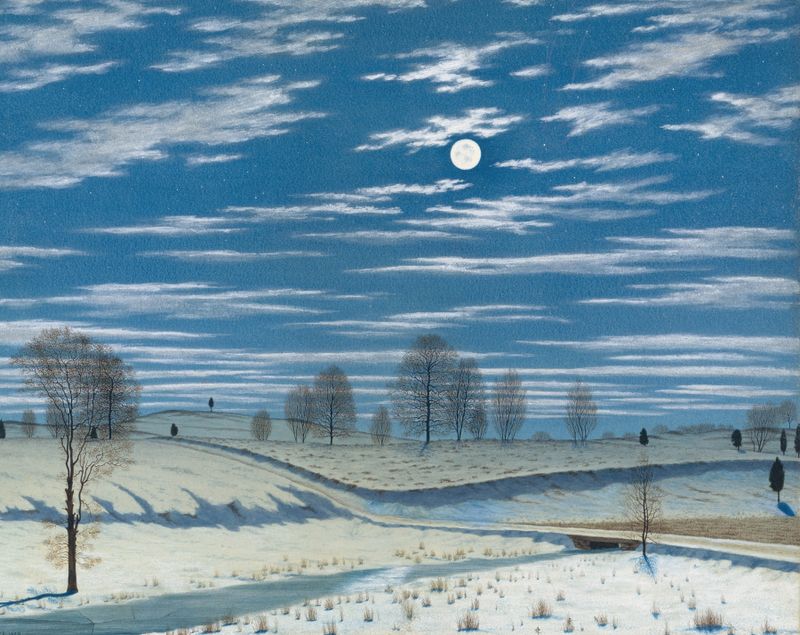
Winter Scene in Moonlight
Henry Farrer

A Powder Magazine in Central Park, from ‘Scenes of Old New York’.
Henry Farrer

The Old Revenue Office, Whitehall, from ‘Scenes of Old New York’
Henry Farrer
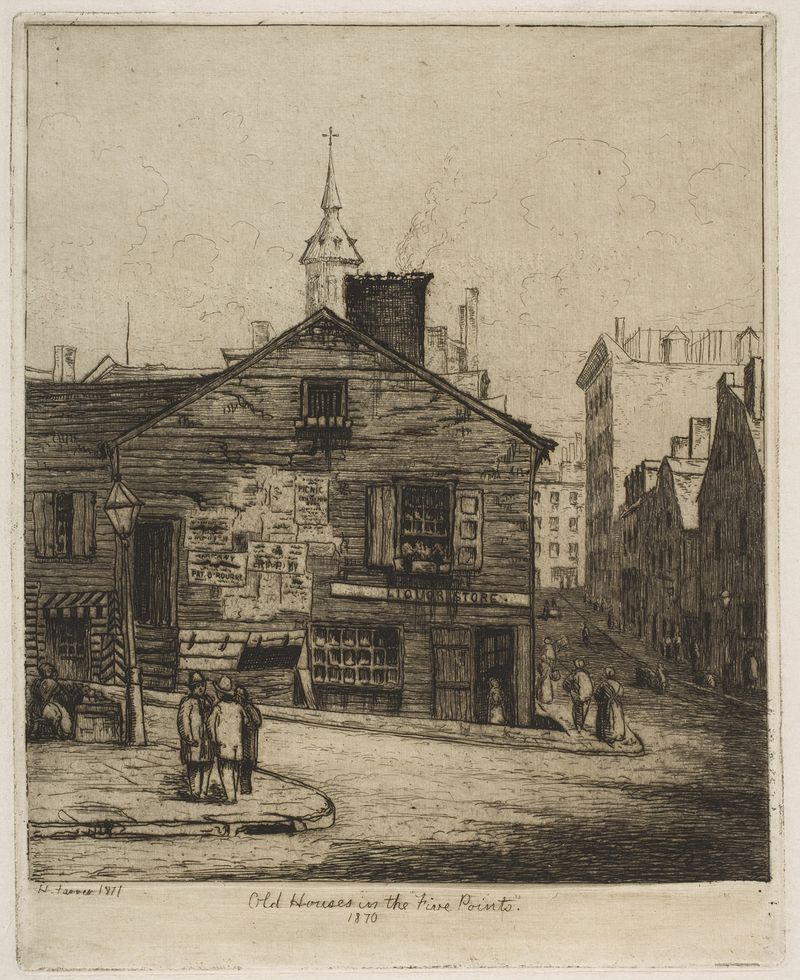
Old Houses in the ‘Five Points’, 1870, from ‘Scenes of Old New York’.
Henry Farrer

City and Sunset
Henry Farrer
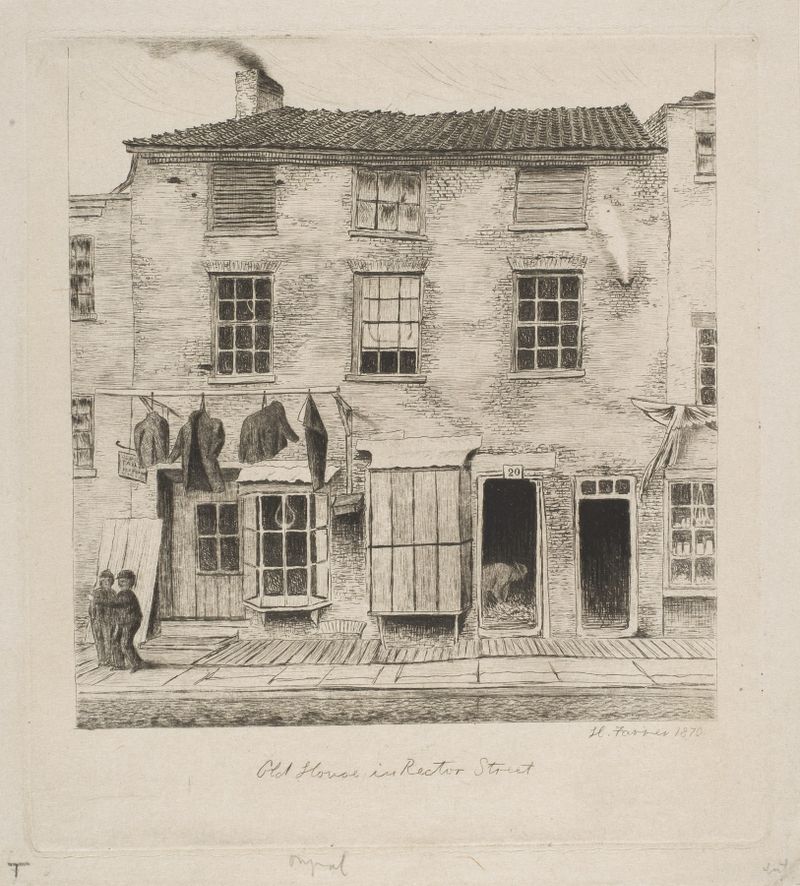
Old House in Rector Street, from ‘Scenes of Old New York’.
Henry Farrer
More Architecture Art
Browse all →
The statue of Liberty
Frédéric Auguste Bartholdi

View of Houses in Delft, Known as ‘The Little Street’
Johannes Vermeer

View of Houses in Delft, Known as ‘The Little Street’
Johannes Vermeer

The Cathedral in Rouen. The portal, Grey Weather
Claude Monet

The yellow house
Vincent van Gogh

The Church in Auvers-sur-Oise, View from the Chevet
Vincent van Gogh