
Spätherbstabend am Teichrand 0889 Führermuseum — History & Facts
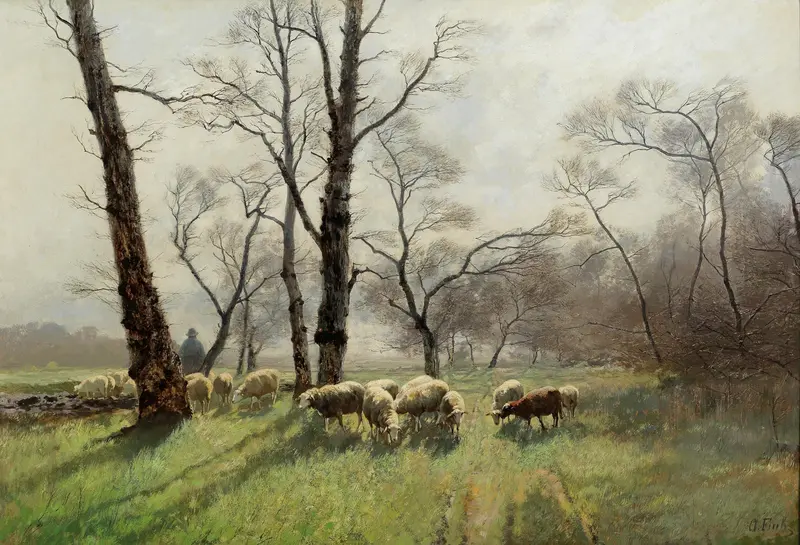
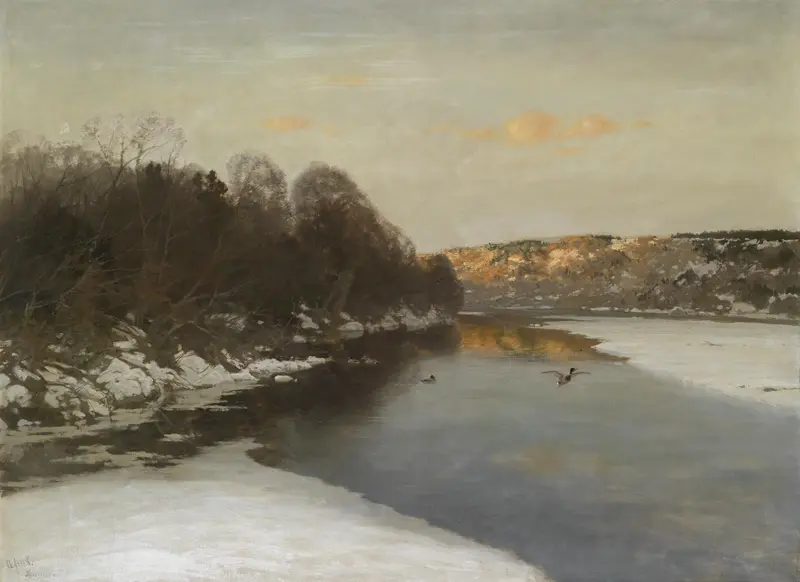
A hush falls over the pond’s edge as the last light of day slips behind the trees, and it is this quiet, almost breath-held moment that August Fink captures in Spätherbstabend am Teichrand 0889 Führermuseum. The viewer’s eye is drawn first to the stark, pale trunks of the birches, their roots gripping the muddy bank, then to their reflections trembling in the still water. The palette is muted, the world drained of color by the lateness of the season, yet the surface of the pond glimmers, holding onto the memory of daylight.
The tangled undergrowth and bare branches speak of late autumn, a time when the landscape pauses before winter’s arrival. Light here is not just illumination, but a gentle farewell. Works like this, created between 1861 and 1916, belong to a period when artists across Central Europe were drawn to the quiet poetry of nature’s overlooked corners. Rather than grand vistas or dramatic storms, painters such as Fink found meaning in the subtle transitions of the seasons and the play of light on water.
Such scenes were often collected by the rising middle class or displayed in public institutions eager to celebrate the national landscape. Today, this painting resides in the Deutsches Historisches Museum, a reminder of how history has kept few traces of the lives and intentions behind these tranquil views. Let your gaze linger on the water’s edge, and consider what stories the fading light might have witnessed.
More Artworks by August Fink


More Landscape Art

The Starry Night
Vincent van Gogh

View of Delft
Johannes Vermeer

Water Lilies
Claude Monet

The Grand Canal, Venice, looking north-west from the Ca' Corner to the Ca' Contarini degli Scrigni, with the campanile of Santa Maria della Carità
Canaletto

Windsor Castle
Canaletto

The Grand Canal looking North-East from the Palazzo Dolfin-Manin to the Rialto Bridge
Canaletto