
Sphinx Alley, temple of Amun-Re in Karnak. From the journey to Egypt — History & Facts
What secret hides in the quiet of the canvas? The stillness of ancient stone whispers tales of time, beckoning the viewer to listen and reflect. Look to the foreground, where a row of majestic sphinxes, their regal bodies carved from the earth itself, stretch towards the horizon. Notice how the warm amber glow of the setting sun caresses their figures, casting long shadows that dance across the ochre sands. The intricate details of their headdresses and the subtle textures of their weathered stone invite your gaze deeper into the tableau, revealing the artistry and reverence embedded in every chiseled line. Beyond the immediate grandeur, consider the emotional resonance of the scene.
Each sphinx, guardians of the temple, evokes a sense of awe and mystery, hinting at the powerful rituals and historic narratives that unfolded in their presence. The empty space between them speaks of silence, an echo of the past that invites contemplation on human ambition and the passage of time. Here, a stark contrast exists between the eternal nature of stone and the ephemeral quality of human life, urging us to ponder our own legacy. In 1903, Ciągliński painted this captivating scene during his journey to Egypt, a time when European artists were increasingly drawn to the allure of ancient cultures.
His experience amid the grandeur of Karnak was not just a search for artistic inspiration but also a deep engagement with the historical and cultural significance of Egypt. This work thus embodies both a personal and collective exploration of humanity's enduring connection to its past.
More Artworks by Jan Ciągliński
Browse all →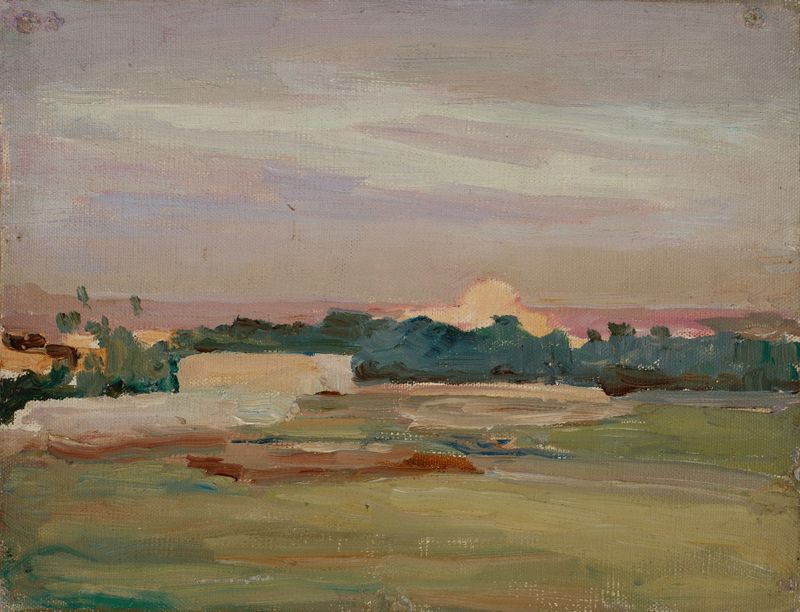
The Sirocco
Jan Ciągliński
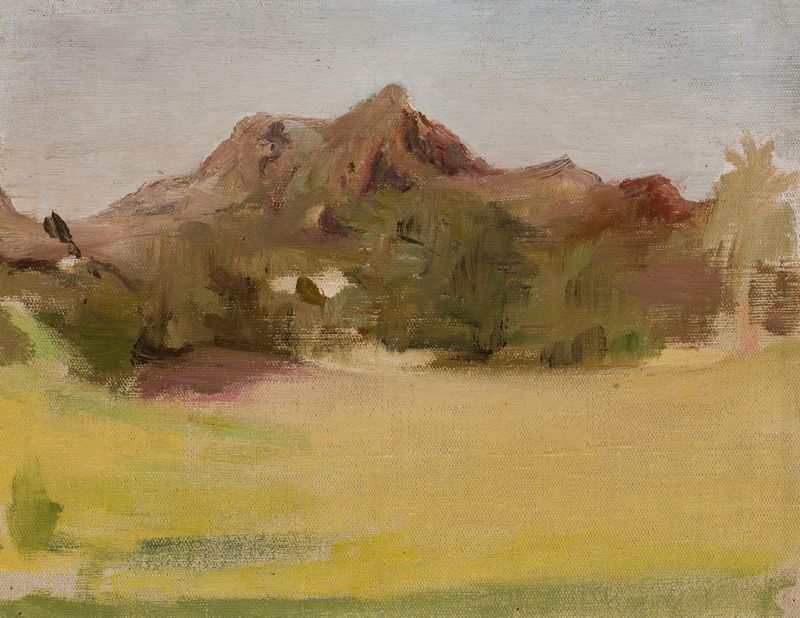
Mountain landscape. From the journey to India
Jan Ciągliński
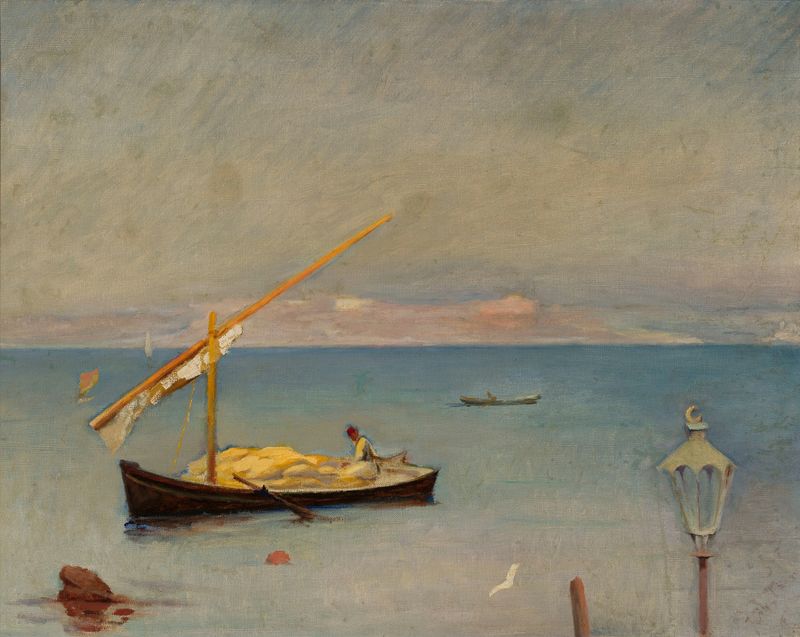
At Bosporus
Jan Ciągliński
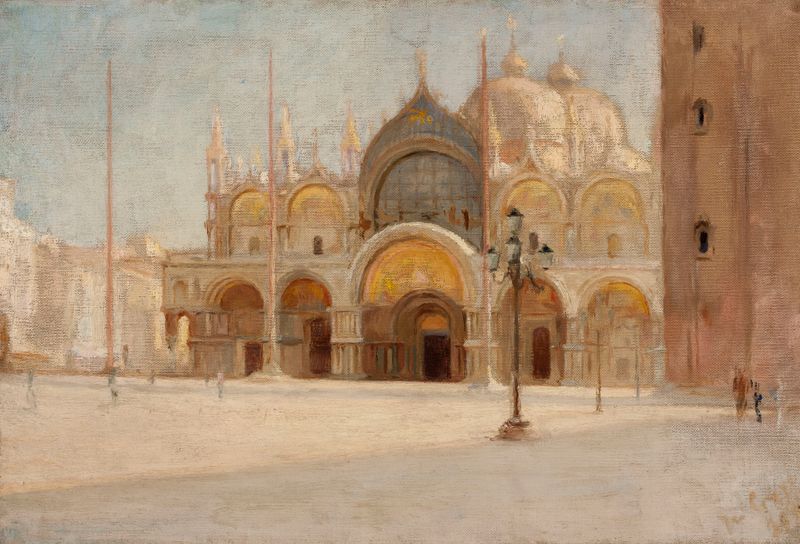
St Mark’s Square in Venice
Jan Ciągliński
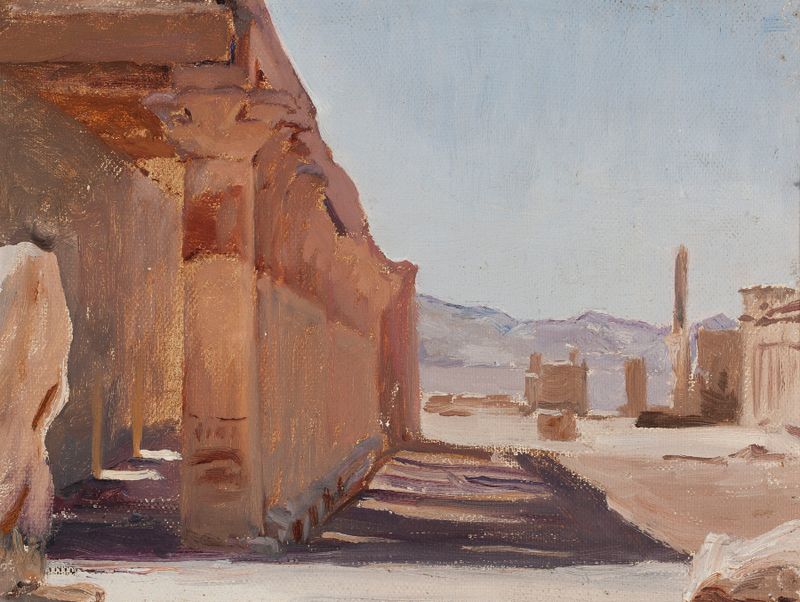
Temple. From the journey to Egypt
Jan Ciągliński
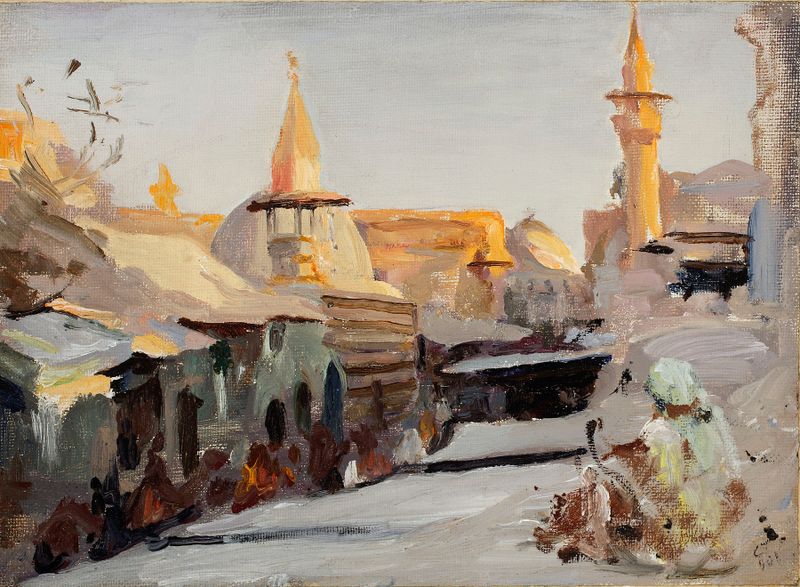
Street in Damascus. From the journey to Palestine
Jan Ciągliński
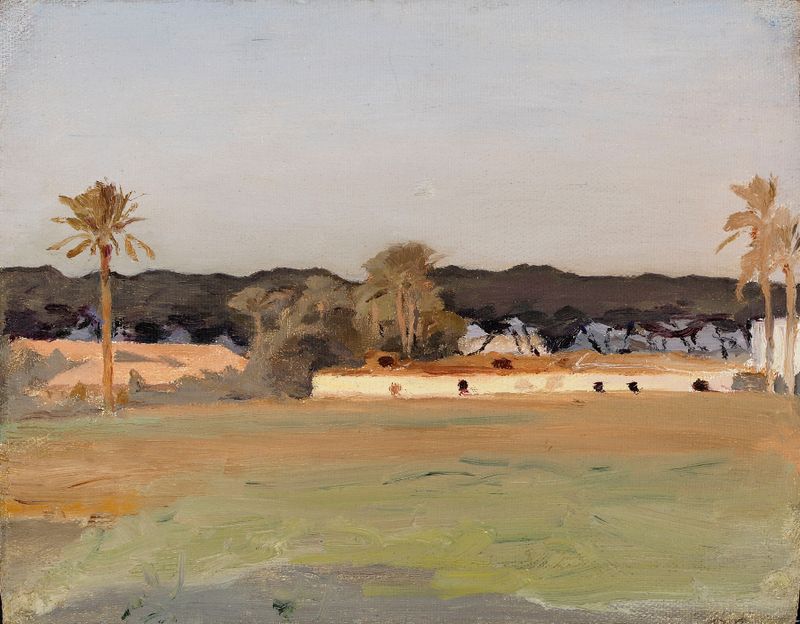
Evening. From the journey to Egypt
Jan Ciągliński
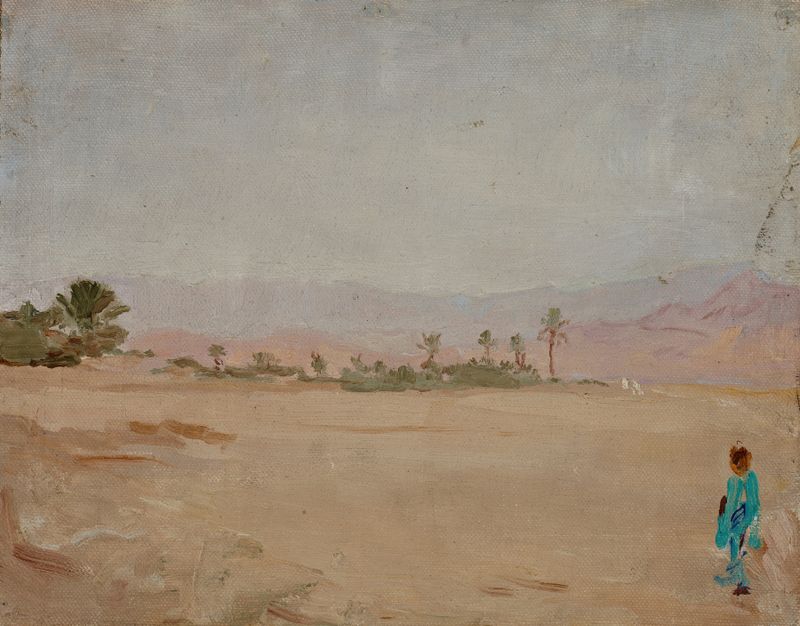
Sahara (Desert)
Jan Ciągliński
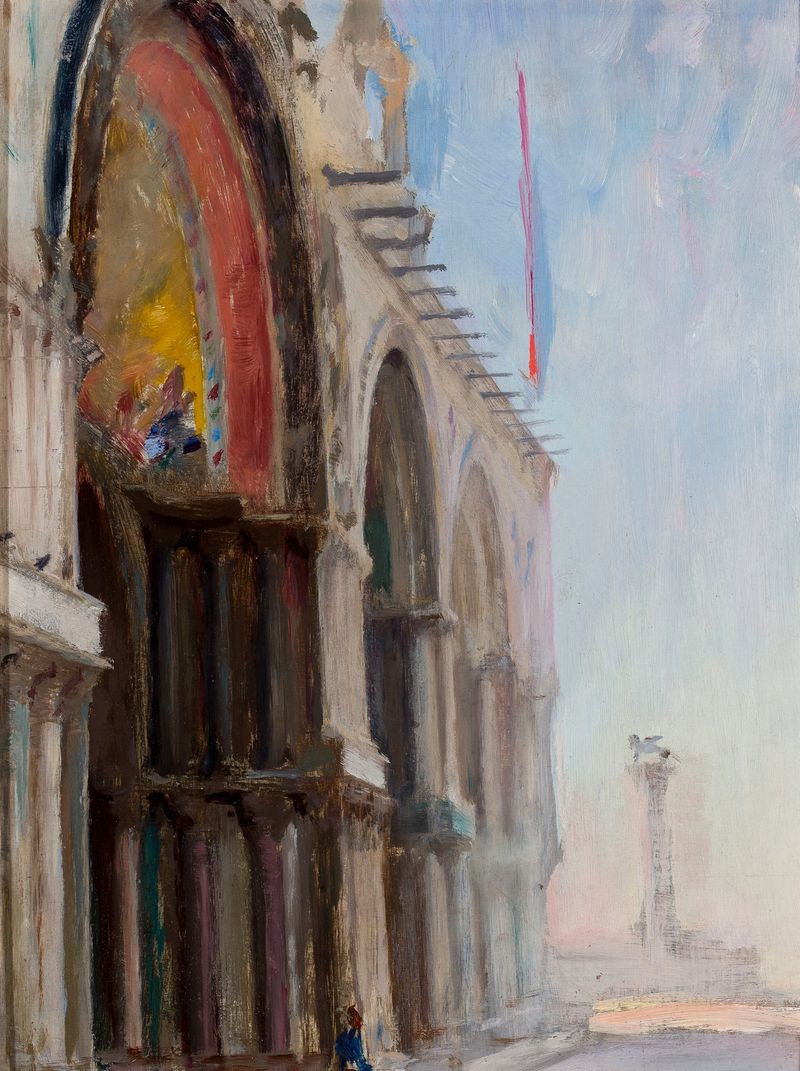
Venice – San Marco. From the journey to Italy
Jan Ciągliński
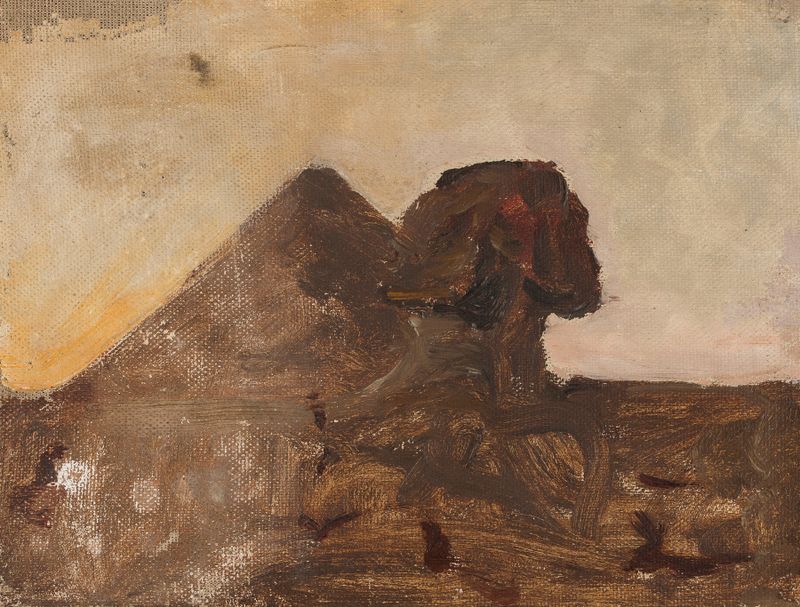
Evening in the desert – Sphinx and pyramid. From the journey to Egypt
Jan Ciągliński
More Architecture Art
Browse all →
The statue of Liberty
Frédéric Auguste Bartholdi

View of Houses in Delft, Known as ‘The Little Street’
Johannes Vermeer

View of Houses in Delft, Known as ‘The Little Street’
Johannes Vermeer

The Cathedral in Rouen. The portal, Grey Weather
Claude Monet

The yellow house
Vincent van Gogh

The Church in Auvers-sur-Oise, View from the Chevet
Vincent van Gogh