Spätsommernachmittag — History & Facts
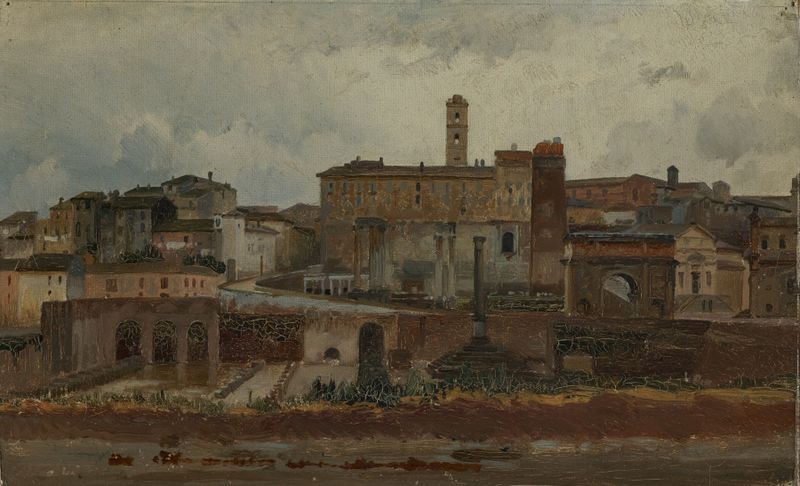
Could a single brushstroke hold eternity? In the delicate dance of time and decay, we find ourselves at the edge of summer's breath, where the whispers of yesterday linger like ghosts in a fading light. Look toward the center, where the soft hues of ochre and gold blend harmoniously, suggesting the warmth of the sun's tender caress. Notice how Riefstahl captures the fleeting moment of late afternoon with gentle brushwork, embodying the very essence of a waning day. The strokes evoke a gentle breeze, subtly shifting the leaves, while shadows stretch and elongate, hinting at the approach of twilight.
The composition feels both comforting and melancholic, beckoning the viewer to reflect on what has passed. Here, the tension between life and decay breathes through the painting. The lush foliage, vibrant yet tinged with signs of waning vitality, symbolizes the inevitable passage of time. Every leaf, every blade of grass tells a story of ephemeral beauty, while the encroaching shadows suggest that night—and the stillness it brings—will soon envelop the scene.
This interplay of light and dark serves as a reminder of the cycles of nature, urging us to cherish fleeting moments. In 1858, Riefstahl created this piece while navigating the shifting tides of Romanticism and emerging Realism in Germany. During a period when artists were increasingly drawn to capturing the beauty of nature and the emotional weight it carries, he found inspiration in the quietude of late summer afternoons. This was a time of profound experimentation and emotional expression in the art world, and Riefstahl's work reflects both personal introspection and a broader cultural shift toward appreciating the transient moments that define our existence.