St James’s Street, London — History & Facts
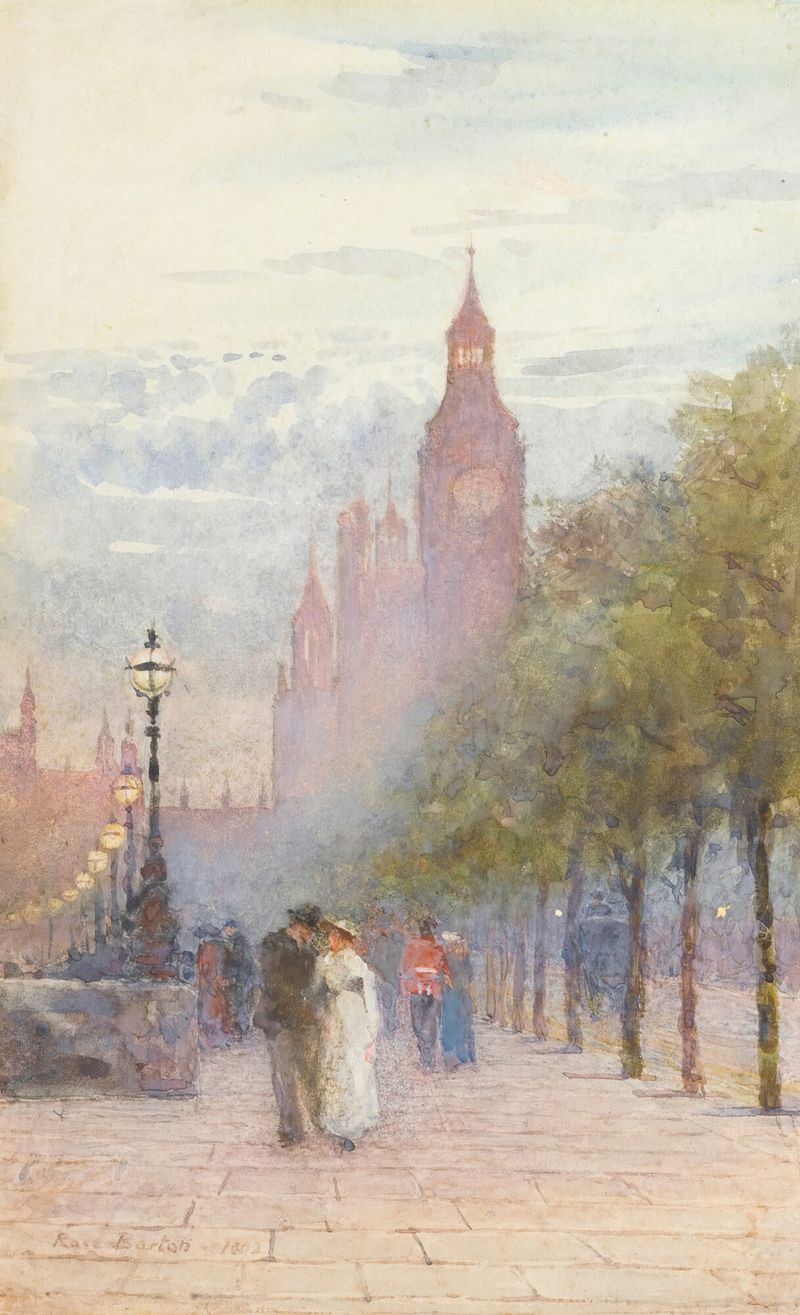
Did the painter know this moment would outlive them? In St James’s Street, London, time stands still, capturing a fleeting yet essential slice of life. Look to the right at the elegantly dressed figures gliding through the bustling street, their silhouettes framed by the intricate architecture of the buildings towering above. Notice how the warm sunlight bathes the scene, casting long shadows that stretch across the cobblestone, highlighting the contrast between the vibrancy of the crowd and the stillness of the facades. The palette—a harmonious blend of soft pastels and deeper earth tones—evokes a sense of nostalgia while imbuing the setting with an air of sophistication. Beneath the surface of this seemingly serene moment lies a complex interplay of progress and tradition.
The juxtaposition of horse-drawn carriages against the backdrop of modern establishments hints at a transformative era in London’s history. Each figure captures a story, their expressions and postures suggesting a shared excitement for the burgeoning modernity that is simultaneously invigorating and disquieting. This duality of rebirth is palpable; life is in perpetual motion while the city’s roots remain unyielding, a testament to its enduring spirit. In 1896, Rose Barton was creating this piece during a time of significant change in the art world and society at large.
Based in London, she was part of the Newlyn School movement, which sought to depict the everyday life and landscapes of England with fresh perspective. As the Victorian era drew to a close, artists like Barton began to explore new subjects and styles, reflecting the evolving cultural landscape that was stepping away from the confines of tradition.