St. Julien des Pauvres backyard in Paris — History & Facts
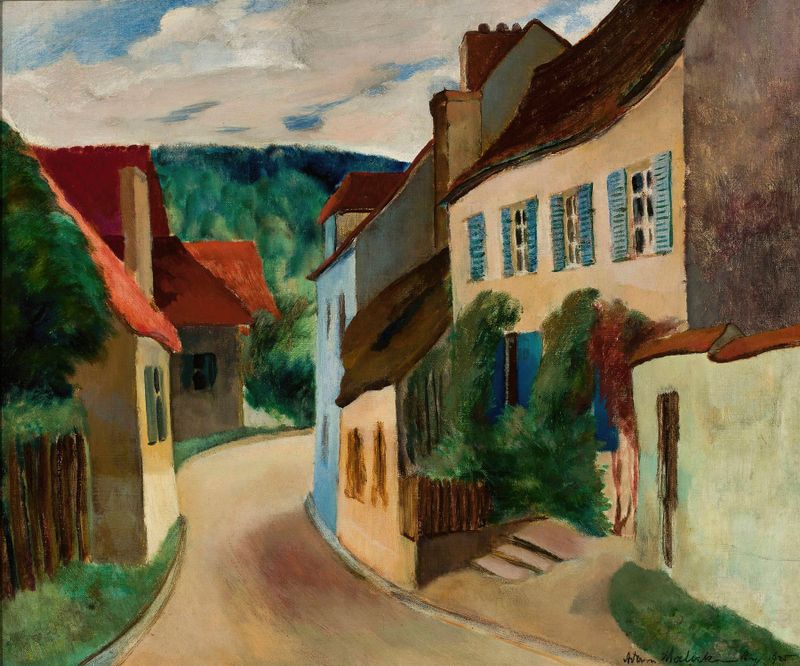
In the quiet chaos of life, can madness be a sanctuary? Look to the center of the canvas, where the disarray of the backyard emerges — an eruption of color and form, as if the very essence of Paris has spilled forth. The chaotic arrangement of objects, from the haphazardly stacked crates to the wild flora, begs the eye to wander yet compels it to settle. Notice how the splashes of green refract the sunlight, creating a symphony of light and shadow that dances across the scene.
The artist’s technique plays with texture, layering paint to evoke a tactile sensation, inviting the viewer to almost feel the roughness of the wooden planks beneath the vibrant blooms. As you explore further, hidden narratives unfold within the apparent disorder. The juxtaposition of the organic against the man-made creates emotional tension, suggesting a struggle between nature's wild spirit and the encroaching structure of urban life. Each element carries an echo of madness — the scattering of colors that defy conventional harmony, the twisted shapes that seem to challenge the very laws of perspective.
This disarray reflects the artist's commentary on the unpredictable nature of existence, where beauty can emerge from disorder. In 1925, Adam Malicki painted this work during a period marked by societal upheavals and artistic revolutions. Living in Paris, he was influenced by the burgeoning modernist movements that sought to break free from traditional constraints. At the time, the city was a crucible of creativity, filled with artists who pushed boundaries and explored the depths of human experience, mirroring Malicki's own quest for expression in a rapidly changing world.