Stage Design, Cloister at Night — History & Facts
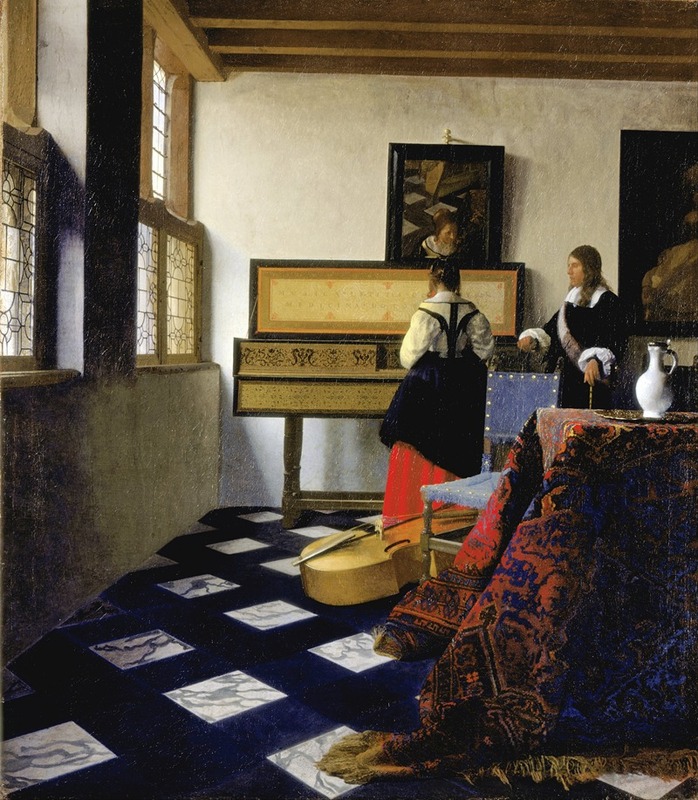
Could beauty survive in a century of chaos? This question lingers in the silence captured within this evocative artwork, where memory intertwines with the essence of place and time. Look to the center of the piece, where a dimly lit cloister emerges, its arches casting elongated shadows that speak of solitude. The artist's careful brushstrokes bring to life the interplay of light and dark, creating a haunting atmosphere. Notice the way the night sky, tinged with deep blues and purples, contrasts with the warm, golden light that spills from within the cloister, illuminating the intricate stonework.
Each element carries a whisper of nostalgia, inviting the viewer to step into the past. Delving deeper, observe the subtle tension between the cloister’s architectural solidity and the ephemeral beauty of light. This duality reflects the struggle between permanence and the fleeting nature of memory. The choice of night—a time often associated with introspection—underscores a longing for something lost, while hints of nature peeking through the architecture evoke the inescapable passage of time.
Together, these elements create a poignant narrative, suggesting that while chaos may reign outside, a refuge of beauty endures. The work was created in 1869, a period when society was grappling with modernization and upheaval. Its unknown artist, likely influenced by the burgeoning movements in Romanticism and Realism, sought to capture a sanctuary amid uncertainty. This cloister, a fragment of spiritual architecture, becomes a testament to a time when art aimed to preserve the beauty and solace of memory against the tide of change.
More Artworks by Unknown Artist
Browse all →
Ridder, Dood en Duivel
Unknown Artist

Shiva Nataraja
Unknown Artist

Portrait of Elizabeth I, Queen of England
Unknown Artist

Dolls’ house of Petronella Oortman
Unknown Artist

Shiva Nataraja
Unknown Artist

The Tale of Genji
Unknown Artist

The Tale of Genji
Unknown Artist

Cong
Unknown Artist

The bodhisattva Maitreya
Unknown Artist

Teabowl with a 'hare's fur' glaze
Unknown Artist