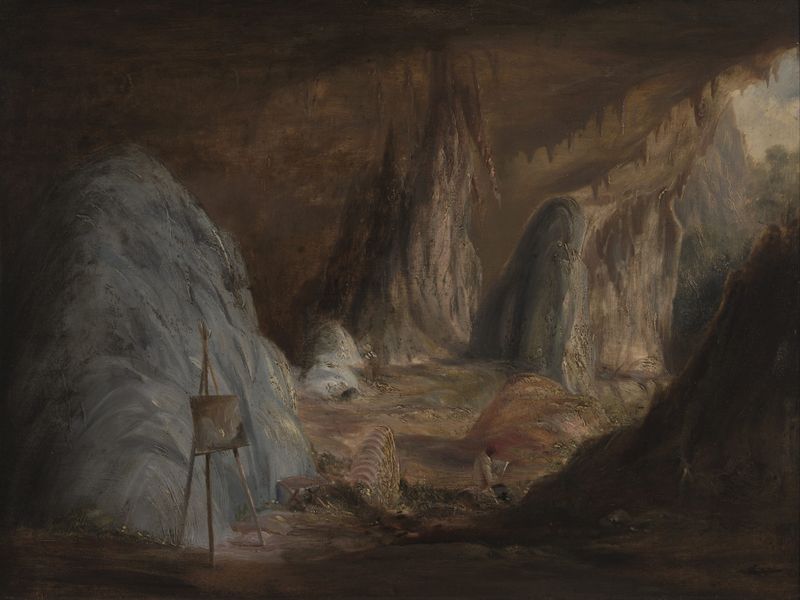
Stalagmite columns at the southern entrance of the Burrangalong Cavern — History & Facts
In the depths of the earth, faith intertwines with the natural world, whispering secrets through the silent formations of stone. Look to the lower left of the canvas, where the sturdy stalagmites rise like ancient sentinels from the cavern floor. Their rugged, textured surfaces capture the soft interplay of light and shadow, revealing the intricate details of their formation. Notice how the muted palette of browns and greens evokes a sense of timelessness, inviting the viewer to contemplate the passage of eons that shaped these structures.
The vertical lines draw the eye upward, suggesting a connection between the earthly and the divine. Within this subterranean setting, there exists a profound juxtaposition of permanence and transience. The stalagmites, formed drop by drop, symbolize patience and resilience, while the surrounding shadows hint at the unknown, reflecting the silent fears and hopes that dwell within us all. The cavern itself serves as a metaphor for introspection, each crevice echoing the weight of unspoken thoughts and faith in the unseen.
Here, the stillness speaks volumes, urging contemplation of the mysteries that lie both within the earth and the human spirit. Conrad Martens created this work during a period when he was exploring the unique landscapes of Australia, focusing on the natural beauty and geological formations that captivated him. As he painted the cavern, he was influenced by the Romantic movement, which emphasized the sublime and the emotional connection between humanity and nature. His work reflects not only a personal journey but also the burgeoning appreciation for Australia’s distinctive landscapes in the art world of the 19th century.