Stalagmites, Burragalong Cavern — History & Facts
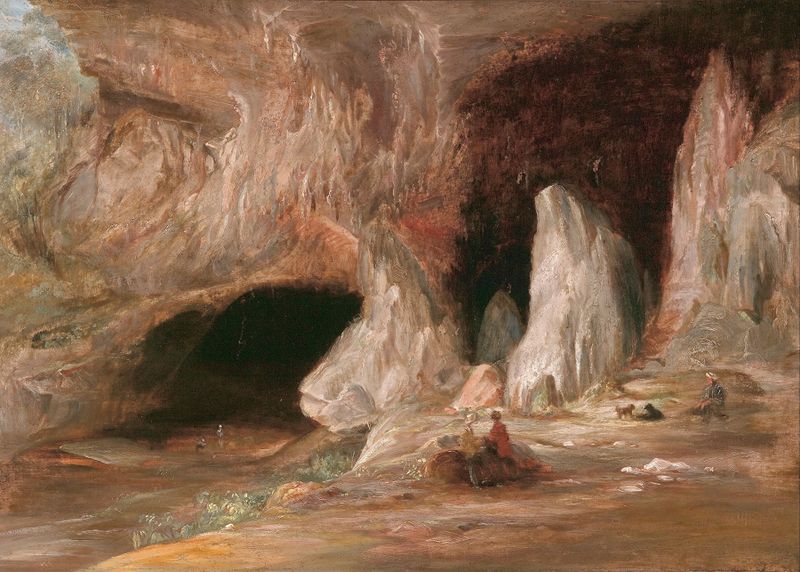
In the depths of Burragalong Cavern, the artist captures more than just a moment; he encases the essence of mortality itself, reminding us of the transient nature of existence. Look closely at the intricate stalagmites that rise like ancient sentinels from the cavern floor. The painter's deft brushwork brings forth a rich palette of earthy browns and shadowy greens, creating an atmosphere that feels both alive and timeless. Notice how the light appears to seep subtly through the cavern's opening, illuminating the jagged formations with a soft, almost ethereal glow that contrasts with the surrounding darkness.
This interplay of light and shadow serves as a visual metaphor for life and death, urging the viewer to ponder what lies beneath the surface. Delve deeper into the composition, and you’ll find whispers of history etched into the rock. Each stalagmite tells a story of patience, of time slowly shaping its form, mirroring our own struggles against the relentless passage of time. The layered textures speak to the weight of nature’s quiet endurance, suggesting a parallel to human fragility.
Here, the cavern becomes a sanctuary of reflection, a space where the boundaries between the ephemeral and the eternal blur, evoking a profound sense of introspection. In 1843, while residing in Australia, the artist created this work amidst a burgeoning interest in landscape painting, a reflection of the Romantic era’s fascination with nature's sublime beauty and its inherent challenges. Martens was exploring the emotional depths of his surroundings, capturing not only the scenery but the unspoken truths of human existence, as the world around him was slowly transforming with the pressures of settlement and industrial change.