Stationstraat te Meerssen, Zuid-Limburg — History & Facts
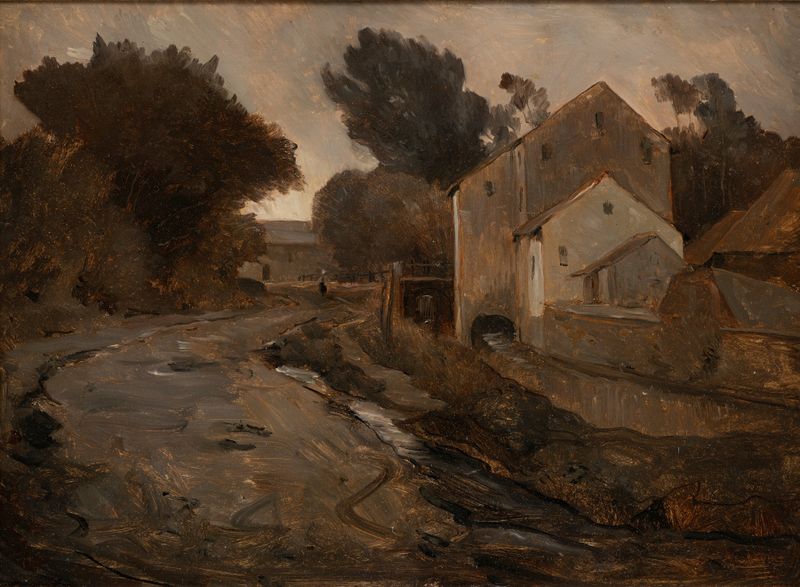
When did color learn to lie? Shadows stretch and curl through the landscape, whispering secrets of the past while painting a façade of warmth and life. Focus first on the muted palette, where earthy tones mingle with subtle blues and greens. The foreground draws your eye to the cobblestone road, its surface glistening as if freshly washed. Notice how the light dances across the scene, illuminating the quaint houses that line the street, their façades catching rays of sunlight while their shadows linger like memories, hinting at stories untold.
Each building, with its distinct character, contributes to an atmospheric tapestry that evokes a tranquil afternoon in a small town. Yet beyond the surface beauty, a narrative of contrasts emerges. The vibrant colors of the houses stand in stark juxtaposition to the lingering shadows, echoing the tension between light and obscurity. The interplay suggests a deeper reflection on the passage of time—how moments can be transformed by the play of light.
This duality invites the viewer to consider their own memories, the light that reveals and the shadow that conceals. In 1894, Willem van Konijnenburg created this piece while living in the Netherlands, immersed in the Post-Impressionist movement. This was a period where artists were beginning to explore new ways of seeing and interpreting their surroundings, blending realistic representation with emotional resonance. As he painted Stationstraat te Meerssen, Zuid-Limburg, he was laying the groundwork for his own unique style that would later encompass bright colors and expressive form, reflecting the evolving landscape of art during that era.