
Steinerne Brücke, rechts ein Kaufladen — History & Facts
Can paint confess what words never could? In Steinerne Brücke, rechts ein Kaufladen, the silent dialogue of reflection speaks volumes about the world it captures, inviting us to explore the layers of visual storytelling hidden within its brushstrokes. Look to the left, where the sturdy arch of the stone bridge rises gracefully against the tranquil water, its surface shimmering like a mirror in the waning light. The gentle interplay of muted blues and earthy tones draws you in, guiding your gaze from the bridge to the quaint shop nestled at the right. Notice how the shop’s windows catch the fading glow, blurring the boundary between reality and its reflection, suggesting a moment caught in time—a simultaneous existence of the concrete and the ephemeral. Within this serene composition lies a tension between permanence and transience.
The robust bridge stands as a testament to human endeavor, while the shop, with its inviting yet elusive presence, hints at the fleeting nature of commerce and community. The reflections invite contemplation on the duality of existence; what is real and what is merely an echo? As the viewer, you are drawn into a meditative state, pondering the stories that lie beneath the surface, both seen and unseen. At an undetermined time, Johannes Huibert Prins painted this piece, likely during a period of introspection and observation in European art. The late 19th century saw a shift toward capturing everyday scenes with a focus on light and atmosphere, reflecting the burgeoning interest in realism.
Prins, immersed in this artistic climate, crafted a painting that speaks to the soul of a moment, embodying both the familiar and the profound in a single frame.
More Artworks by Johannes Huibert Prins
Browse all →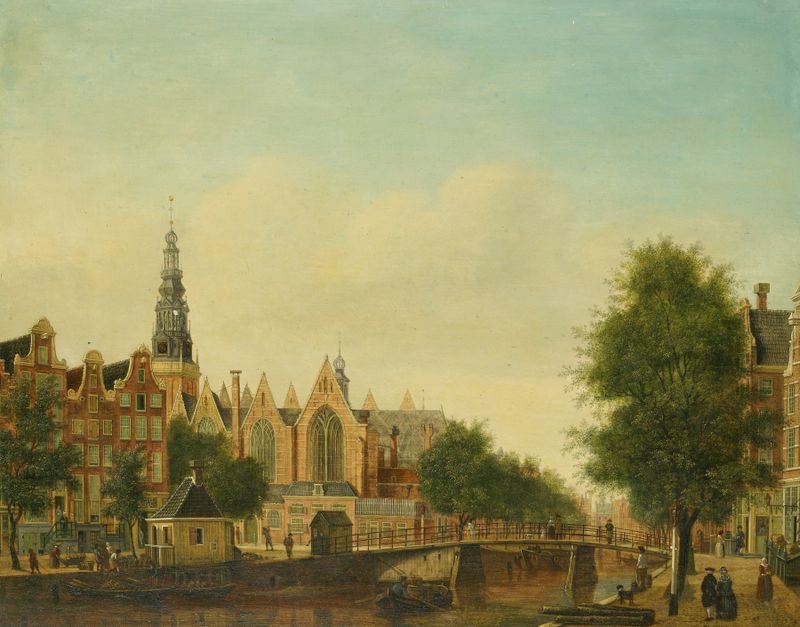
The Oude Kerk seen from the Oudezijds Voorburgwal
Johannes Huibert Prins

View of a Netherlandish City
Johannes Huibert Prins
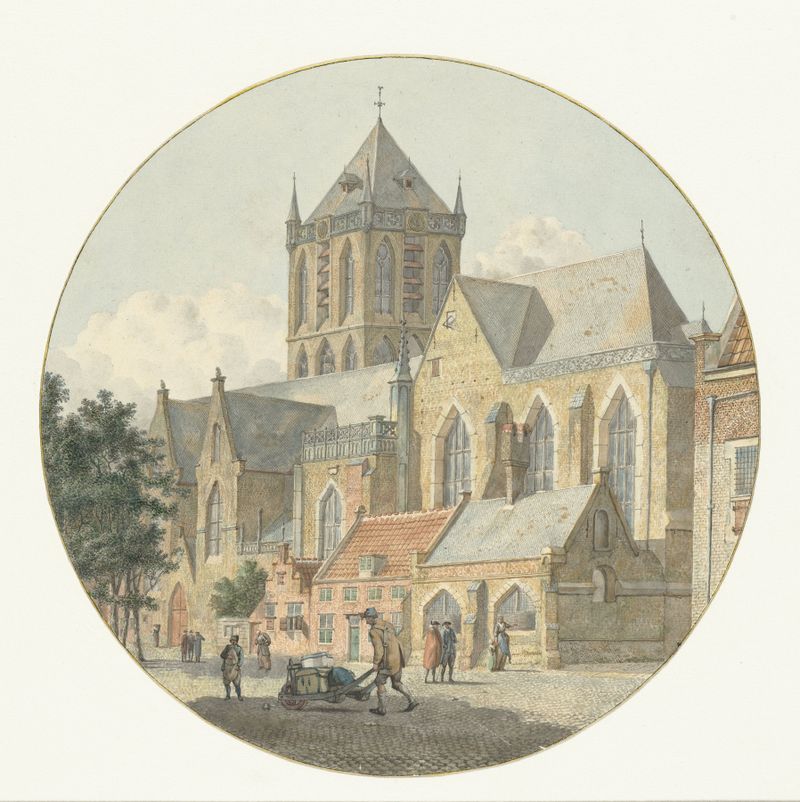
De St.-Jacobskerk te Utrecht
Johannes Huibert Prins

A View of the Nieuwe Kerk, Delft
Johannes Huibert Prins
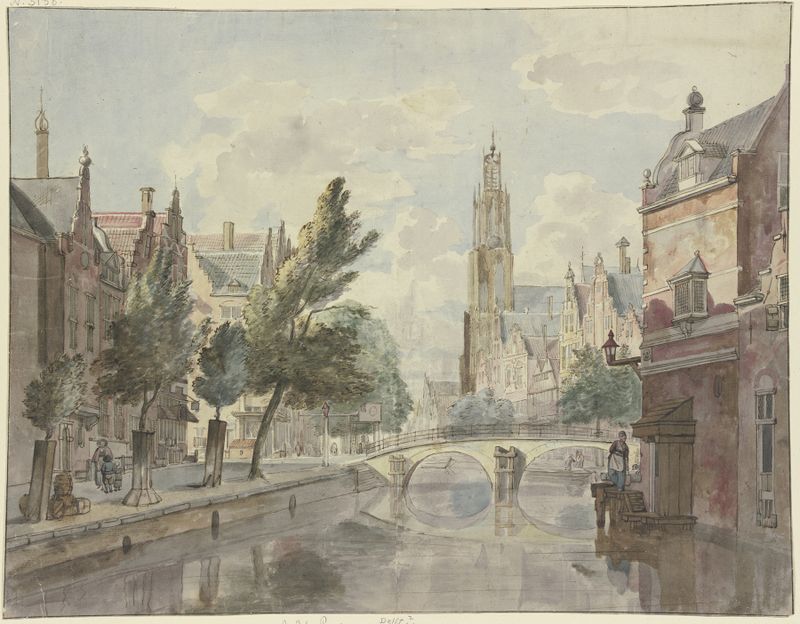
Steinbrücke über einen Kanal, im Hintergrund eine Kathedrale, rechts am Haus eine Laterne
Johannes Huibert Prins
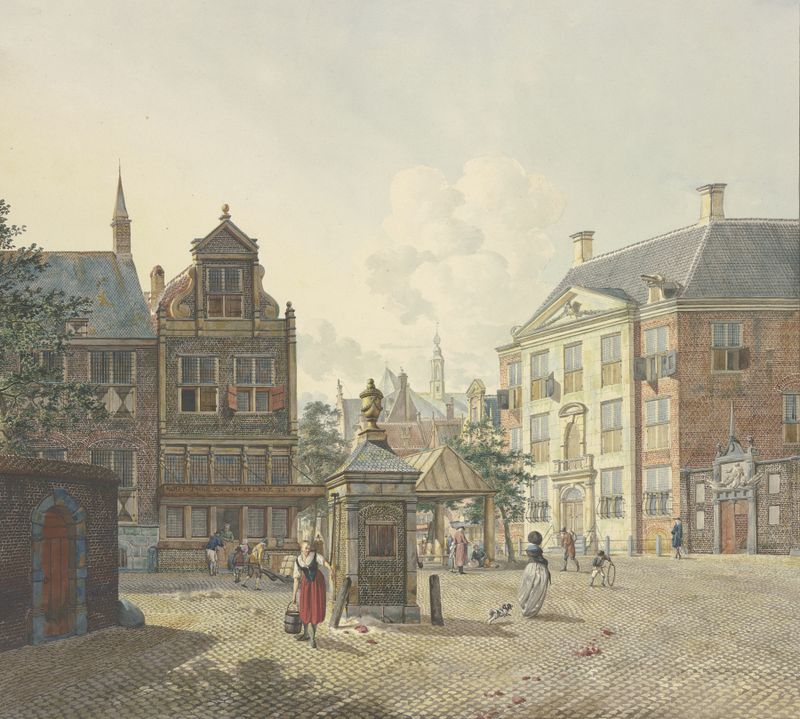
Auf einem freien Platz ein Brunnenhaus, dabei eine Magd in rotem Rock und mit einem Eimer
Johannes Huibert Prins
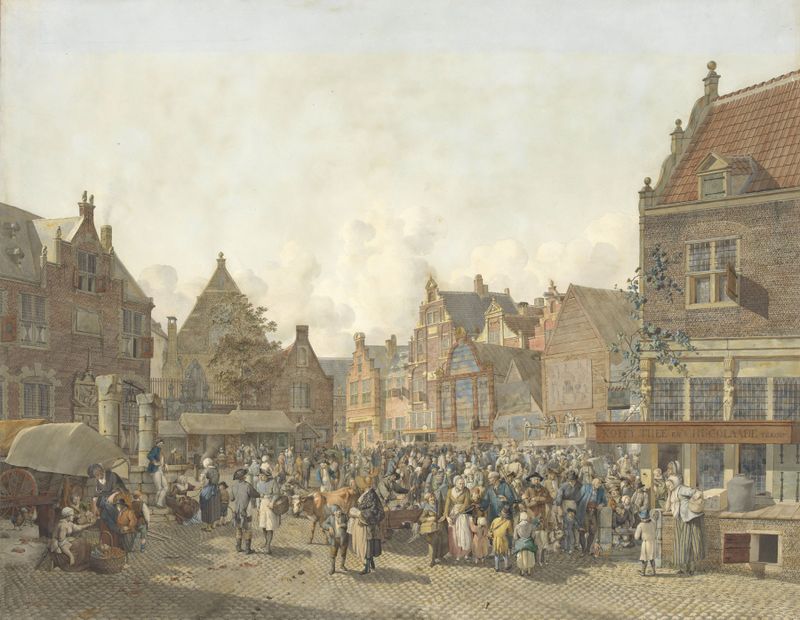
Town Square with Fair
Johannes Huibert Prins
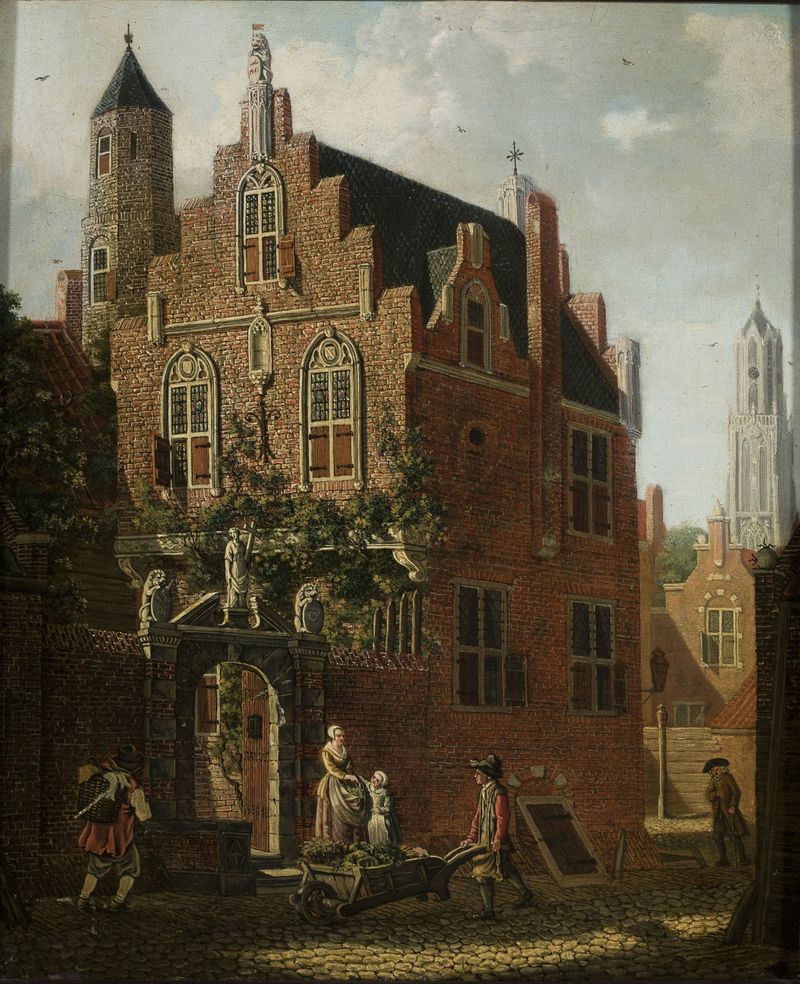
View of the city
Johannes Huibert Prins
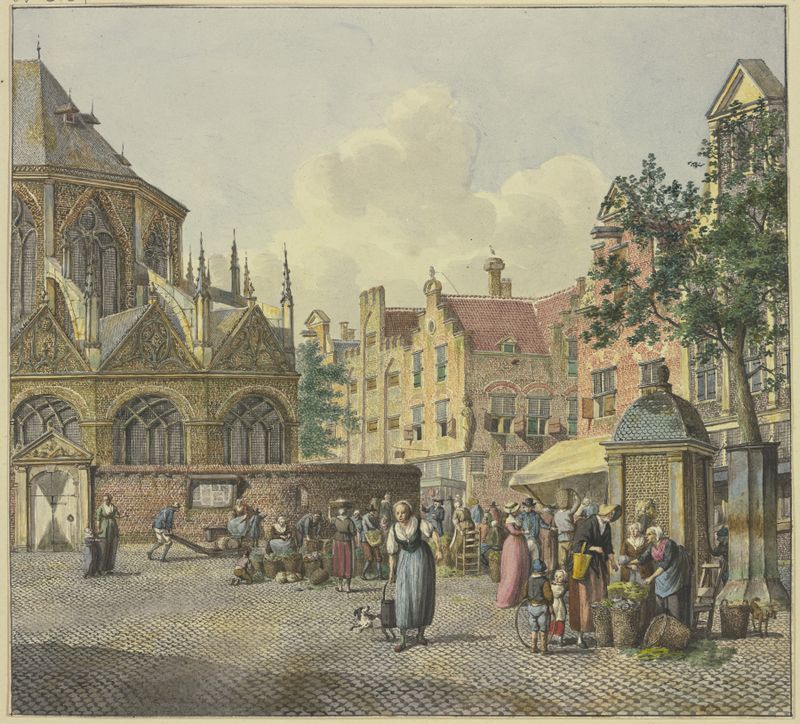
Links der Chor einer Kirche, rechts ein Brunnenhaus, mit Gemüseverkäuferinnen
Johannes Huibert Prins

Kanal mit Schleusentor, links kehrt eine Magd die Straße
Johannes Huibert Prins
More Architecture Art
Browse all →
The statue of Liberty
Frédéric Auguste Bartholdi

View of Houses in Delft, Known as ‘The Little Street’
Johannes Vermeer

View of Houses in Delft, Known as ‘The Little Street’
Johannes Vermeer

The Cathedral in Rouen. The portal, Grey Weather
Claude Monet

The yellow house
Vincent van Gogh

The Church in Auvers-sur-Oise, View from the Chevet
Vincent van Gogh