Still Life with a Cucumber and a Pitcher — History & Facts
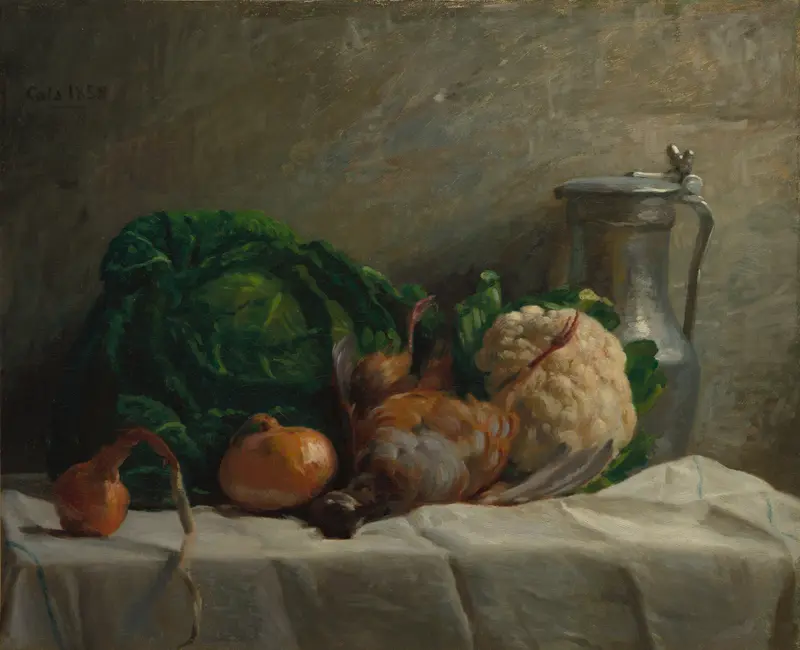
A pale cucumber sprawls across the foreground, its unexpected color and size drawing the eye before anything else can compete. The painter sets this humble vegetable against a gathering of objects that seem to shimmer with quiet anticipation: a glossy lemon, a tomato bursting with ridges, and the cool gleam of glass and porcelain. The light, entering from the left, pools over the folds of a white cloth, guiding your gaze from the softness of fruit to the hard, reflective surfaces behind.
Each object claims its own space, yet the composition feels intimate, as if these things have been left here just moments before, awaiting a meal or a conversation. Painted in 1847, this still life belongs to a moment when artists across Europe were reexamining the ordinary. Such paintings, often destined for the homes of the rising bourgeoisie, celebrated abundance and the pleasures of daily life. The careful rendering of textures—the roughness of the cucumber, the cool glaze of the pitcher—reflects both technical skill and a growing fascination with the material world.
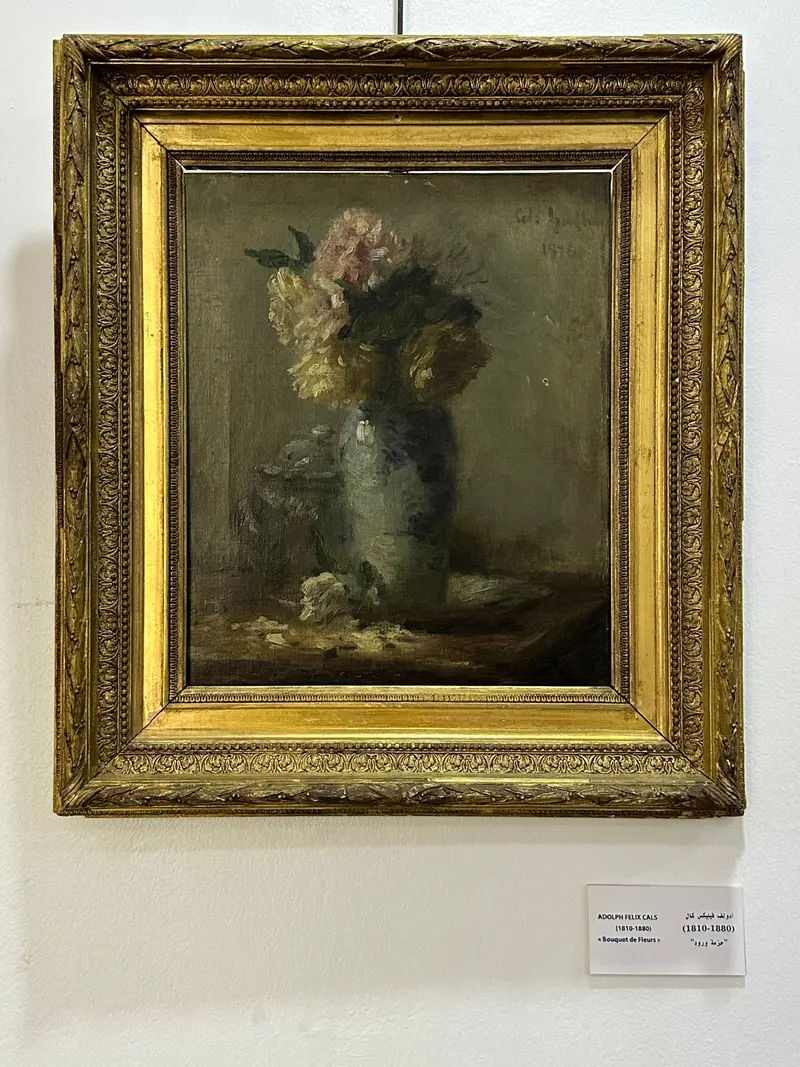
Though history has kept few traces of Adolphe-Félix Cals’s intentions for this work, its presence today in the Minneapolis Institute of Arts invites us to linger, to notice how the everyday can become quietly extraordinary under a painter’s gaze.