
Card Game at "le Père Martin" — History & Facts
A circle of lamplight holds two men in quiet suspense, their faces half-lit as they weigh their cards and their luck. The round format of the painting itself feels like the table they share—intimate, closed, a world apart from whatever waits beyond the frame. Shadows swallow the corners, but the glow of the oil lamp draws your eye to the hands: one man’s cards fanned carefully, the other’s resting on the table, caught between decision and chance.
The worn hats and heavy coats hint at a long day behind them, the game a ritual of rest or rivalry, its outcome written in their silent concentration. Every detail—the soft reflection of light on the tabletop, the blurred windowpanes behind—serves to deepen the hush, the sense of time suspended. Painted in 1859, this work belongs to a world where scenes of ordinary life were gaining new dignity on canvas. In mid-nineteenth-century France, artists like Adolphe-Félix Cals turned their attention to the humble pleasures and quiet dramas of everyday people, often working in dim interiors where light itself became a character.
Such paintings were rarely grand commissions; they were made for private collectors or small exhibitions, prized for their honesty and atmosphere. The Cleveland Museum of Art now holds this piece, a testament to the era’s fascination with the poetry of the commonplace. Look again at the lamp’s glow and the men’s absorbed faces—here, the ordinary becomes quietly absorbing, the game as serious as any history.
More Artworks by Adolphe-Félix Cals

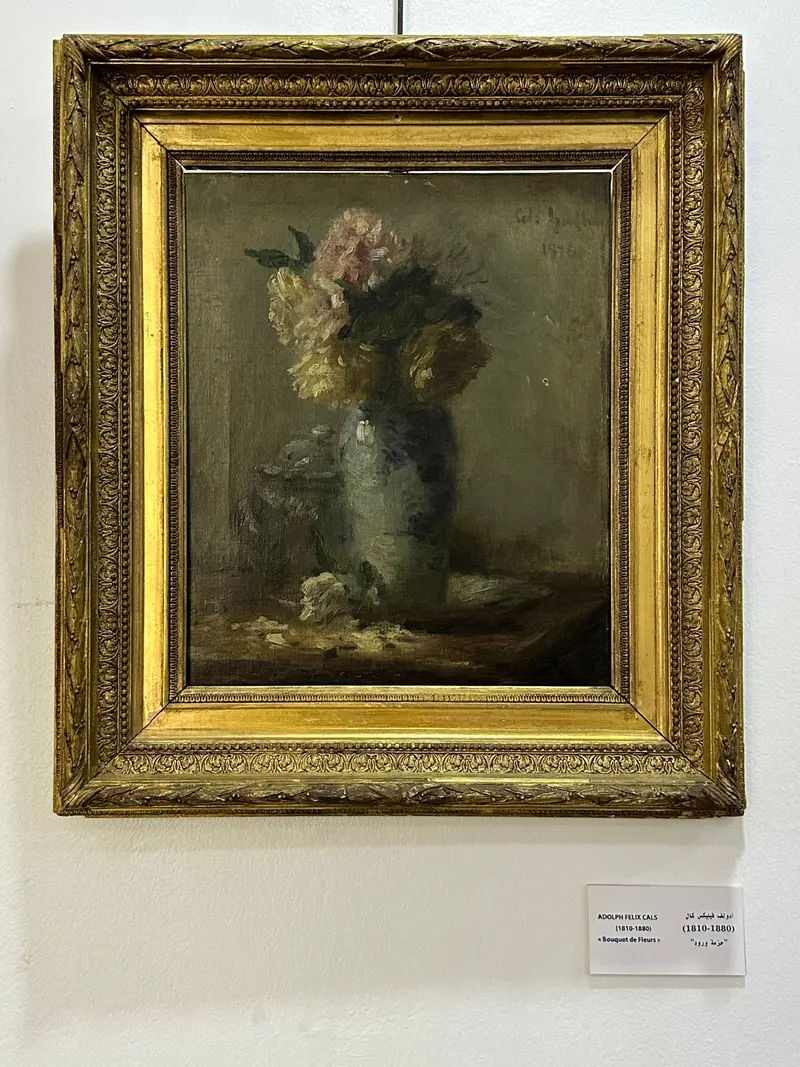
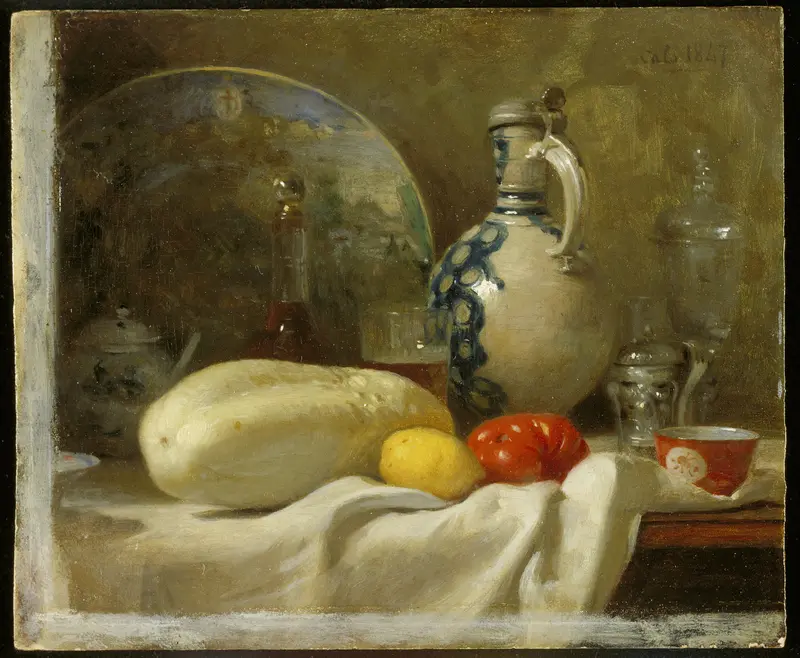
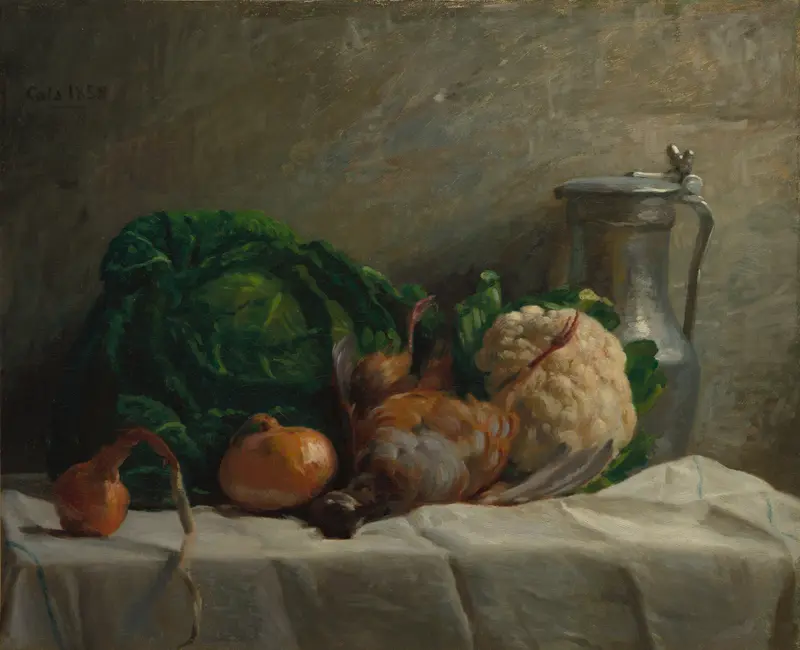
More Genre Scene Art

Banquet of the Officers of the St George Civic Guard
Frans Hals

Rembrandt and Saskia in the Scene of the Prodigal Son
Rembrandt van Rijn

Bal du moulin de la Galette
Pierre-Auguste Renoir

Quadrille at the Moulin Rouge
Henri de Toulouse-Lautrec

A Burial at Ornans
Gustave Courbet

When Will You Marry?
Paul Gauguin