Storm — History & Facts
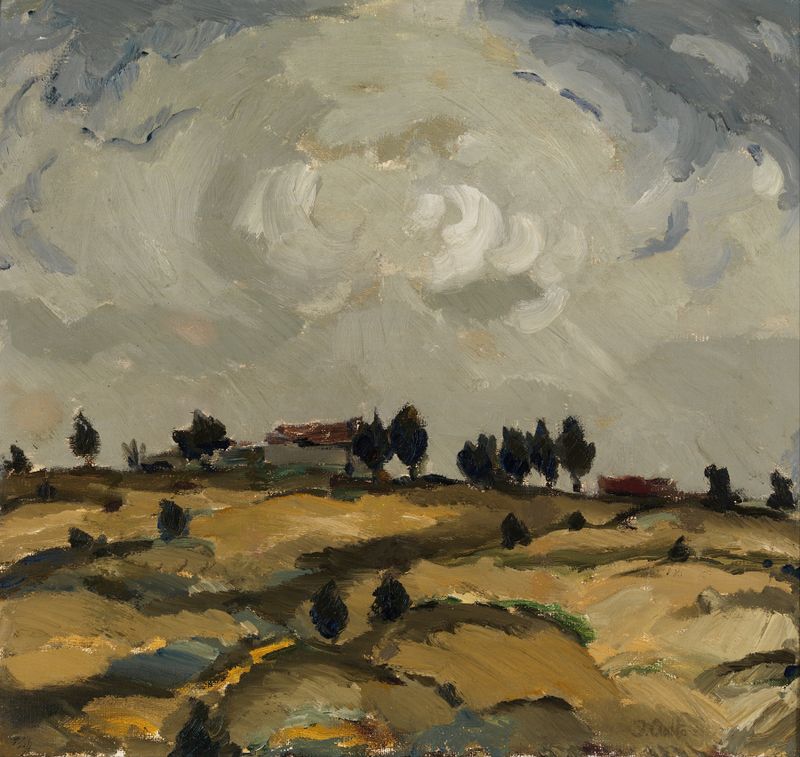
When did color learn to lie? Within rich swirls of deep blues and tumultuous grays, an unseen force writhes, evoking visceral emotions that cling to the viewer like the very storm itself. Look to the center of the canvas where turbulent waves clash, each stroke a fervent expression of chaos. Notice how the artist’s palette dances between vibrant hues and darker tones, creating a palpable tension. The brushwork is frenetic yet deliberate, guiding your eye across the canvas as it immerses you in a universe caught between creation and destruction, motion and stillness. The storm suggests not just a physical tempest, but an emotional upheaval.
The juxtaposition of light breaking through the clouds hints at the fleeting moments of hope amid chaos. Each crest of the wave reflects the artist’s internal struggle, embodying the conflicts of a world on the brink of change during a tumultuous era. What lies beneath this tempest is a yearning for clarity — an exploration of humanity’s own storms and how they shape our identities. In 1915, the artist created this work amidst the upheaval of World War I, a period that profoundly influenced his vision.
Living in Finland, Aalto was a part of a burgeoning artistic movement that sought to capture the rawness of emotion and nature. His work during this time was marked by a desire to encapsulate the essence of struggle and resilience, reflecting not only personal experiences but the collective turmoil of a world grappling with its own storms.