
Strandparti Solskin i Havet — History & Facts
Begin your exploration by focusing on the sunlit figures to the left, their warmth radiating through the golden hues that dominate the canvas. Notice the gentle sway of the waves depicted in varying shades of blue and green, contrasting with the vibrant tones of the sand. The artist employs soft brushstrokes to convey both movement and stillness, inviting the viewer to breathe alongside the tranquil seaside moments.
Each detail, from the delicate play of light on the water’s surface to the subtle shadows that lurk in the corners, draws you into a world where nature's beauty is both captivating and elusive. As you delve deeper, consider the shadow cast by the figures, hinting at the transient nature of happiness. The juxtaposition of the radiant sun and the creeping darkness beneath suggests an underlying tension—joy intertwined with melancholy. The scattered seashells, glimmering like tiny jewels along the shore, echo the fragility of life's simple pleasures, reminding us that such moments are often fleeting and shadowed by the inevitable passage of time. In 1884, Bloch created this masterpiece amidst a burgeoning interest in naturalism and realism, reflecting the tensions of a rapidly changing society.
Residing in Denmark, he found inspiration from the scenic beauty of his homeland, exploring themes of light and shadow that resonated deeply with contemporary artistic movements. The painting not only captures a moment in time but also reflects the artist's keen sensitivity to the layers of human experience woven into the fabric of nature.
More Artworks by Carl Bloch

The Daughter of Jairius
Carl Bloch

The Entombment of Christ
Carl Bloch
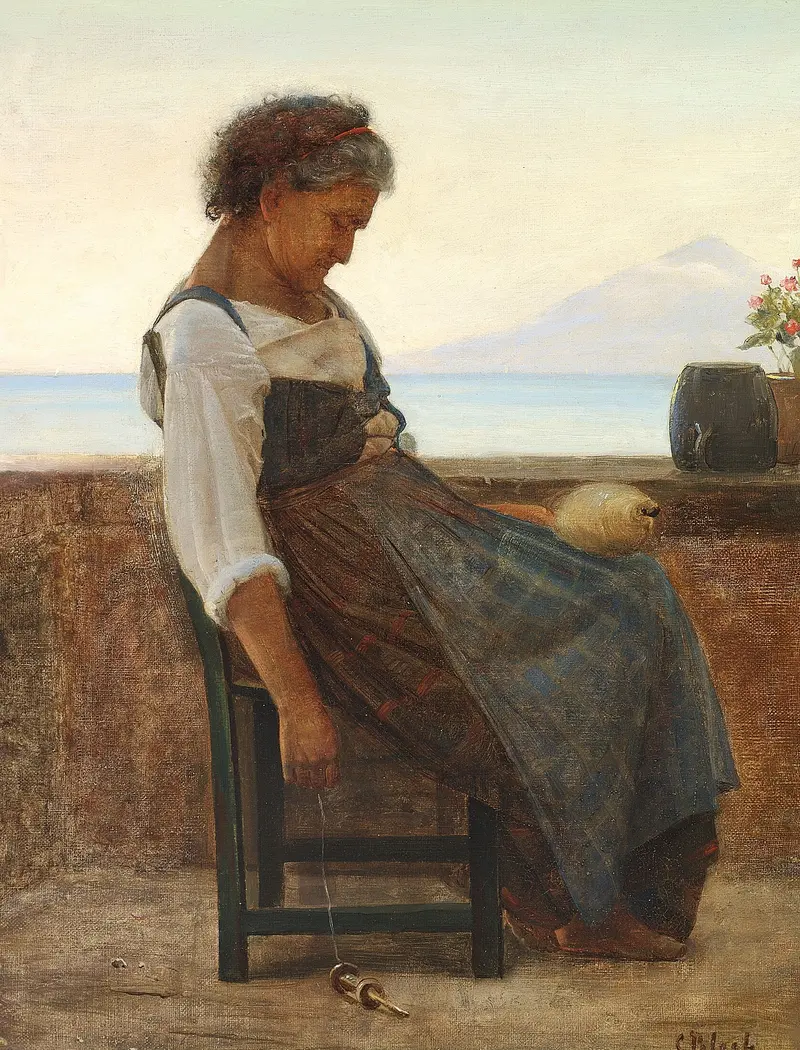
Italiensk morlille tager sig et hvil
Carl Bloch
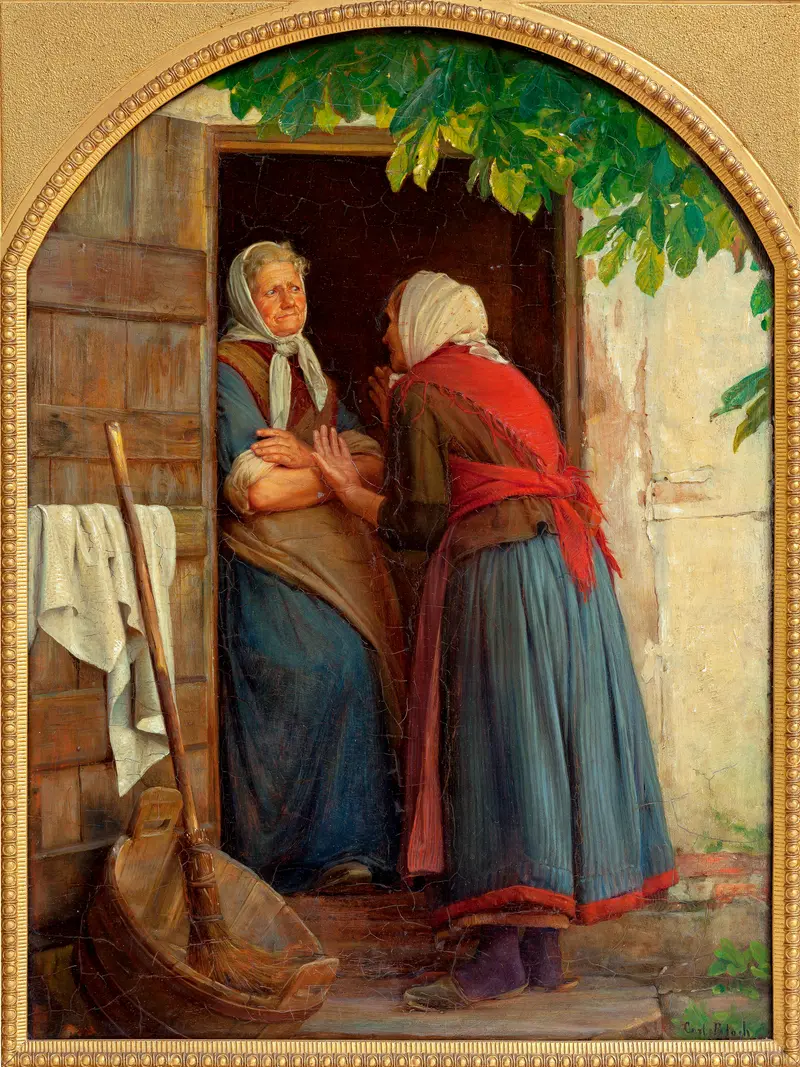
Two women talking
Carl Bloch

A Norwegian bride
Carl Bloch
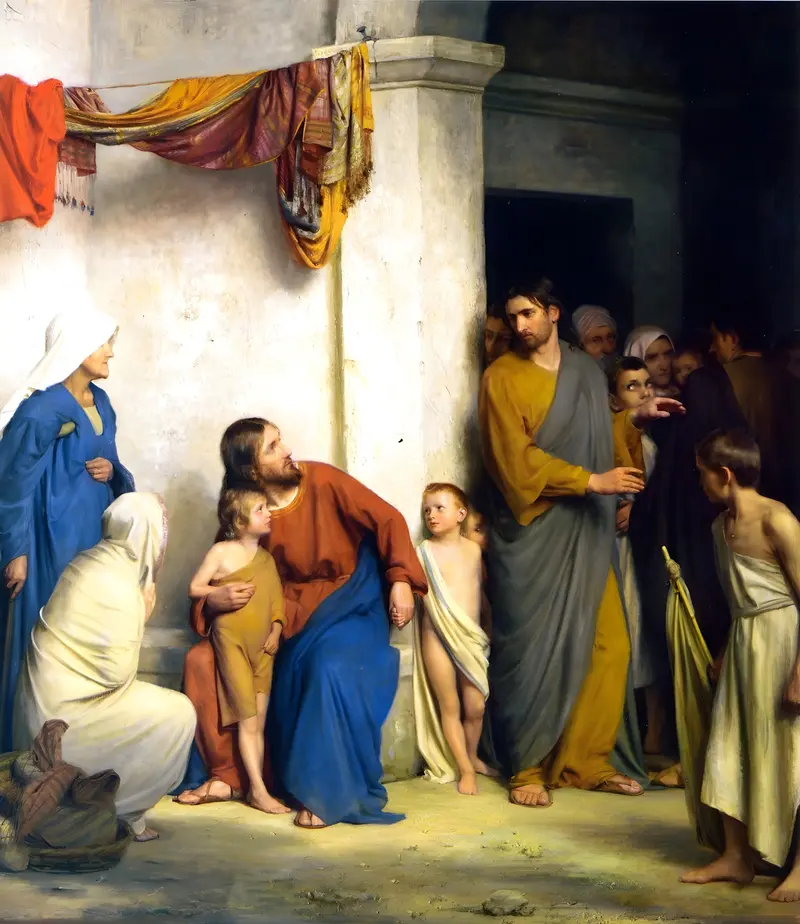
Christ and the Children
Carl Bloch

Christ and the doubting Thomas
Carl Bloch
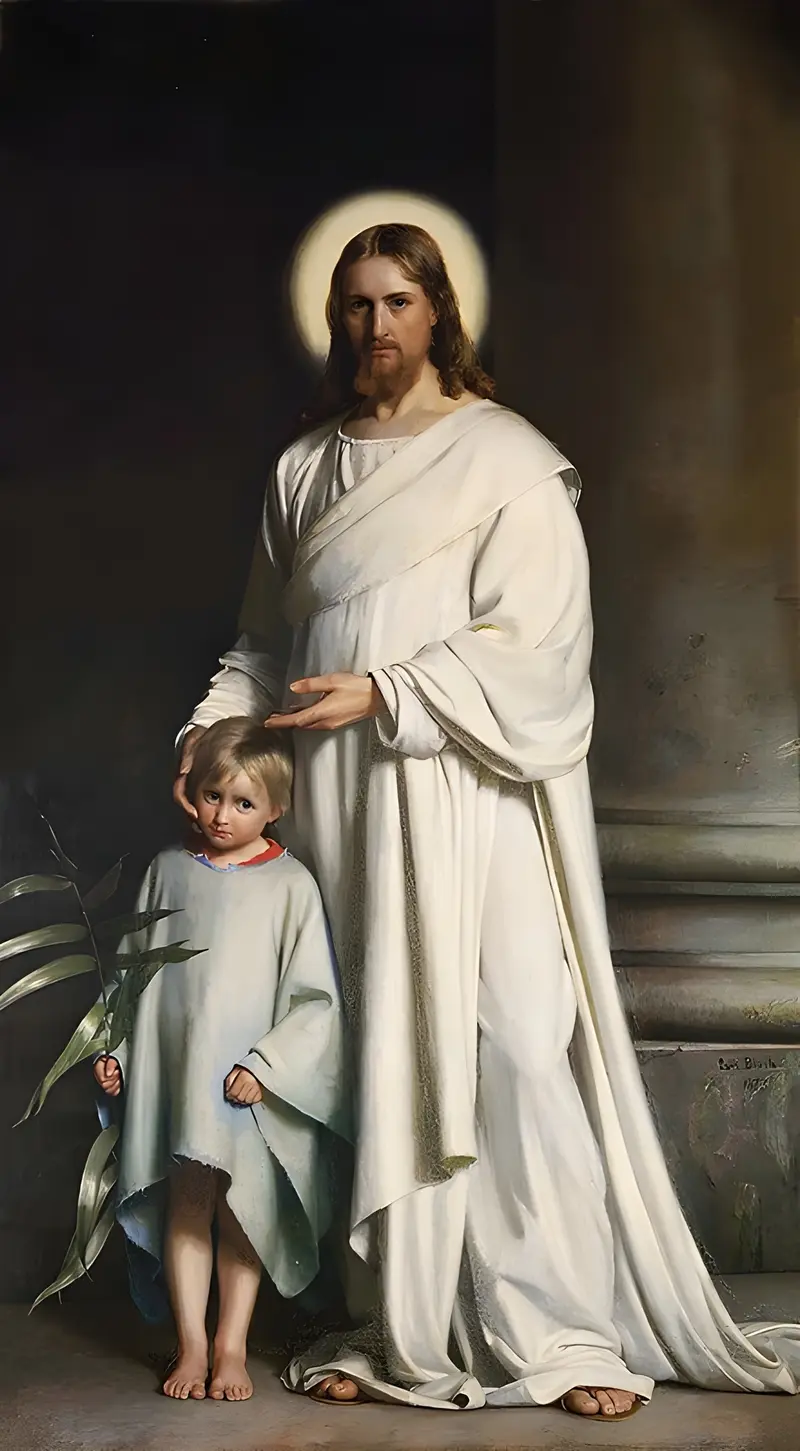
Christ blessing the little child
Carl Bloch

Christ Healing the Blind Man
Carl Bloch
Christ in the Garden of Gethsemane
Carl Bloch





