Street Scene — History & Facts
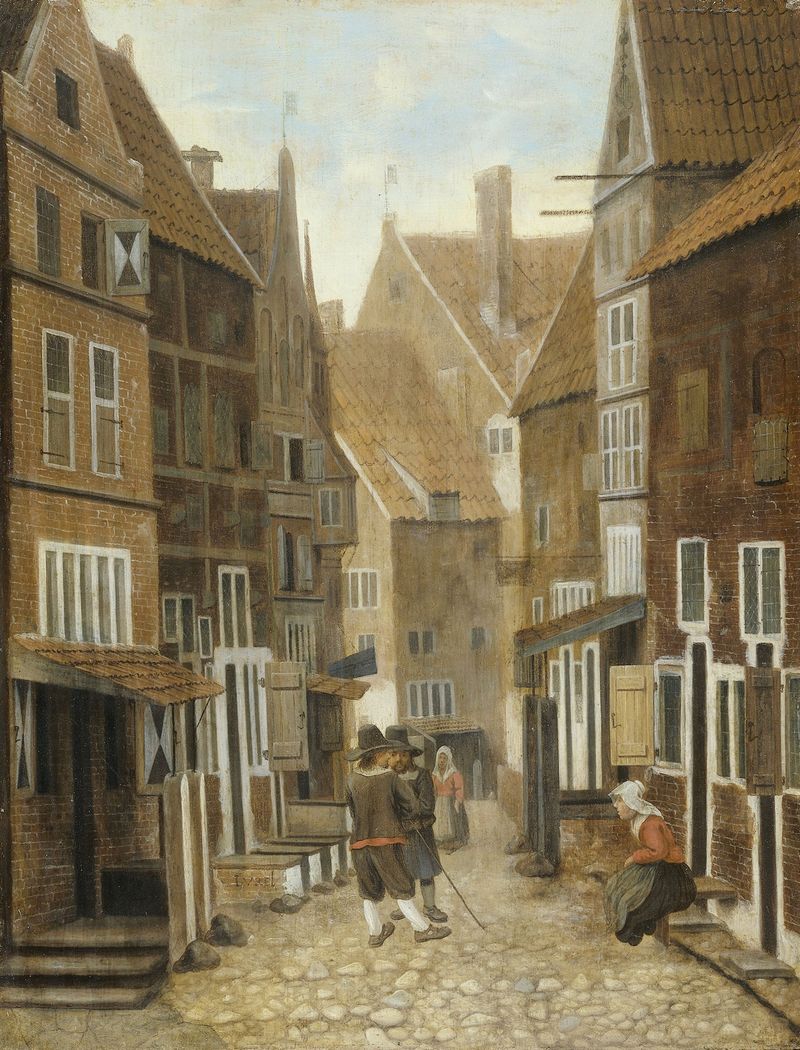
Is this a mirror — or a memory? The quiet streets capture an elusive moment, inviting viewers to reflect on the passage of time and the stories that linger in the shadows. Look to the left at the charming row of houses, each brick painted with the warm hues of a fading sun, casting soft shadows that stretch toward the cobblestone path. Notice how the figures, seemingly engaged in their own discreet narratives, create a harmonious balance between movement and stillness. The delicate interplay of light and dark emphasizes the textures of the buildings and the subtle expressions on their faces, revealing the artist's meticulous attention to detail. Hidden beneath the surface of this tranquil scene are emotional tensions that speak to broader themes of human experience.
The solitary figure leaning against the wall suggests contemplation, perhaps a longing for connection in a bustling world. The distance between the inhabitants, both physically and emotionally, evokes a sense of isolation amidst the vibrancy of life. Each element, from the playful light to the muted colors, carries the weight of revelations waiting to be uncovered. In the mid-17th century, Vrel found himself in a rapidly changing artistic landscape in the Netherlands, where genre painting began to flourish.
Working during this time, he developed a unique style that emphasized the everyday lives of ordinary people, often capturing fleeting moments of introspection. This period offered both a reflection of society and an exploration of personal identity, themes that resonate through Street Scene.