
Studie — History & Facts
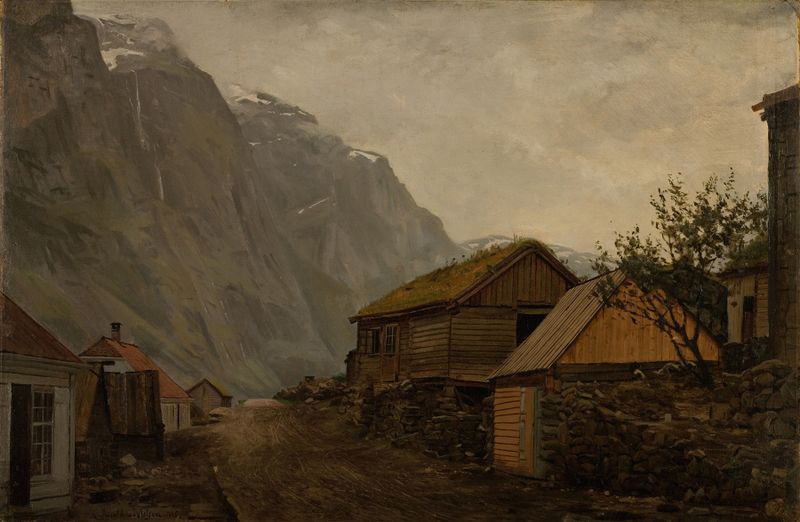
In the quiet realm of Studie, reflections transcend mere surface; they delve deep into the soul’s vulnerabilities. A meditative moment where art and introspection converge, this piece invites us to confront our own echoes. First, look to the right at the delicate interplay of shadow and light, where subtle gradations reveal the contours of emotion. The muted palette, infused with soft earth tones, draws you in, while the gentle brushwork creates a sense of fluidity, as if the figures could breathe and sigh.
Notice how the reflections are not just visual but emotional, capturing a pause in the rhythm of life, urging the viewer to linger in the contemplative space. Beneath the surface, the artist weaves a narrative of duality—what is seen versus what is felt. The juxtaposition of sharp lines and soft edges suggests the tension between clarity and uncertainty. The subtle reflections hint at unspoken words, a silent dialogue that resonates with anyone who has grappled with their own introspections.
This emotional depth invites viewers to not just observe but to connect their own experiences with the sentiments portrayed. In 1858, Amaldus Nielsen painted Studie while immersed in the burgeoning art scene of Denmark. This period marked a transition towards modernity, where artists began to explore personal expression and psychological depth. As he navigated through a pivotal moment in his career, Nielsen was influenced by both Romantic ideals and emerging Realism, leading him to create works that resonate with the nuanced complexities of human experience.
More Artworks by Amaldus Nielsen
Browse all →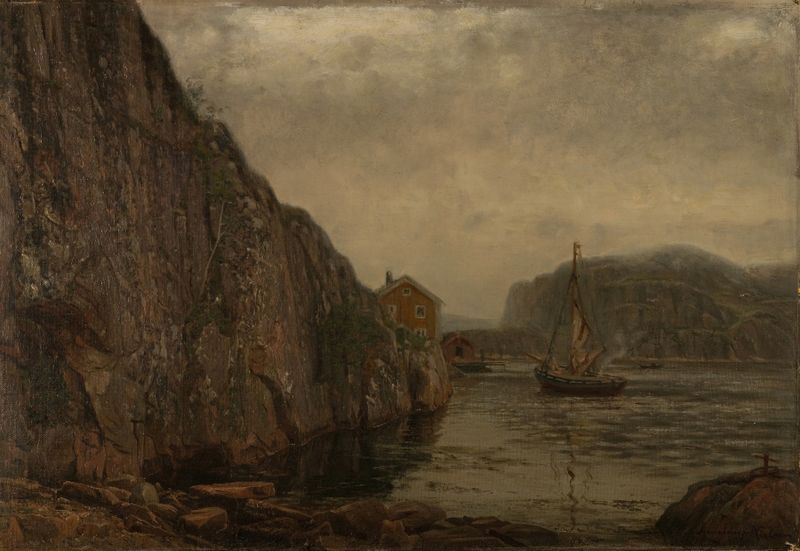
Skjærgård, Ny-Hellesund
Amaldus Nielsen
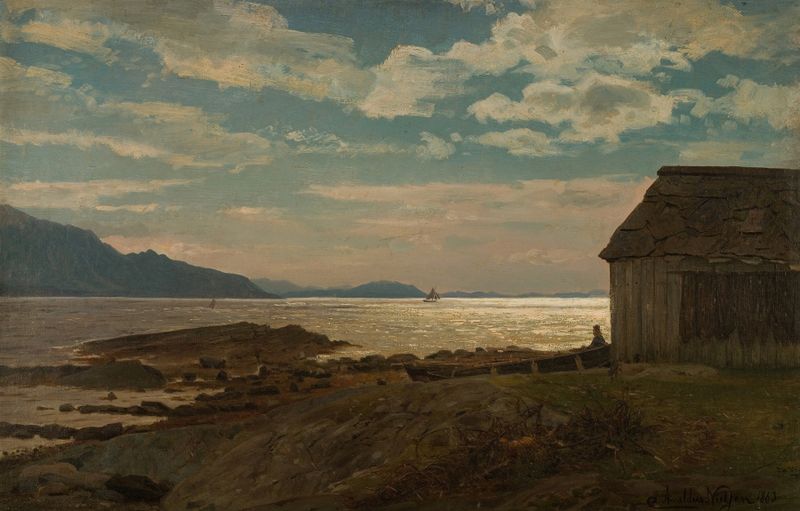
Fra Ølvestranden, Hardanger
Amaldus Nielsen
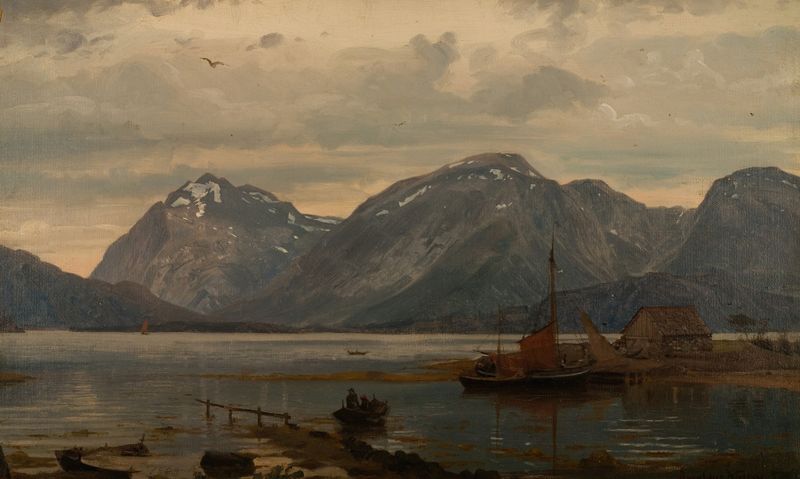
Fra Englafjellene, Hardanger
Amaldus Nielsen
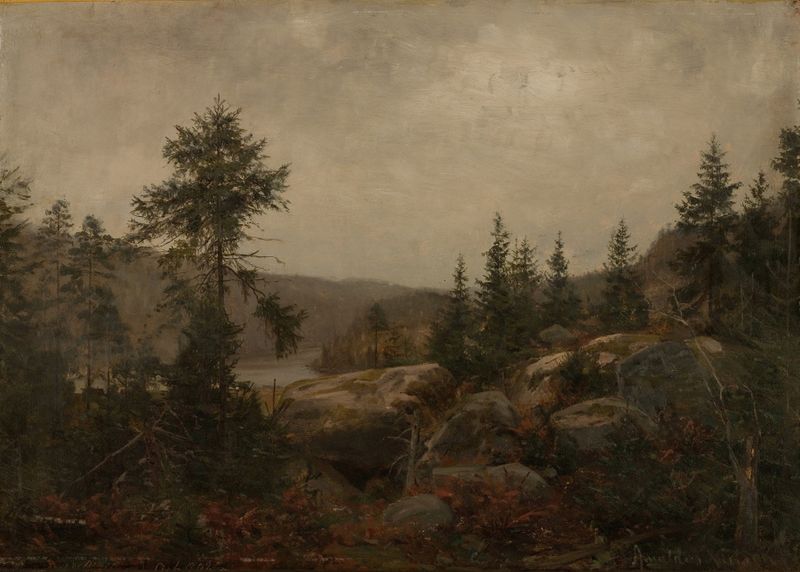
Duskregn . Gården Foss, Mandalselven
Amaldus Nielsen
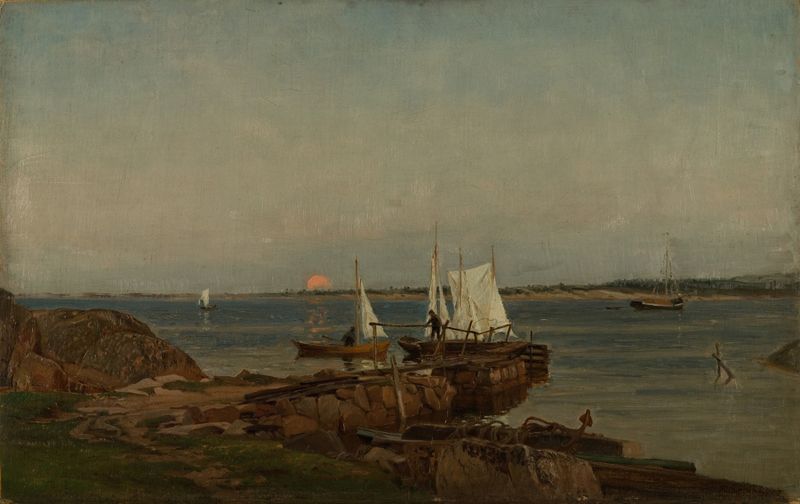
Sommernatt, Hvaler
Amaldus Nielsen
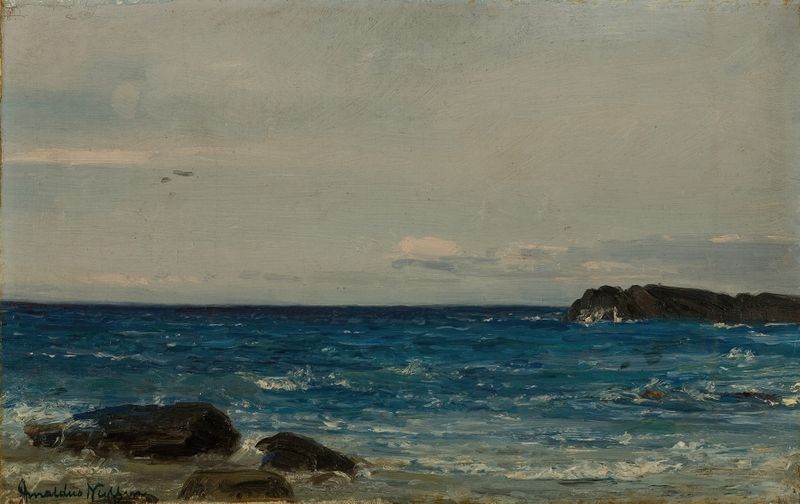
Fra Jæren
Amaldus Nielsen
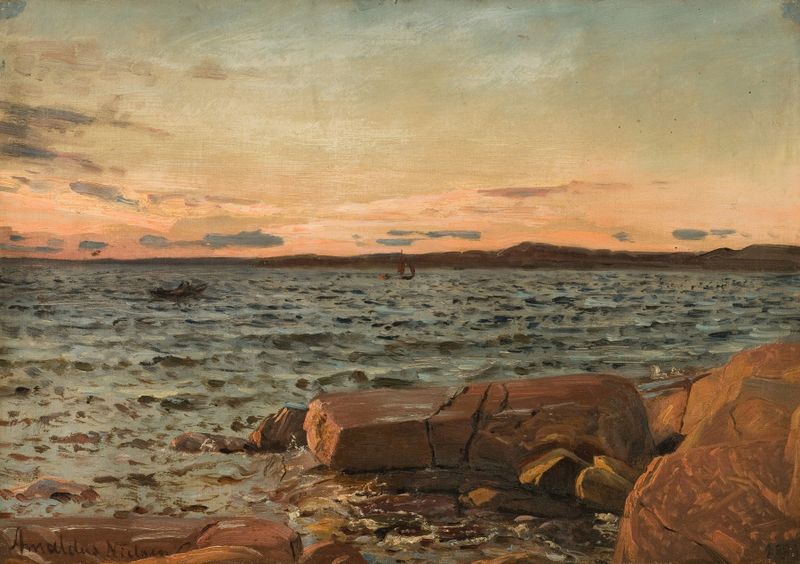
Solgangsvind, Hvaløene
Amaldus Nielsen
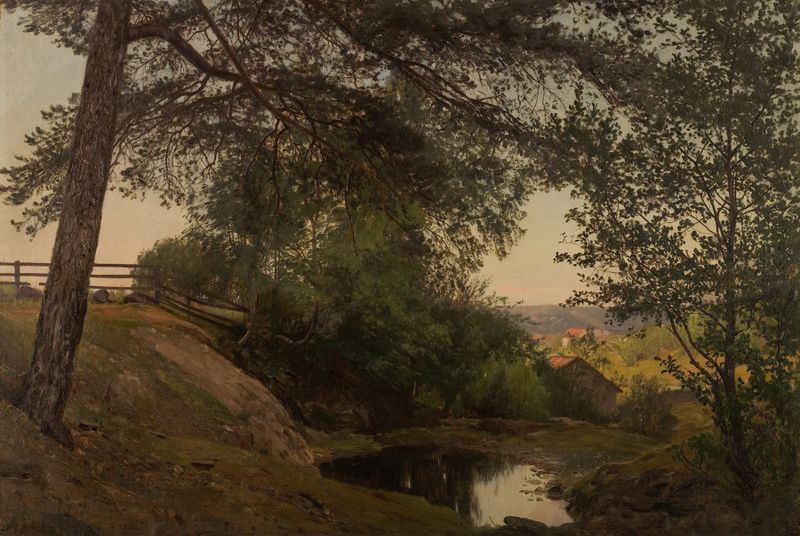
Mellom trærne. Lervik, Stord
Amaldus Nielsen

Båtbyggeri, Lillesand
Amaldus Nielsen
Regnstemning, Gudvangen
Amaldus Nielsen





