Sunlit Birch Forest — History & Facts
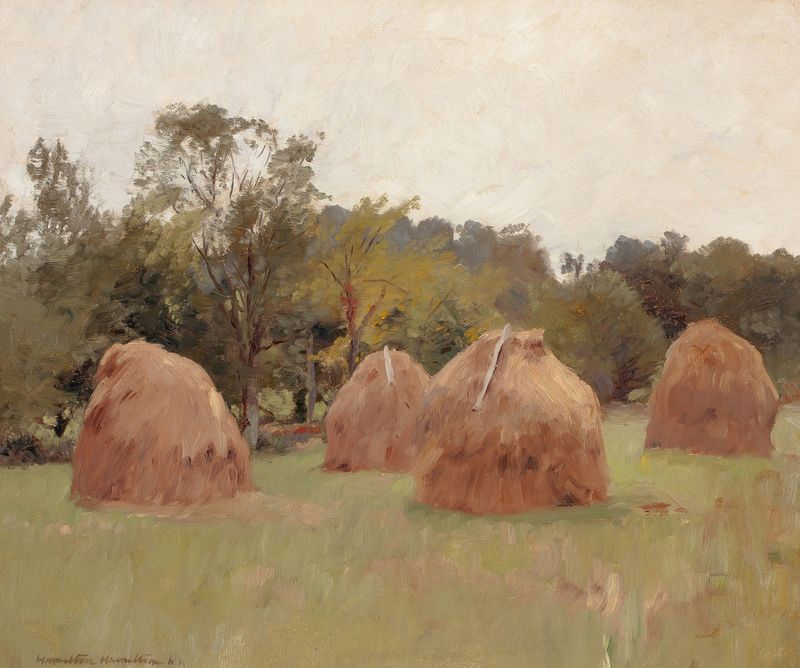
When did color learn to lie? The delicate hues of a forest can mask the fragility of life that thrives within its embrace. Look to the left, where rays of sunlight filter through the canopy, illuminating a cascade of golden leaves that dance with the gentle breeze. Notice how the artist employs a soft palette, blending greens and yellows to create a sense of warmth and calm. The birch trees stand tall, their stark white trunks contrasting against the vibrant foliage, inviting the eye to travel deeper into this serene woodland realm. Yet, there is an underlying tension woven through this tranquil scene.
The vibrancy of the colors evokes joy, but the subtle shadows lurking beneath the leaves hint at the inevitability of change and decay. Each brushstroke captures the transient beauty of the moment, reminding viewers of nature's fragility and the fleetingness of life. The interplay between light and shadow speaks to the duality of existence — joyous yet sorrowful, vibrant yet ephemeral. Hamilton Hamilton painted this piece during a period marked by a growing interest in impressionistic techniques, skillfully merging realism with abstraction.
As he worked on Sunlit Birch Forest, it was a time of artistic experimentation and a shift towards capturing the essence of landscapes rather than their exact representations. This work reflects his desire to convey the beauty of nature while also hinting at its inherent vulnerability, a theme that resonated deeply within the artistic movements of his era.