
‘Sunny Day’, a Windmill on a Waterway — History & Facts
In Sunny Day, a Windmill on a Waterway, emptiness transforms into a vivid landscape, inviting contemplation and reflection. Look to the left where the windmill stands tall against a backdrop of soft, billowing clouds. The artist's deft brushwork captures the gentle sway of the blades, while the shimmering water reflects dappled light from above. Notice how the warm hues of golden sunlight contrast with the cooler tones of the sky, creating a harmonious balance that draws your eye across the canvas.
Each stroke seems deliberate, an invitation to explore the serene interplay between nature and man. Beneath the tranquility lies a tension between solitude and presence. The windmill, a symbol of industriousness, stands seemingly abandoned, evoking feelings of isolation amid a vibrant world. The expansive waterway stretches toward the horizon, suggesting a boundless emptiness, yet it is alive with the whispers of nature.
This duality illustrates the delicate balance of existence: the beauty of the moment intertwined with the lurking melancholy of absence. During the years around 1860 to 1903, the artist was immersed in the Dutch landscape painting movement, which celebrated the natural beauty of his homeland. Working predominantly in the Netherlands, he captured scenes that spoke to the essence of rural life and its connection to the environment. This period saw a growing appreciation for the Impressionist style, influencing his use of light and color, and reflecting a shifting artistic landscape focused on emotional truth within the simplicity of everyday scenes.
More Artworks by Paul Joseph Constantin Gabriël
Browse all →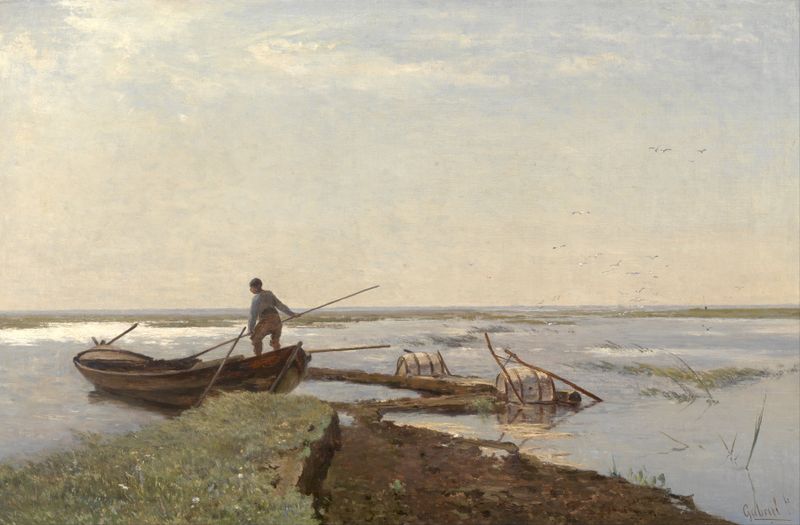
Polder Landscape (in the Kamperpolder)
Paul Joseph Constantin Gabriël

Polderlandschap met molens
Paul Joseph Constantin Gabriël
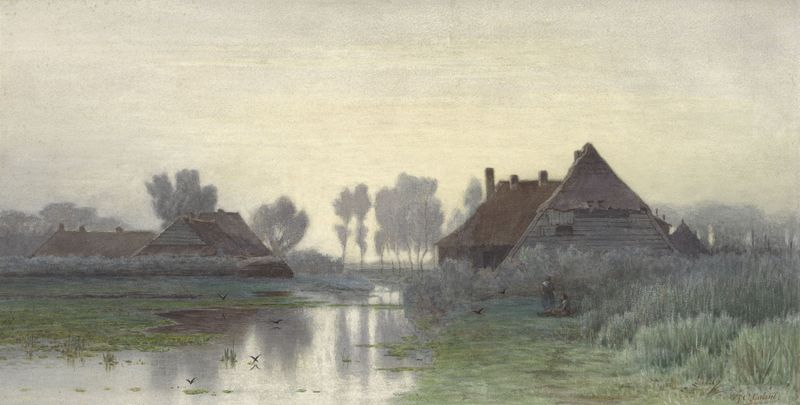
Boerenwoningen aan het water bij ochtendnevel
Paul Joseph Constantin Gabriël

Polder landscape
Paul Joseph Constantin Gabriël

Dutch Landscape
Paul Joseph Constantin Gabriël
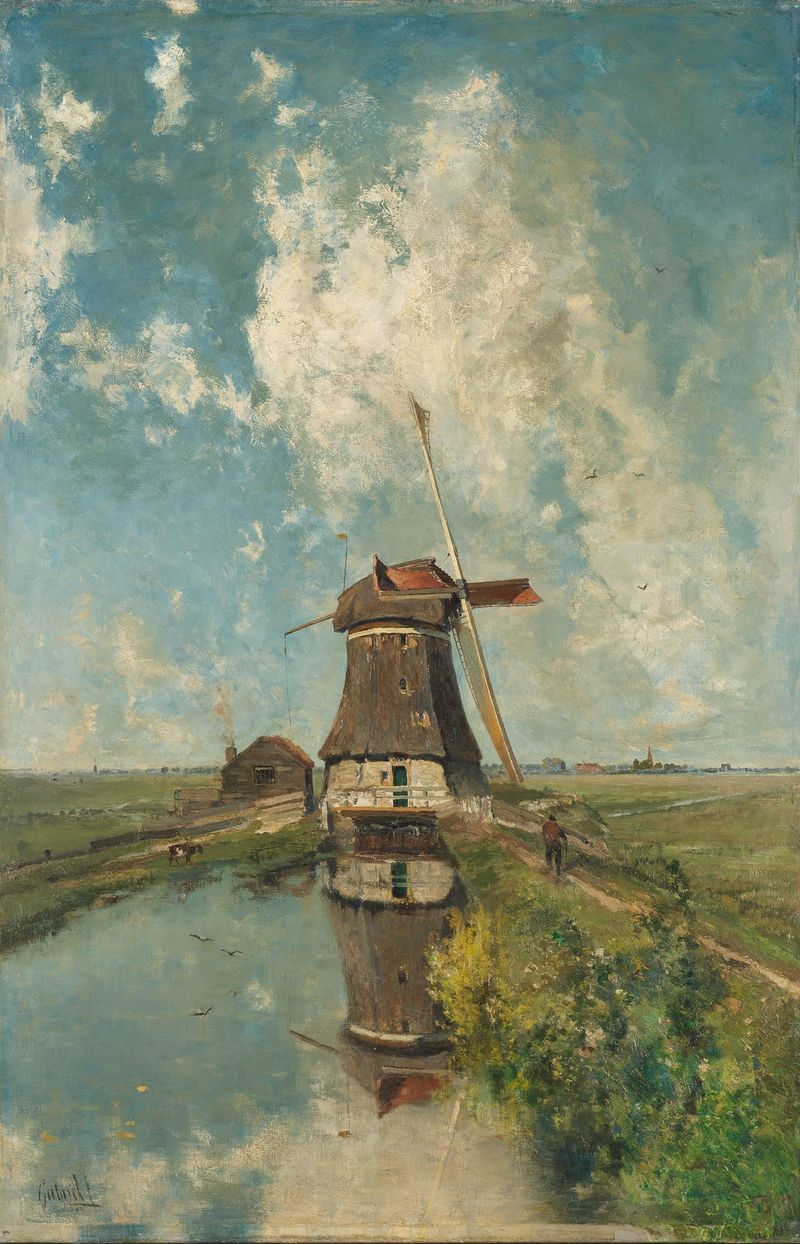
A Windmill on a Polder Waterway, Known as ‘In the Month of July’
Paul Joseph Constantin Gabriël

Landscape near Kortenhoef
Paul Joseph Constantin Gabriël

Landscape near Abcoude
Paul Joseph Constantin Gabriël
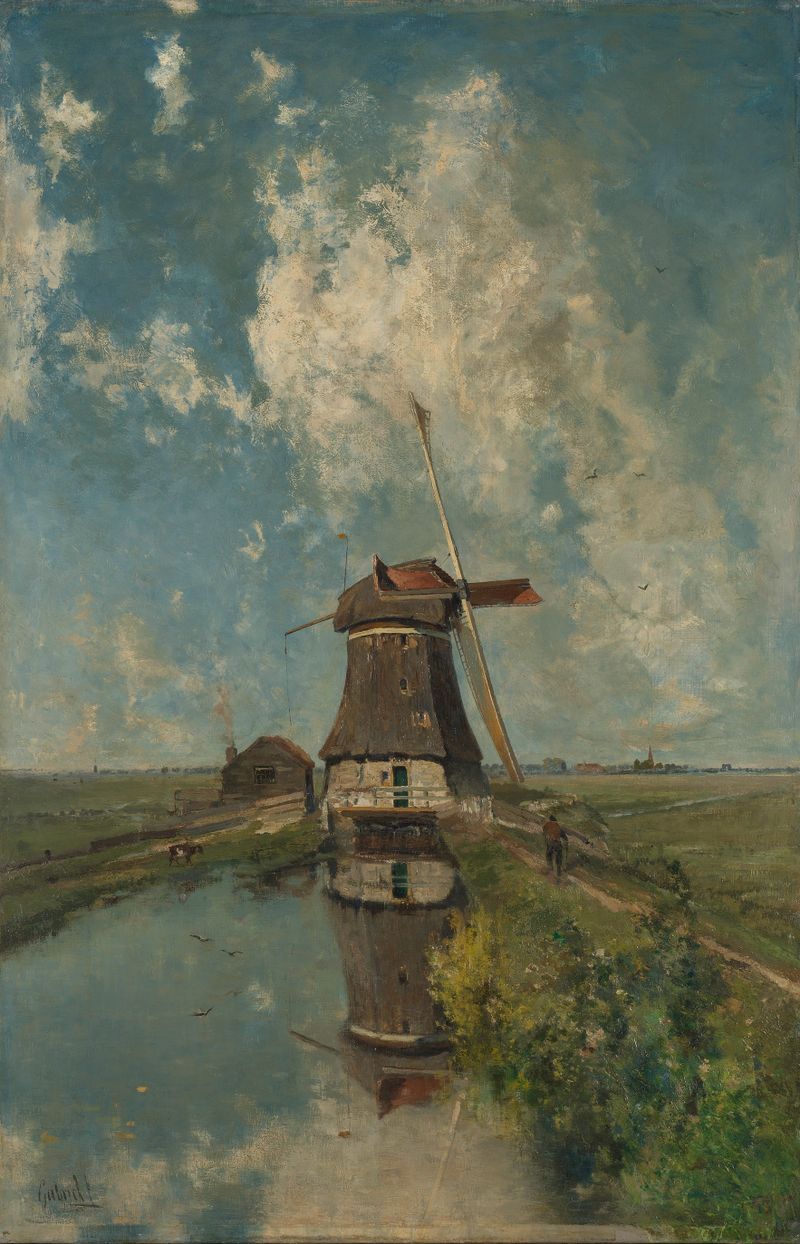
A Windmill on a Polder Waterway, Known as ‘In the Month of July’
Paul Joseph Constantin Gabriël

Windmill on a Pond
Paul Joseph Constantin Gabriël





