
Sunny Day on a Norwegian Fjord — History & Facts
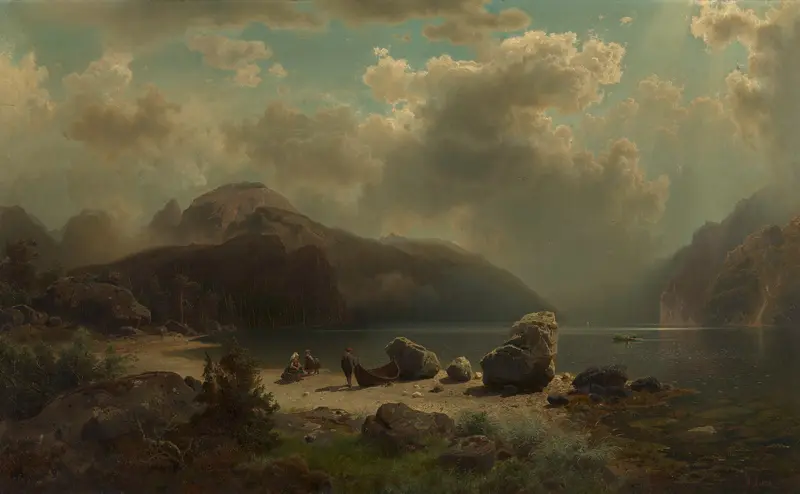
A single shaft of sunlight breaks through the drifting clouds, catching the tips of snow and the ripple of a fjord so still it seems to hold its breath. The eye is drawn first to the glassy water, then to the figures gathered by a weathered boat—one standing, two seated, their gestures caught in a moment of quiet conversation or rest. The painter sets the human scale against the vastness of Norway’s mountains, letting the grandeur of the landscape dwarf the everyday.
Far across the water, a second boat glides, its passengers mere flecks against the towering cliffs and distant glacier. Every rock and blade of grass is rendered with a care that makes the viewer lean in, searching for the story behind this pause on the shore. Works like this, painted in 1861 by August Wilhelm Leu, belong to a moment when northern Europe’s wild places became the subject of awe and curiosity for collectors and travelers alike. The Romantic landscape tradition, flourishing in the nineteenth century, made the fjord not just a backdrop but a protagonist—an emblem of nature’s scale and mystery.
Artists like Leu, trained in the academic precision of Düsseldorf, brought back scenes that mingled local life with the drama of geology and weather, often for an urban audience hungry for visions of the untamed north. This painting’s journey is only partly known: it surfaced at Dorotheum in Vienna in 2011, a reminder that history has kept few traces of its earlier path. The real invitation, though, is to follow the light across the water, and imagine the world beyond the frame.
More Artworks by August Wilhelm Leu

Motif from Grundlsee with Backenstein
August Wilhelm Leu
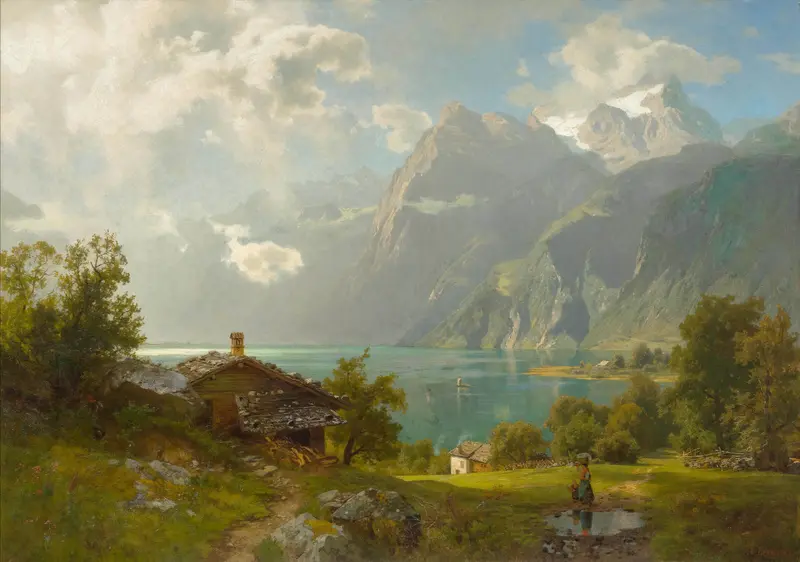
View at the Lake of Lucerne with washerwoman and child
August Wilhelm Leu
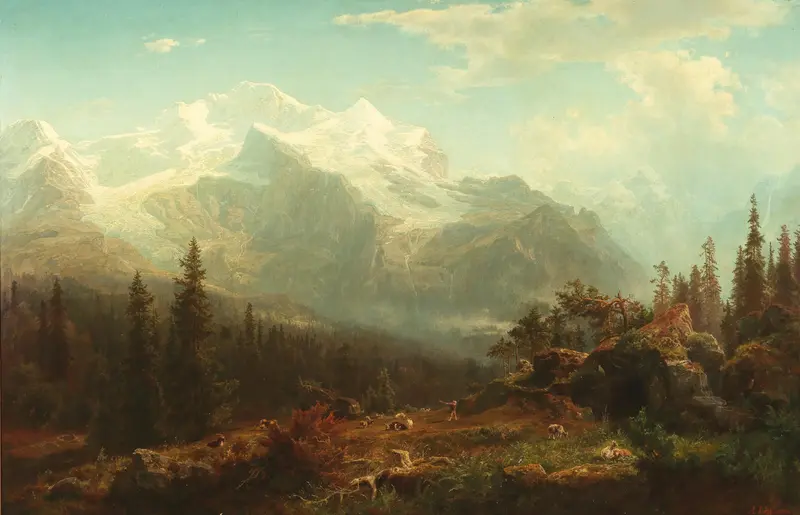
A Scene in the Bern Alps
August Wilhelm Leu
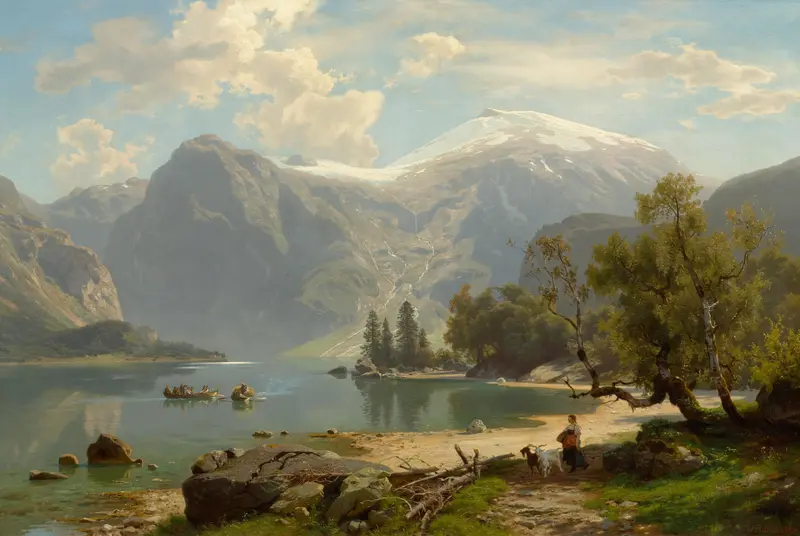
At the Hintersee in Bavaria
August Wilhelm Leu
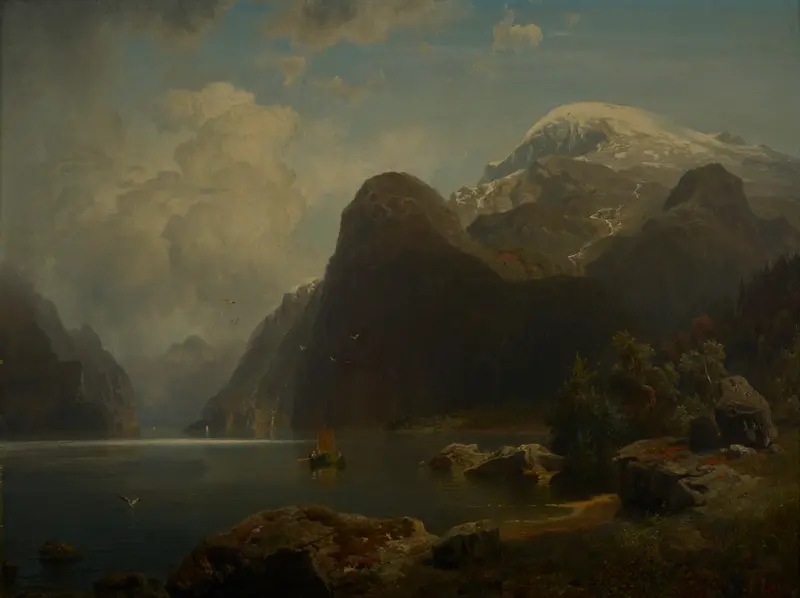
Bergachtig landschap in Noorwegen DM 873 241 Dordrechts Museum
August Wilhelm Leu
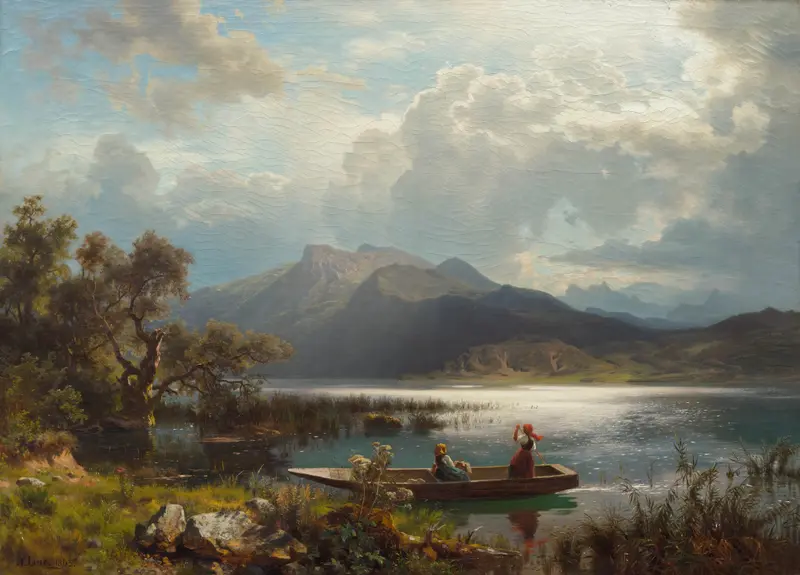
Shimmering mountain lake with girls in a boat
August Wilhelm Leu
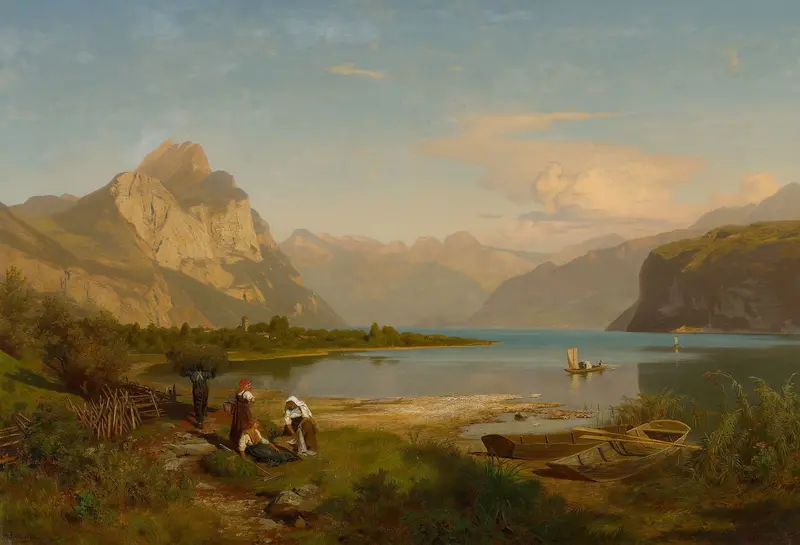
Walensee. View from Weesen towards Sargans
August Wilhelm Leu
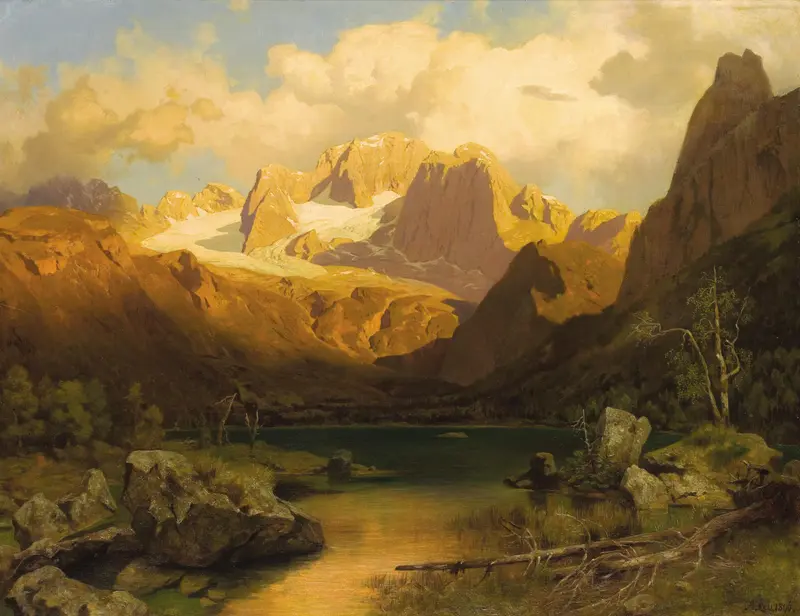
View of an Alpine Mountain Top
August Wilhelm Leu
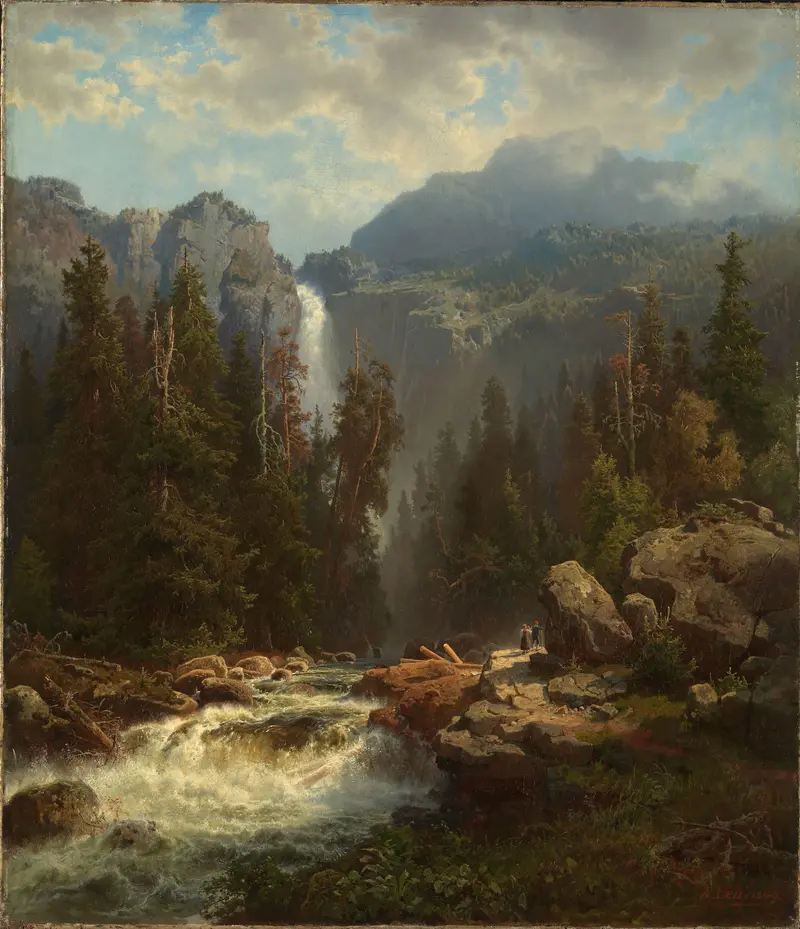
Norwegian Landscape with a Waterfall
August Wilhelm Leu
Norwegian Fjord
August Wilhelm Leu
More Landscape Art

The Starry Night
Vincent van Gogh

View of Delft
Johannes Vermeer

Water Lilies
Claude Monet

The Grand Canal, Venice, looking north-west from the Ca' Corner to the Ca' Contarini degli Scrigni, with the campanile of Santa Maria della Carità
Canaletto

Windsor Castle
Canaletto

The Grand Canal looking North-East from the Palazzo Dolfin-Manin to the Rialto Bridge
Canaletto