
Sunset, Shinnecock Bay — History & Facts
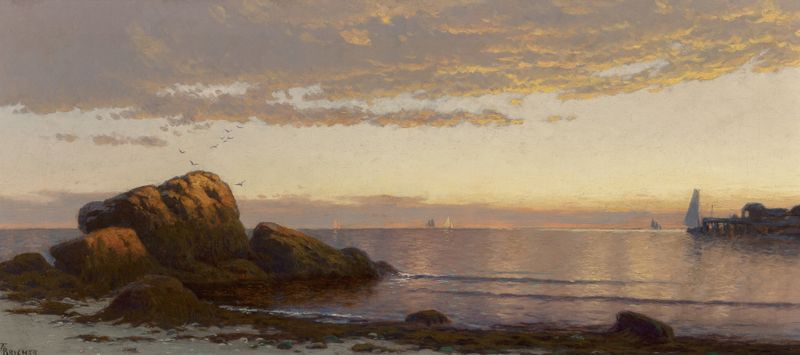
When did color learn to lie? In the vast embrace of twilight, hues mingle and dance, telling tales of truth and illusion as day surrenders to night. The notion of color, often seen as a simple tool for representation, becomes a complex actor in our emotional landscape. Focus on the warm gradient on the horizon, where golden yellows bleed into dusky purples, evoking a sense of longing and tranquility. Notice how the light reflects upon the gentle ripples of Shinnecock Bay, shimmering like scattered jewels across the water's surface.
The soft brushwork creates an ethereal atmosphere, drawing the viewer’s gaze to where the sky kisses the sea, establishing a harmonious connection that captures both beauty and fleeting time. Yet, beneath the serene surface lies a tension that speaks to the transience of nature. The fading light suggests an impending silence, a moment before darkness envelops the scene. The interplay between light and shadow raises questions about permanence and ephemerality, illustrating not only the beauty of a sunset but also the inevitable passage of time.
Each color, saturated and vibrant, holds the weight of loss as the day dissolves into night. Painted between 1861 and 1897, this work reflects Alfred Thompson Bricher’s deepening engagement with the American landscape movement. During this time, the artist was navigating personal challenges while exploring themes of light and atmospheric effects, mirroring broader shifts in the art world towards impressionism. His commitment to capturing the sublime effects of nature solidified his reputation as a leading landscape painter.
More Artworks by Alfred Thompson Bricher
Browse all →
New England Coast
Alfred Thompson Bricher
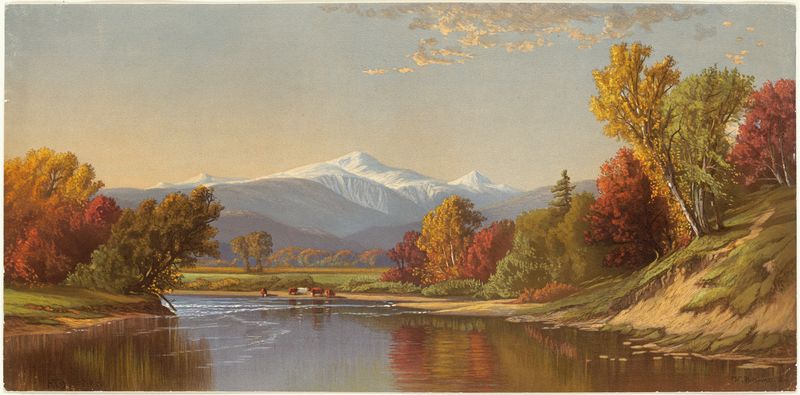
Late Autumn in the White Mountains
Alfred Thompson Bricher
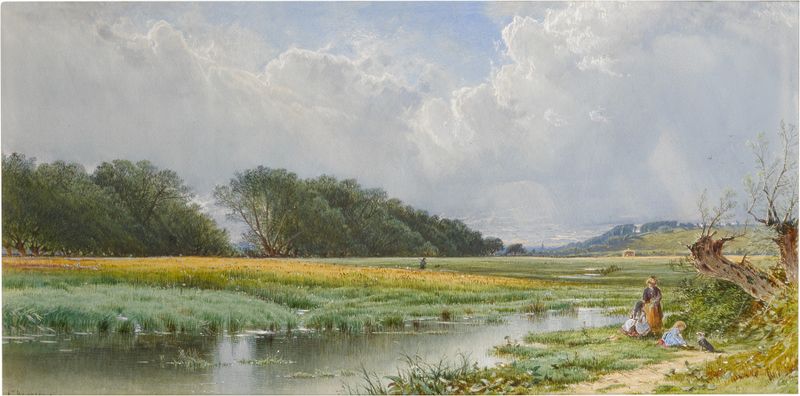
On the Meadows of Old Newburyport
Alfred Thompson Bricher

Along the Maine Coast
Alfred Thompson Bricher
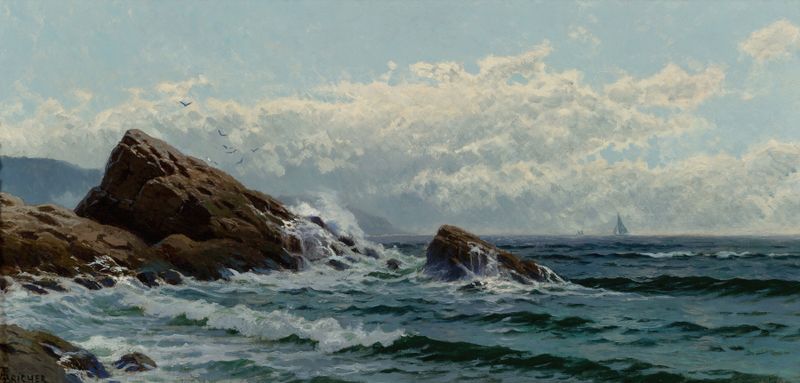
Crashing Waves
Alfred Thompson Bricher

At Water’s Edge
Alfred Thompson Bricher
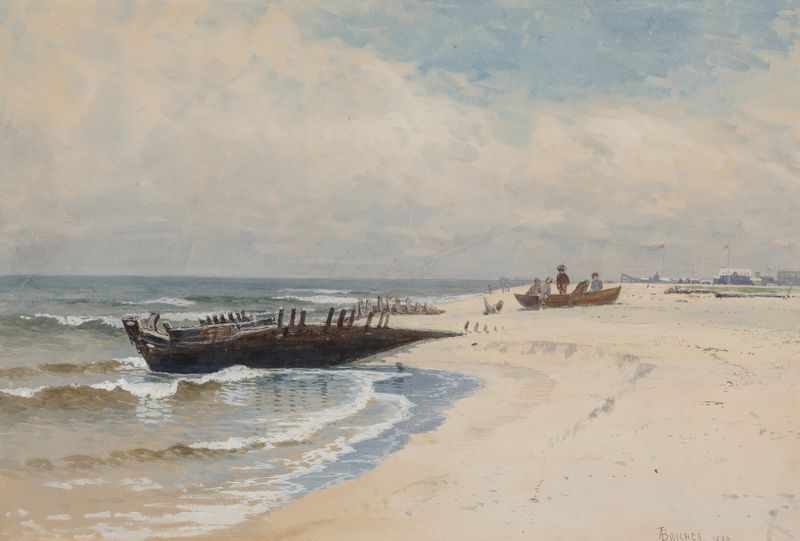
Low Tide
Alfred Thompson Bricher
Sunset on the Coast
Alfred Thompson Bricher

Castle Rock, Nahant, Massachusetts
Alfred Thompson Bricher

On the Meadows of Old Newburyport
Alfred Thompson Bricher





