
Taj-Mahal, Agra — History & Facts
Where does light end, and longing begin? In the soft glow surrounding the ethereal silhouette of the Taj Mahal, a haunting beauty emerges, steeped in both history and sorrow. Focus on the way the artist has captured the fading light as it dances across the marble surface of the monument, casting a delicate sheen that feels almost otherworldly. Look to the foreground, where the lush garden path invites you into the scene, a contrast to the solemn grandeur behind it. Notice the subtle gradations of color, from the warm golds of sunset to the cool blues of twilight, each brushstroke echoing a bittersweet harmony that reflects the passage of time. Delve deeper into the contrasts present in the painting; the juxtaposition of the vibrant garden against the silent, majestic structure conveys an emotional tension between life and loss.
The stillness of the Taj seems to hold stories untold, while the verdant surroundings vibrate with vitality. This duality evokes a profound sense of melancholy, drawing the viewer into a contemplation of love and remembrance, the monument serving as a testament to an enduring bond. In 1916, Bartlett painted this work during a period of artistic exploration, experimenting with color and light in ways that were innovative for his time. Residing in Japan, he sought to bridge Western and Eastern art traditions, reflecting a world grappling with change amidst the turmoil of global conflict.
This piece stands as a reflection of his personal journey, imbued with a sense of longing that resonates through time and space.
More Artworks by Charles William Bartlett
Browse all →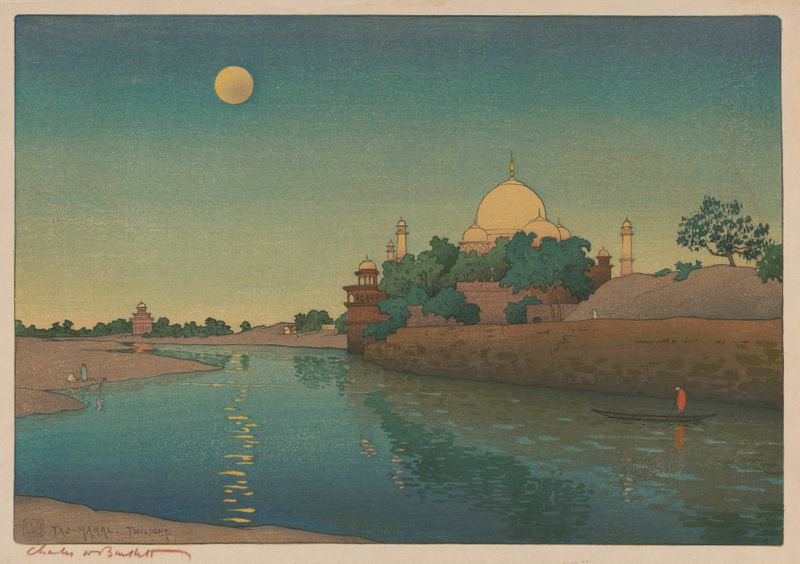
More Architecture Art
Browse all →
The statue of Liberty
Frédéric Auguste Bartholdi

View of Houses in Delft, Known as ‘The Little Street’
Johannes Vermeer

View of Houses in Delft, Known as ‘The Little Street’
Johannes Vermeer

The Cathedral in Rouen. The portal, Grey Weather
Claude Monet

The yellow house
Vincent van Gogh

The Church in Auvers-sur-Oise, View from the Chevet
Vincent van Gogh