
Taj-Mahal, twilight — History & Facts
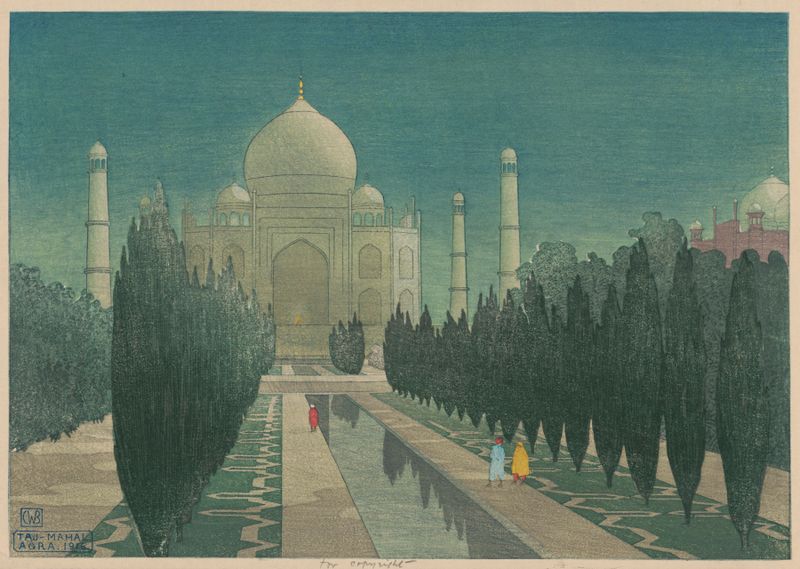
What if silence could speak through light? In the stillness of twilight, reflections dance upon the water, revealing the profound beauty of a moment suspended in time. Look to the right at the soft ripples that echo the monumental silhouette of the Taj Mahal. The structure looms gracefully against a gradient of deep blues and purples, the last remnants of daylight fading. Notice how the golden glow emanates from the dome, illuminating the intricate details of the marble façade, inviting viewers to explore the architectural beauty.
The harmonious composition, framed by delicate wisps of clouds, creates a serene balance between the grandeur of the monument and the tranquil water below. As you delve deeper, consider the way the reflection doubles the majesty of the Taj Mahal, creating a dialogue between the physical and the ethereal. The juxtaposition of the darkening sky and the radiant temple conjures a sense of longing and introspection. The stillness of the scene evokes a meditative quality, allowing emotions to surface, hinting at the stories of love and loss that resonate within the walls of this iconic structure. In 1920, Charles William Bartlett painted this piece amidst a world recovering from the aftermath of the First World War.
Living in Japan at the time, he immersed himself in Eastern aesthetics while embracing Western techniques. His work reflects the transition between two worlds and the universal themes of beauty and reflection, which resonated deeply with audiences seeking solace and inspiration in the face of global uncertainty.
More Artworks by Charles William Bartlett
Browse all →
More Architecture Art
Browse all →
The statue of Liberty
Frédéric Auguste Bartholdi

View of Houses in Delft, Known as ‘The Little Street’
Johannes Vermeer

View of Houses in Delft, Known as ‘The Little Street’
Johannes Vermeer

The Cathedral in Rouen. The portal, Grey Weather
Claude Monet

The yellow house
Vincent van Gogh

The Church in Auvers-sur-Oise, View from the Chevet
Vincent van Gogh