Tänzerin und Liegende after Auguste Dominique Ingres — History & Facts
There is a pulse of movement caught mid-breath in this sketch from August Macke, where a dancer arches her arms overhead, her body curving in a gesture that is both performance and private ritual. The figure’s pose, echoed on both pages of the open sketchbook, draws the eye upward, tracing the arc of her limbs as if following the sweep of music. Nearby, a reclining woman lounges with an air of unstudied ease, her own arm bent behind her head in a mirrored, more languid echo.
The charcoal lines are swift and searching, capturing not just anatomy but the sensation of bodies at rest and in motion, the dancer’s energy balanced by the quiet repose of her companion. Created in 1913, this drawing belongs to a world where artists like Macke were searching for new ways to express the rhythms of modern life, often turning to the sketchbook as a laboratory for ideas. The inscription “nach Ingres” signals a dialogue with the past—specifically with the classical grace of Auguste Dominique Ingres—but the loose, expressive line belongs to the charged atmosphere of early twentieth-century Germany. Works like this, preserved in sketchbooks such as the one held in the Wuselig collection, remind us that much of art’s history is written in these fleeting studies, where the boundaries between homage, experiment, and invention blur.
Let your gaze linger on the dancer’s uplifted arms and the reclining figure’s dreamy gaze—the energy of their moment remains, undimmed by time.
More Artworks by August Macke
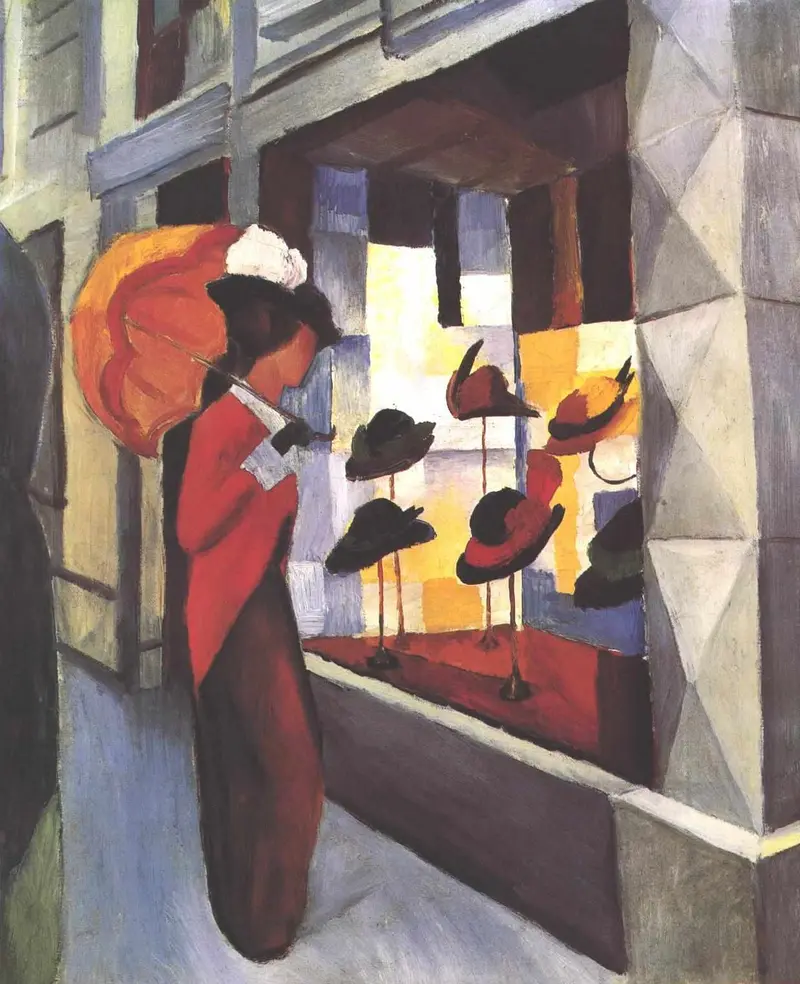
Woman with a Parasol in Front of a Hat Shop
August Macke

Street with Church in Kandern
August Macke
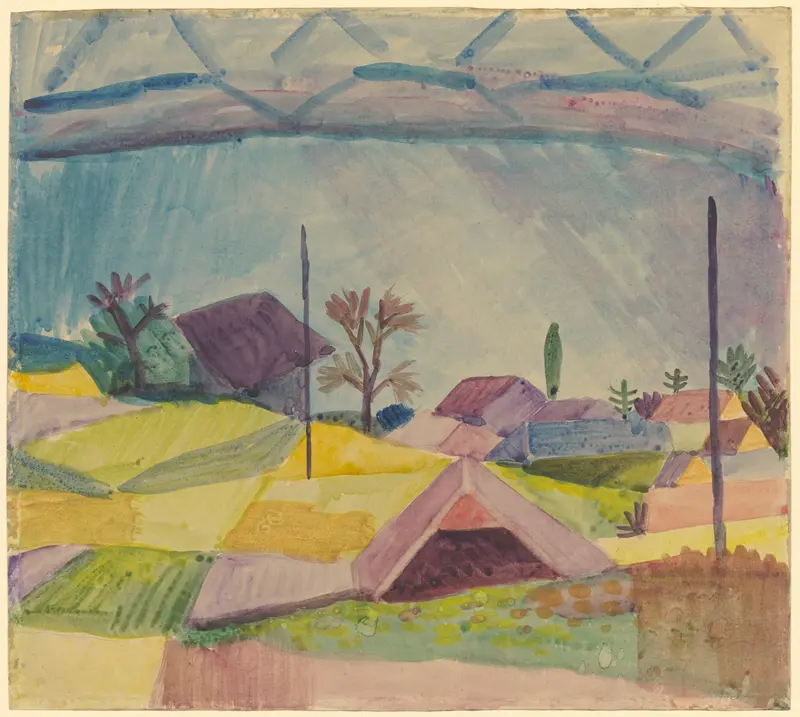
View of Hilterfingen
August Macke

Paar im Nachen
August Macke
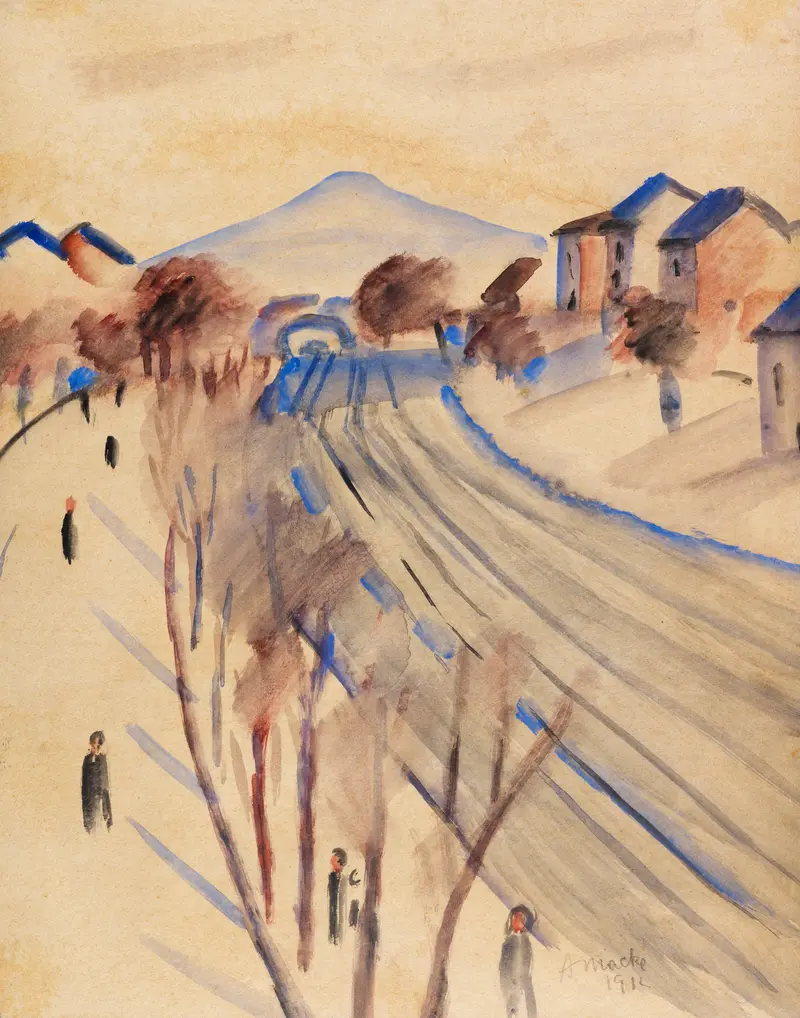
Ölberg mit Bahngleisen II
August Macke
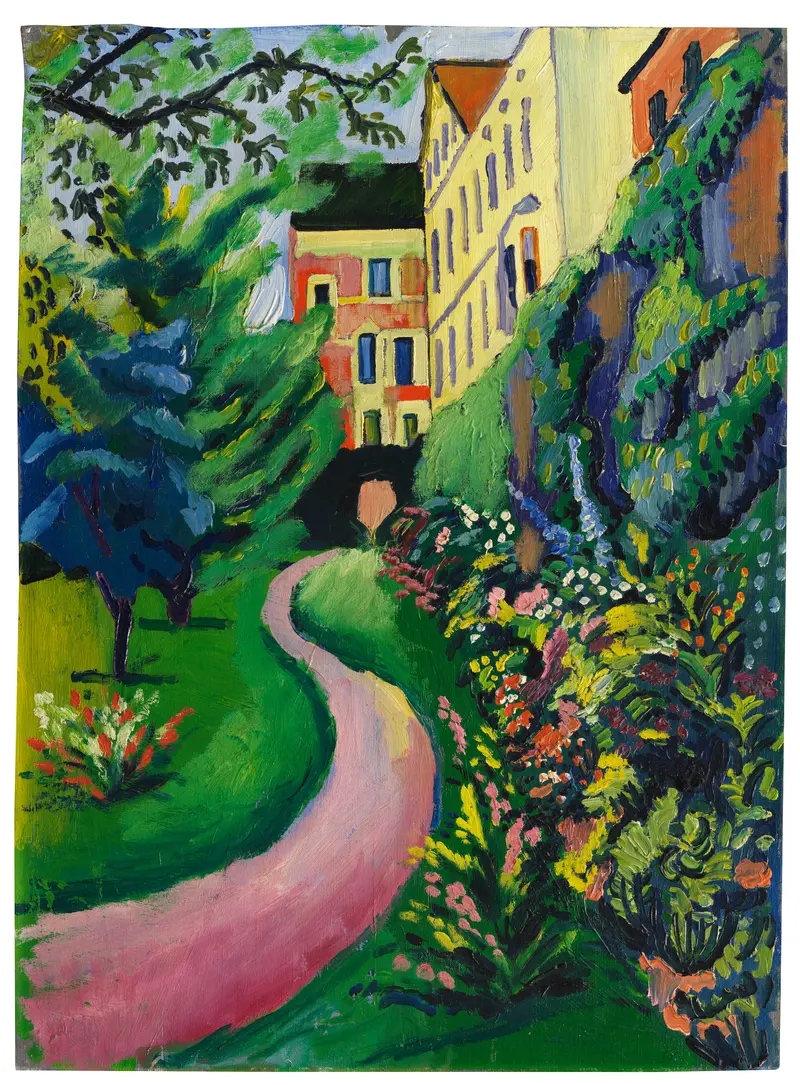
Unser Garten mit blühenden Rabatten
August Macke
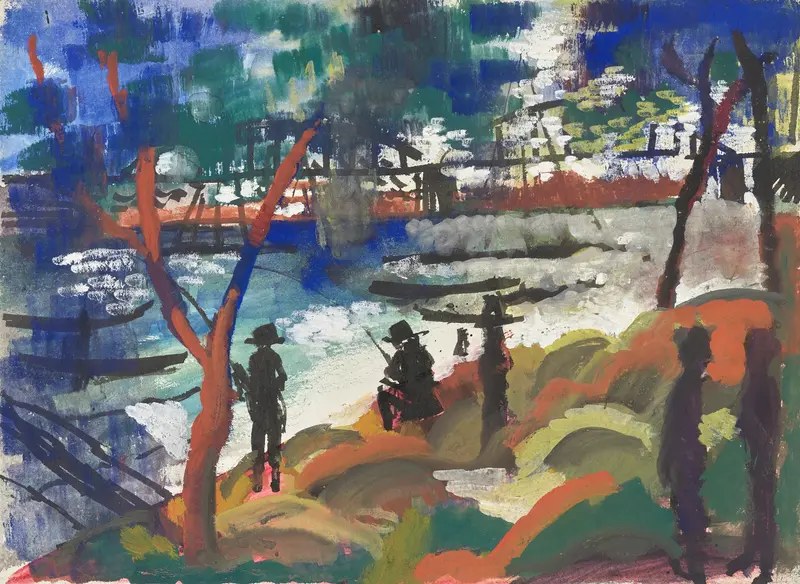
Angler am Fluss
August Macke
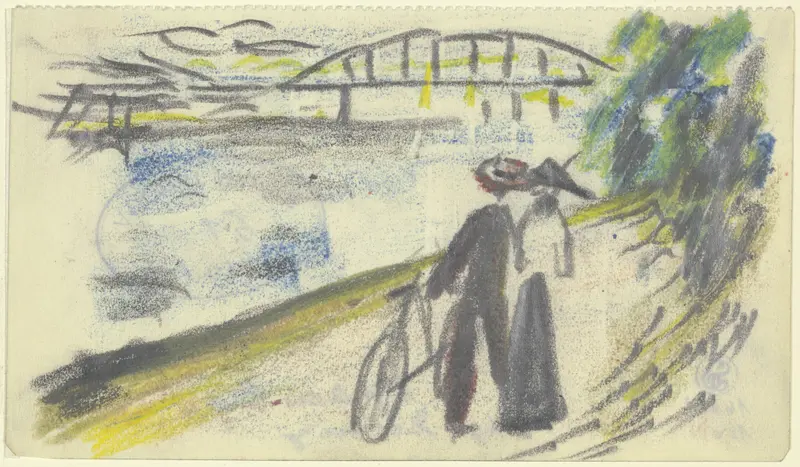
Path at the Rhine
August Macke
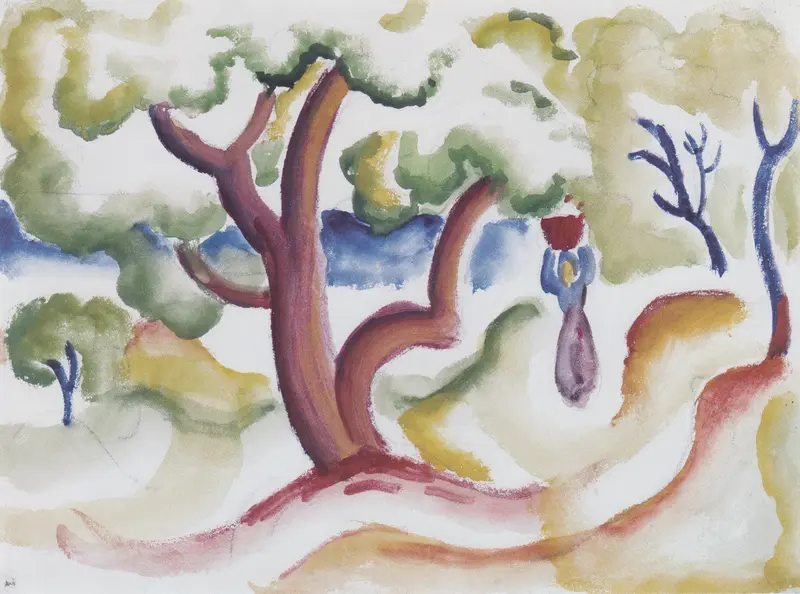
Frau mit Krug unter Bäumen
August Macke
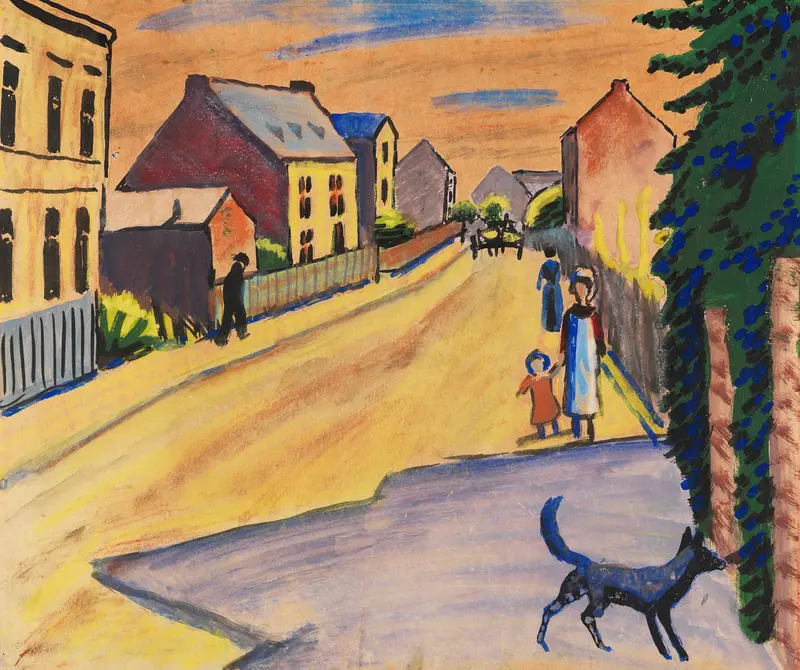
Sonnige Straße mit Hund
August Macke