Tarbert, Loch Fyne — History & Facts
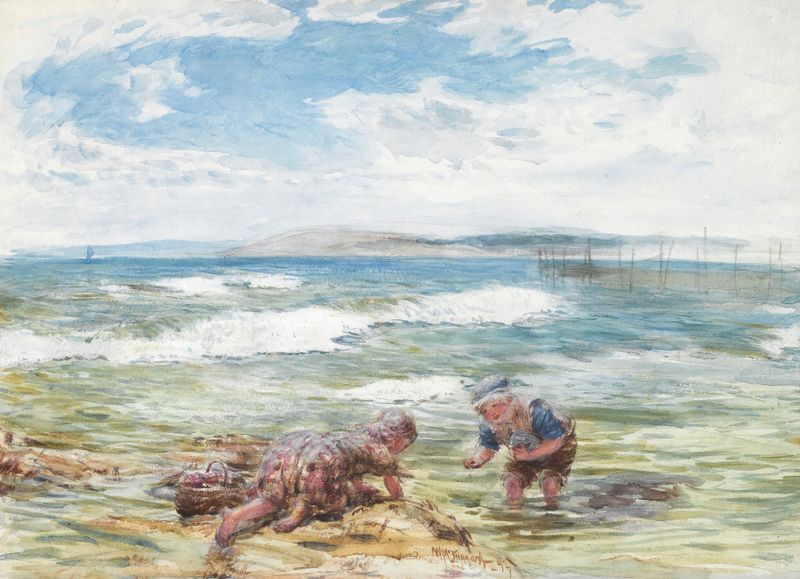
In an age where the ephemeral reigns, the pursuit of balance becomes a silent rebellion against the relentless tide of change. Look to the swirling waters of Loch Fyne, where the artist captures a moment of tranquility amidst the vibrant chaos of nature. The soft blues and greens beckon the viewer’s gaze, inviting them to explore the seamless interplay between land and sea. Notice the delicate brushwork that delineates the rippling surface of the water, reflecting glimmers of sunlight, which dance playfully at the edges of the canvas, suggesting both stillness and movement. The painting conveys an emotional tension between calmness and the impending storm, a metaphor for life's uncertainties.
The distant hills, cloaked in mist, stand as solemn sentinels, watching over the scene while embodying the weight of time and memory. Each stroke evokes a sense of nostalgia, hinting at the past's influence over the present, while the luminous foreground invites viewers to find solace in the balance between nature’s beauty and its transitory essence. William McTaggart created this work in the latter part of the 19th century, a period marked by a fascination with the Scottish landscape and its dramatic coastal scenes. Living in Scotland, he was deeply influenced by the Romantic movement, which sought to capture the sublime in nature.
The world of art was evolving, and through his brush, McTaggart immortalized fleeting moments, offering viewers not just a scene but a profound reflection on existence itself.