Fishing From The Rocks, Port Seton — History & Facts
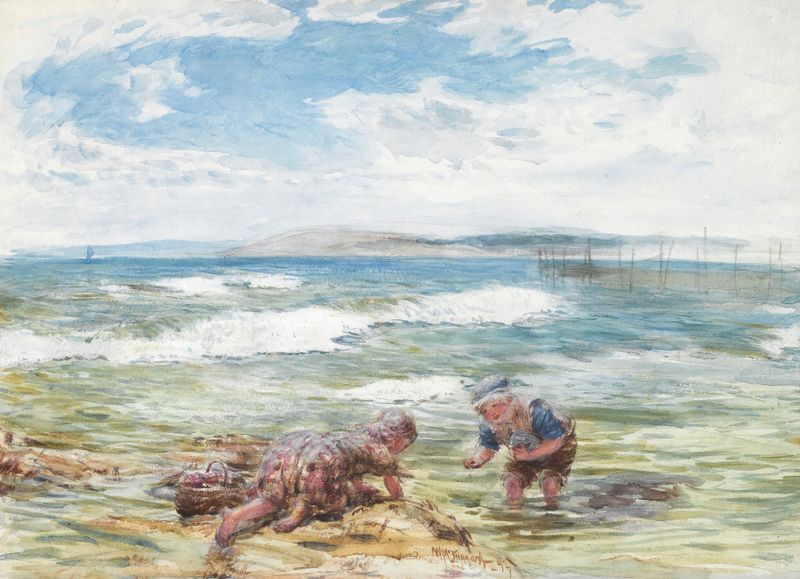
In this stillness, the essence of divinity reveals itself through muted brinks of color and the harmony of human existence. Look to the left, where a lone fisherman stands resolute against the rugged coastline, the waves crashing against the rocks below. Notice how the artist skillfully employs a palette of blues and grays to evoke the churning sea, while soft hints of golden sunlight kiss the horizon, illuminating the scene with ethereal warmth. The composition balances the weight of the fisherman’s solitary figure with the vastness of nature, creating a dialogue between man and the elements that is both intimate and grand. As your eyes wander over the canvas, consider the tension held in the fisherman’s pose — a blend of patience and anticipation.
The distant horizon seems to promise abundance, yet the wildness of the sea suggests danger and uncertainty. This duality reflects not only the struggle for sustenance but also the divine beauty found in the dance of risk and reward, portraying the human spirit’s unwavering search for connection with nature and the divine. William McTaggart created this remarkable piece in the late 19th century, a time when Scotland was deeply engaged in the exploration of realism and impressionism. Working from his studio in Glasgow, he sought to capture the raw beauty of the Scottish landscape, reflecting both his personal experiences and the broader artistic movements of the time.
In Fishing From The Rocks, Port Seton, McTaggart’s brush dances between realism and abstraction, inviting viewers to contemplate their place within the greater tapestry of life.