The Uncertain Glory Of An April Day — History & Facts
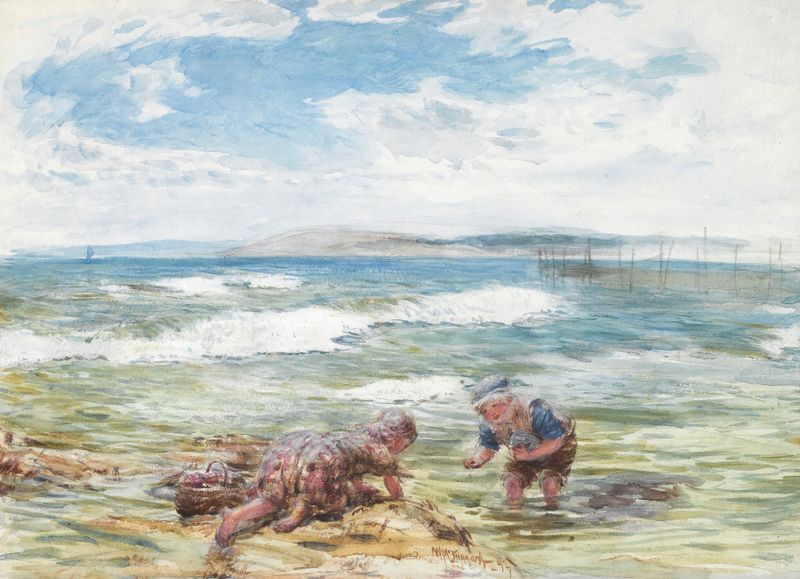
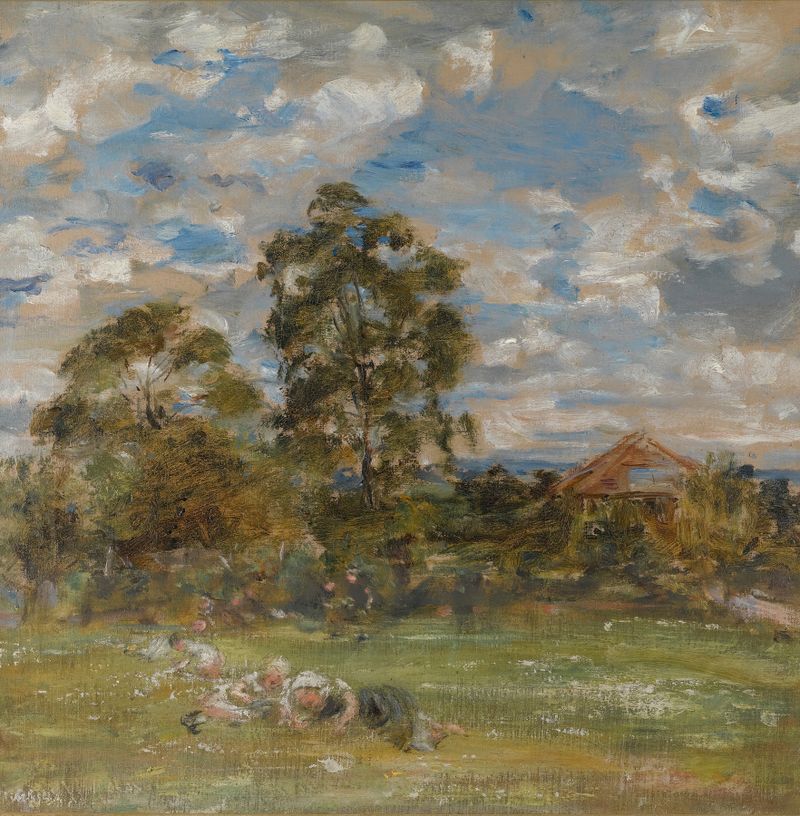
Where does light end, and longing begin? The interplay of dusk's soft glow and the encroaching shadows beckons a sense of introspection and the weight of solitude in The Uncertain Glory Of An April Day. Look to the center of the canvas, where a lone figure stands at the shoreline, gazing out over an expansive sea that reflects the spectrum of the twilight sky. The rich blues and purples meld seamlessly into hints of warm orange and pink, creating a palpable tension between day’s end and the promise of night. Notice how the light dances on the water’s surface, illuminating the figure’s silhouette while casting a veil of mystery over the distant horizon.
This composition draws the viewer's eye inward, where the calmness of the scene belies an underlying emotional turmoil. The contrasts within the painting reveal a deeper story of yearning and emptiness. The solitary figure suggests a profound isolation, surrounded by the vastness of nature yet seemingly detached from it. The soft brush strokes evoke a sense of fleeting beauty, as if capturing a moment that is both ephemeral and eternal.
This duality speaks to the human condition, hinting at the struggle to find meaning in the face of uncertainty — the tension between the allure of hope and the weight of desolation. William McTaggart painted this work in 1897 during a period of personal reflection and artistic maturation in Scotland. At this time, he was known for his evocative landscapes that captured the fleeting qualities of light and atmosphere. The late 19th century was also marked by a growing interest in Impressionism, which influenced his approach, allowing him to explore the emotional resonance of the natural world.