Tatranská krajina — History & Facts
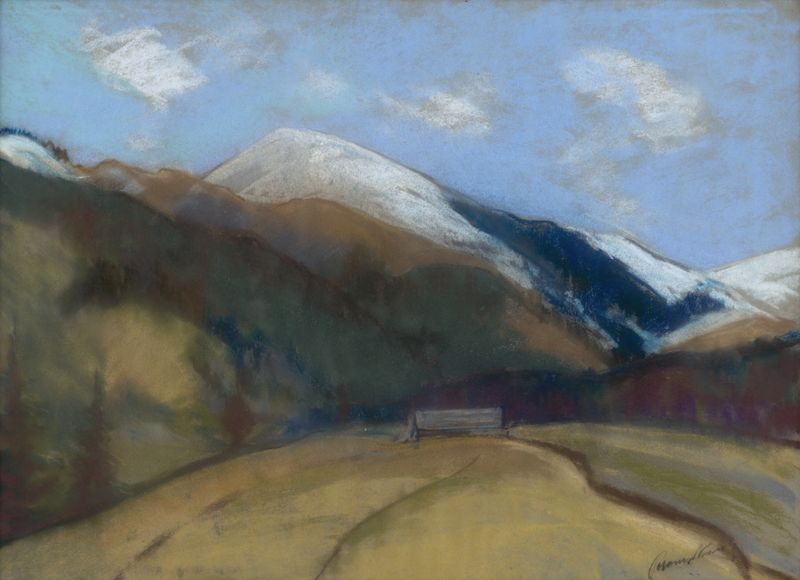
This transformation is a delicate dance between nature and artistry, where vibrant strokes breathe life into the unformed. In the journey of creation, the artist finds harmony amidst tumult, revealing the beauty that lies within the wild and untamed landscapes of the Tatra Mountains. Look to the center of the canvas, where the emerald greens of the rolling hills converge with the cerulean sky. The brushwork is both fluid and gestural, inviting the viewer’s eye to wander through the textured layers of paint.
Notice how the light plays across the scene, illuminating the peaks and casting shadows that hint at the changing weather. The use of color is both bold and soft, creating a sense of depth and movement, as if the landscape is breathing in rhythm with its surroundings. At first glance, the painting evokes tranquility, yet there lies an underlying tension between the chaos of nature and the calmness of the scene. The contrasting colors amplify the emotional experience—dark, brooding hues of the mountains juxtaposed with the bright serenity of the sky.
Each brushstroke not only captures the environment but also conveys the artist's struggle to translate the visceral experience of nature into a visual language, reflecting the duality of creation itself. Karol Polónyi painted Tatranská krajina in 1930 while living in Slovakia, a period marked by national identity exploration through art. This was a time of artistic awakening within Central Europe, as artists sought to express their cultural heritage amidst the changing tides of modernism. Polónyi's work emerged from a deep connection to his homeland, encapsulating both the beauty and complexity of the natural world with an innovative spirit that resonated with the expressions of his contemporaries.