The Tatras in Winter — History & Facts
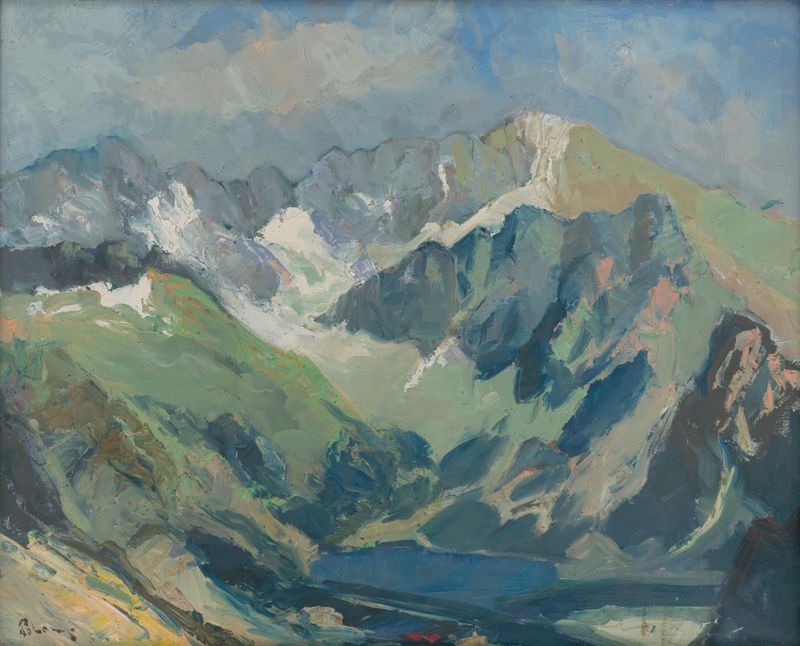
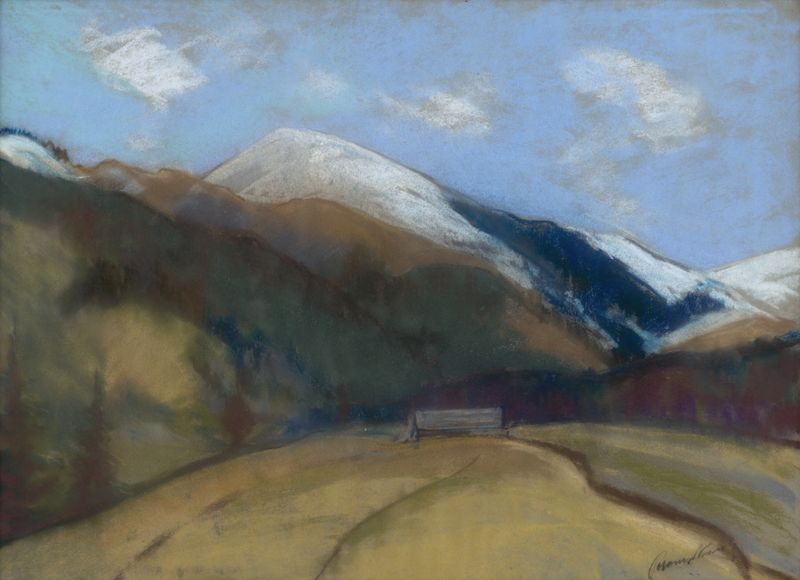
What if beauty was never meant to be finished? In The Tatras in Winter, the painter captures a moment where nature seems to hold its breath, poised between the ephemeral and the eternal. Look to the left, where jagged peaks rise majestically against a blue-gray sky, their snow-capped summits glimmering in the soft winter light. Notice how the foreground is a delicate interplay of icy blues and muted whites, suggesting both serenity and the biting cold of the season. Polónyi's technique, with its fine brushwork and layered texture, invites the viewer to feel the chill of the air and the crispness of the landscape, drawing you deeper into this wintry realm. Amidst the tranquil beauty lies a tension between isolation and transcendence.
The stark contrast between the dark trees and the luminous snow reveals a duality of warmth and cold, light and shadow. Each brushstroke reflects a fleeting moment of clarity, suggesting that within the vastness of the mountains, there is a profound stillness that speaks to the soul's yearning for connection amidst solitude. Karol Polónyi painted this landscape during the interwar period, a time of significant change in Europe. Working in the 1920s and 1930s, he blended influences from Impressionism with his own stylistic voice, aiming to encapsulate the raw beauty of the Tatra Mountains.
This era was marked by a search for identity in art, and Polónyi’s work stands testament to that pursuit, grounding a sense of place in a world poised on the brink of transformation.