
Temple by the Lake — History & Facts
In the delicate interplay of light and shadow, the past calls out to us, urging reflection on the legacies we leave behind. Focus first on the ethereal reflections shimmering on the water’s surface. The calm lake cradles the temple, inviting viewers to lose themselves in its tranquil embrace. Notice how the soft hues of green and blue interlace with the temple’s warm, earthy tones; this color harmony creates a serene yet vibrant juxtaposition, as if nature and architecture are engaged in a gentle dance.
The meticulous brushwork draws the eye, revealing the intricate details of the temple’s façade and the surrounding foliage, while the subtle ripples in the water suggest an ever-present connection to the currents of time. Delve deeper into the emotional landscape presented here. The temple, symbolizing spirituality and permanence, stands resilient against the ephemeral nature of the lake. Yet, the fleeting moments captured in the reflections remind us of life's transience, hinting at the fragility of legacy.
Chinnery’s choice to position the temple by the lake evokes a dialogue between the natural and the man-made, balancing reverence and vulnerability as the viewer contemplates what is preserved and what is lost. At the time Temple by the Lake was created, George Chinnery was immersed in the vibrant art scene of 19th-century China, where he settled in 1825. As an artist renowned for his landscapes and portraits, he navigated the complex cultural exchanges between East and West, capturing moments of stillness amidst a rapidly changing world. This painting reflects his mastery in merging the beauty of his surroundings with profound philosophical themes, situating it firmly within a legacy that transcends time.
More Artworks by George Chinnery
Browse all →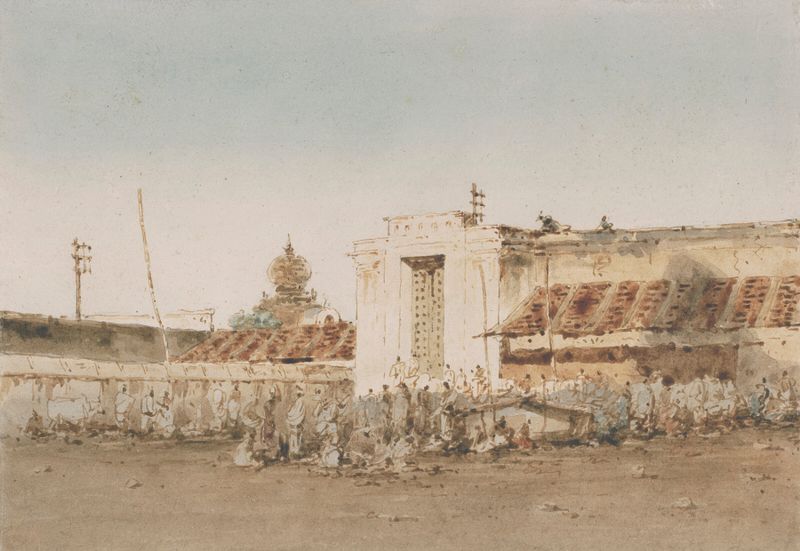
The entrance to ‘the Honourable East India Company’s pagoda’, Madras
George Chinnery
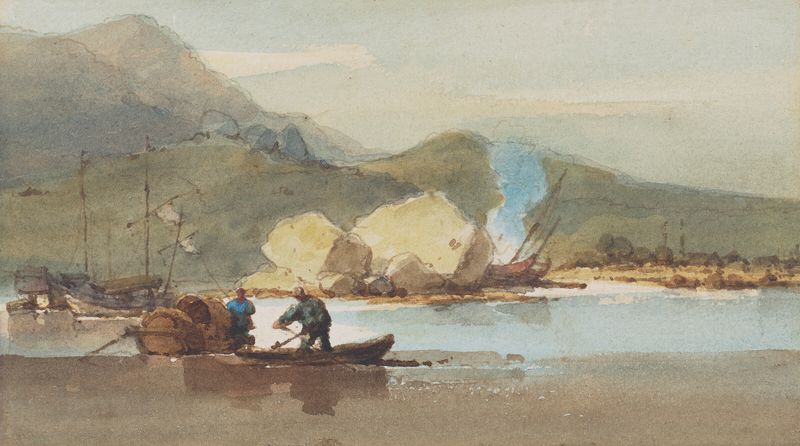
Junks and Tanka boats in a bay, with a beached junk and cooking fire beyond
George Chinnery
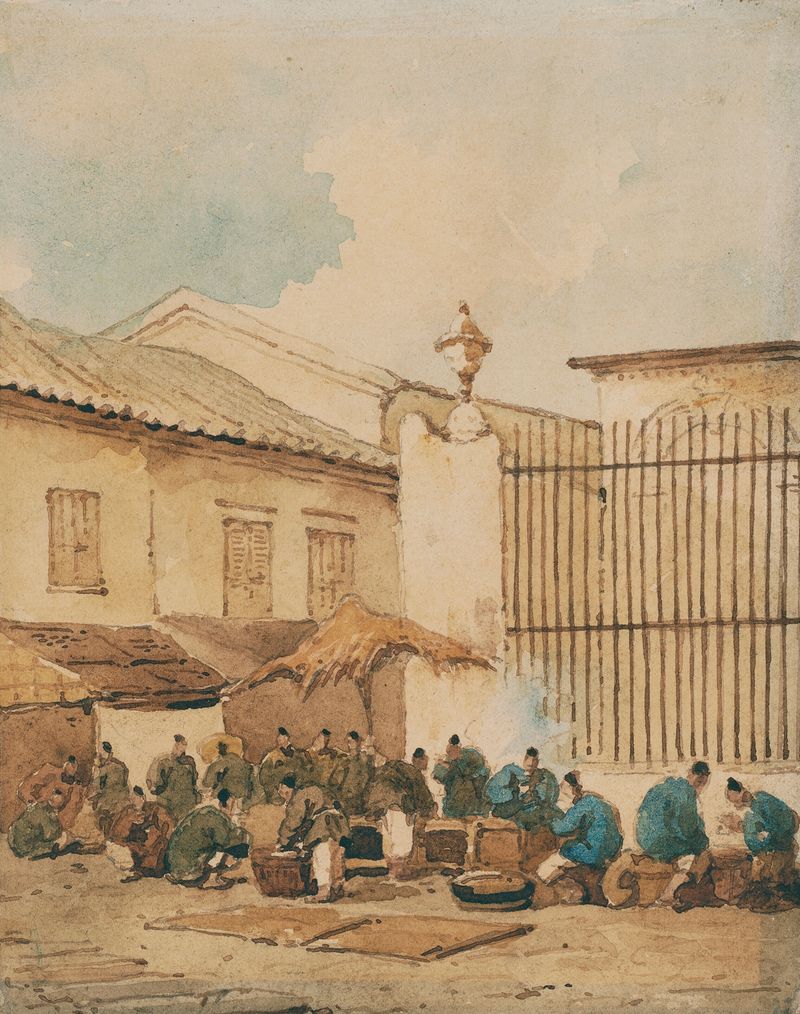
A market outside the railings of St. Dominic’s Church, Macau
George Chinnery

A River in Ceylon
George Chinnery
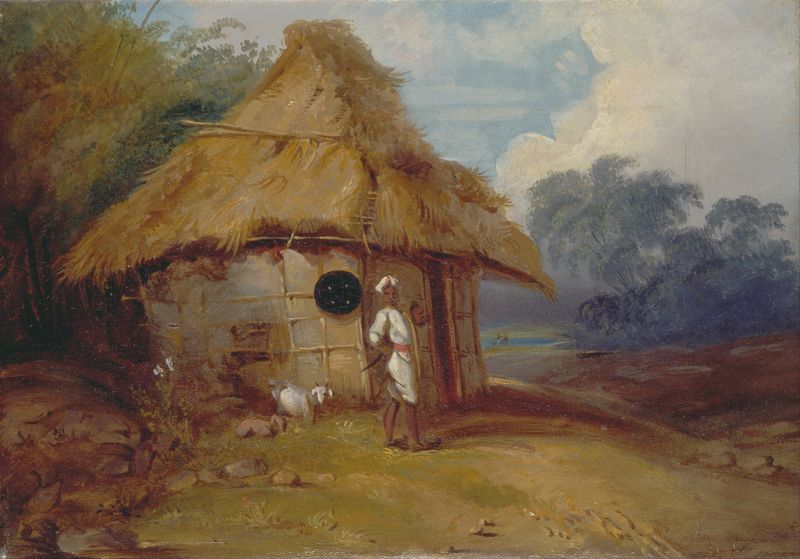
View in Southern India, with a Warrior Outside his Hut
George Chinnery
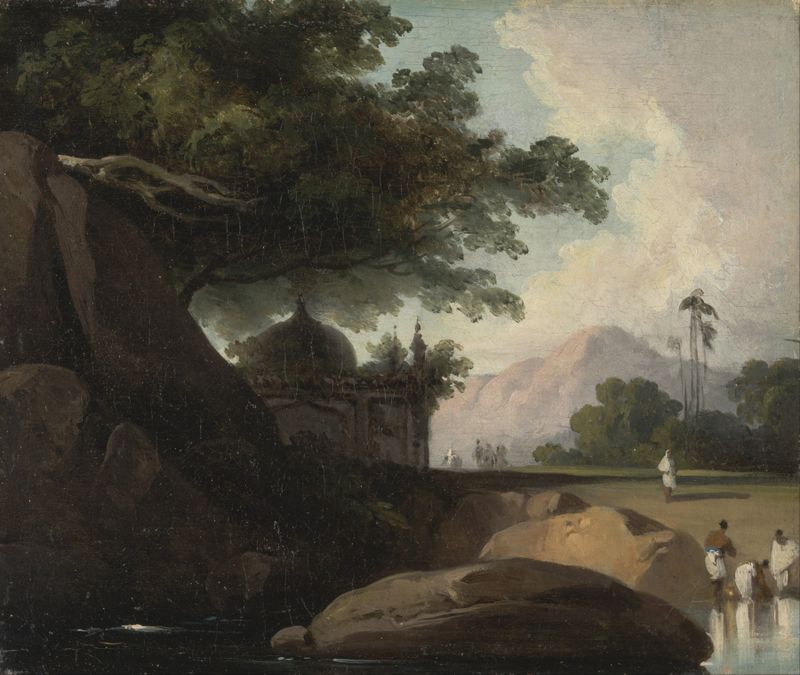
Indian Landscape with Temple
George Chinnery

Madras, a street scene
George Chinnery
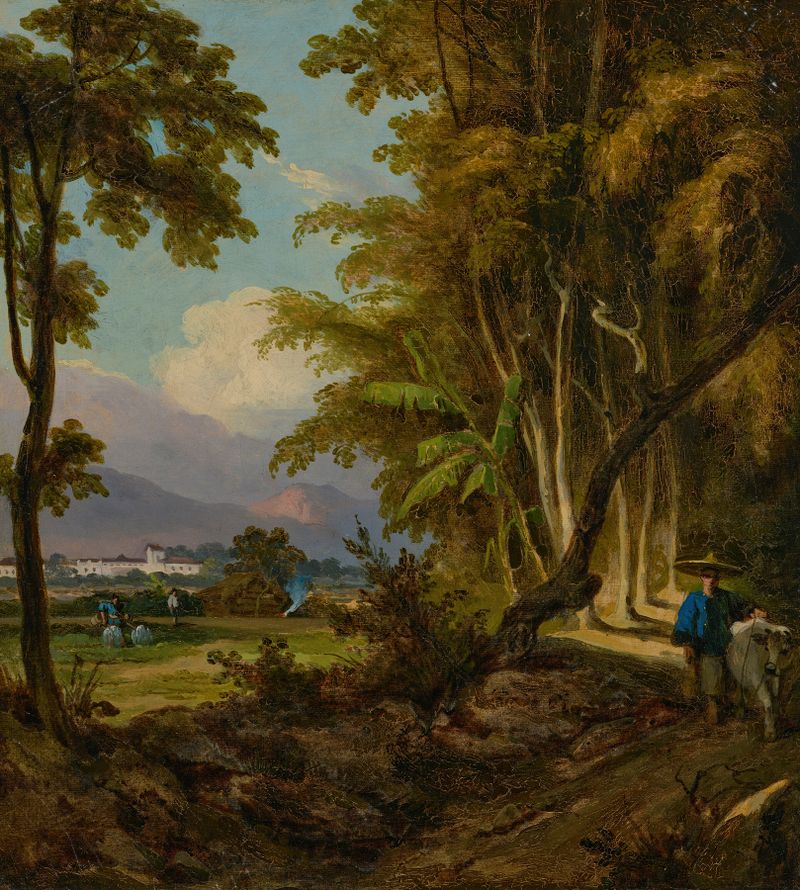
A landscape in Macau with a herdsman walking along a track
George Chinnery

Tanka boat off Macao
George Chinnery
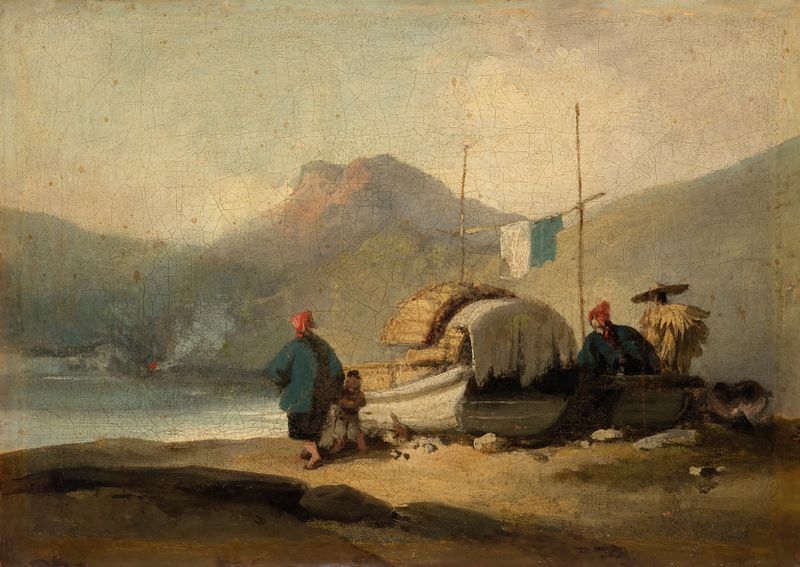
Chinese Scene, Boats by Lake
George Chinnery





