
The entrance to ‘the Honourable East India Company’s pagoda’, Madras — History & Facts
This delicate dance of light and shadow challenges our perceptions of beauty and betrayal within the confines of a single frame. What secrets lie beneath the vibrant facade of colonial ambition, and how do they intertwine with the elegant architecture of a bygone era? Look to the left at the intricate details of the pagoda’s facade, where the rich colors burst forth, inviting admiration yet hinting at a more complex story. The careful brushwork captures the sun's rays filtering through the leaves overhead, casting dappled light that plays upon the stone.
Notice how the symmetry and grandeur of the structure contrast with the surrounding environment, evoking both awe and a sense of unease about what this place represents in the broader context of colonialism. Delve deeper into the artwork’s emotional undercurrents: the sublime beauty of the pagoda juxtaposed with the era's moral ambiguity reflects a landscape marked by exploitation and cultural erasure. The vibrant hues celebrate the artistry of a foreign land yet simultaneously narrate tales of betrayal against its people and traditions. Each brushstroke is a commentary on the complexities of civilization, where opulence often overshadows the stories of those who are marginalized. This piece was created during a period of great change in the world of art and society, as George Chinnery navigated the tumultuous waters of colonial India in the early 19th century, likely in Madras.
The artist was known for his ability to capture the vibrancy of life in the East, working during a time when European influences were profoundly reshaping local cultures. Chinnery's brush reflects both admiration and critique, embodying the intricate dialogue between beauty and the darker realities of empire.
More Artworks by George Chinnery
Browse all →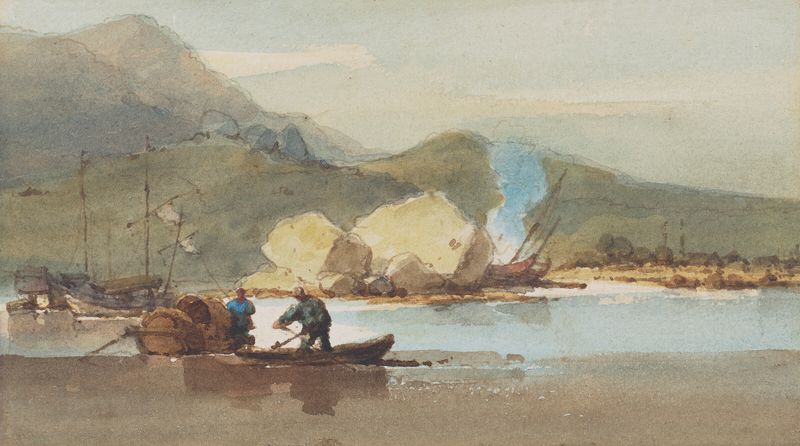
Junks and Tanka boats in a bay, with a beached junk and cooking fire beyond
George Chinnery
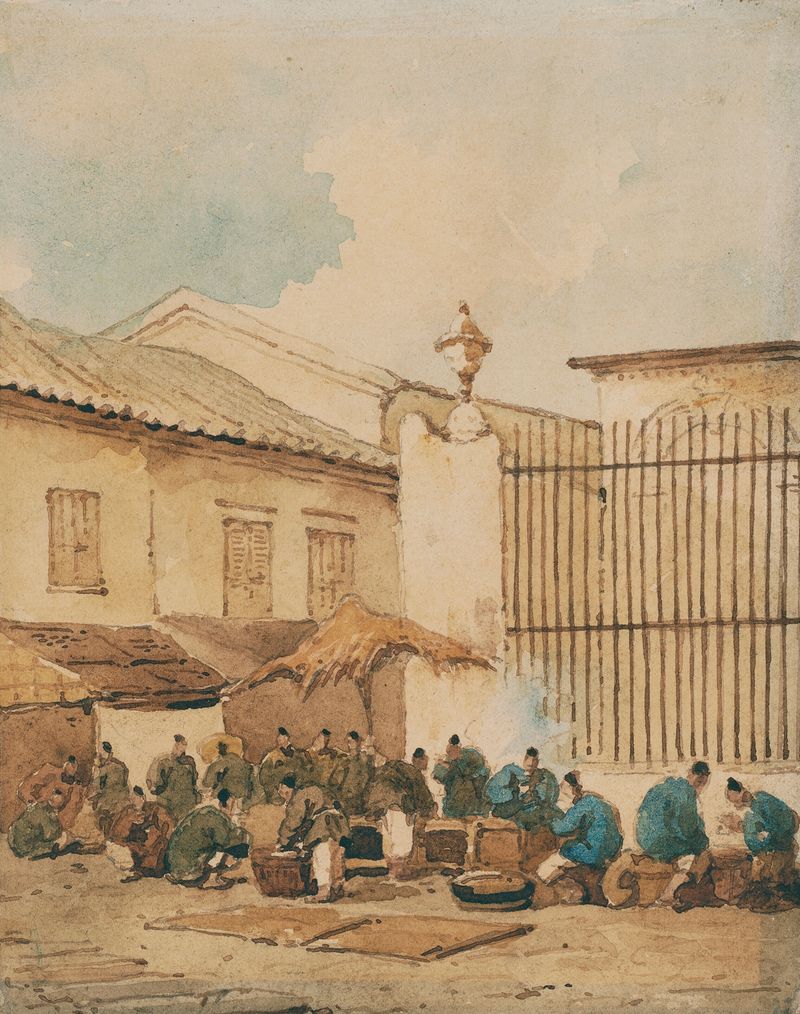
A market outside the railings of St. Dominic’s Church, Macau
George Chinnery

Temple by the Lake
George Chinnery

A River in Ceylon
George Chinnery
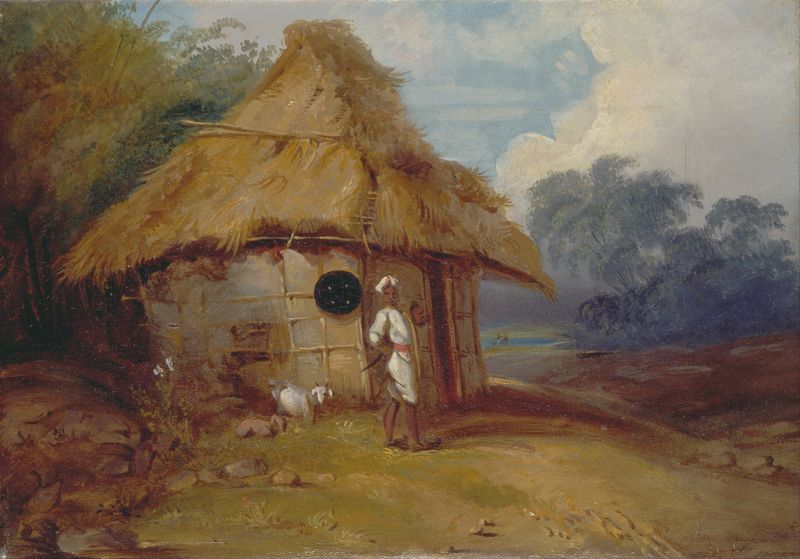
View in Southern India, with a Warrior Outside his Hut
George Chinnery
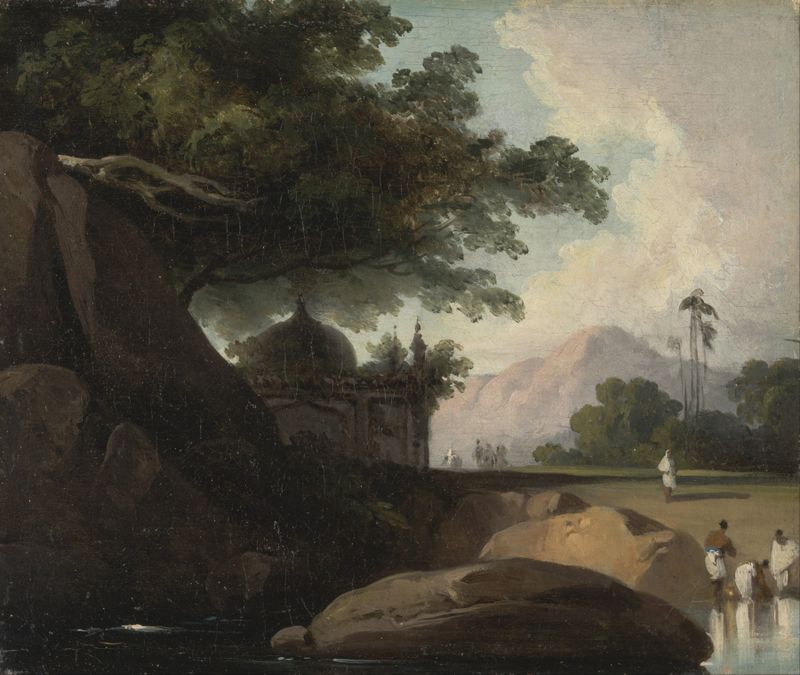
Indian Landscape with Temple
George Chinnery

Madras, a street scene
George Chinnery
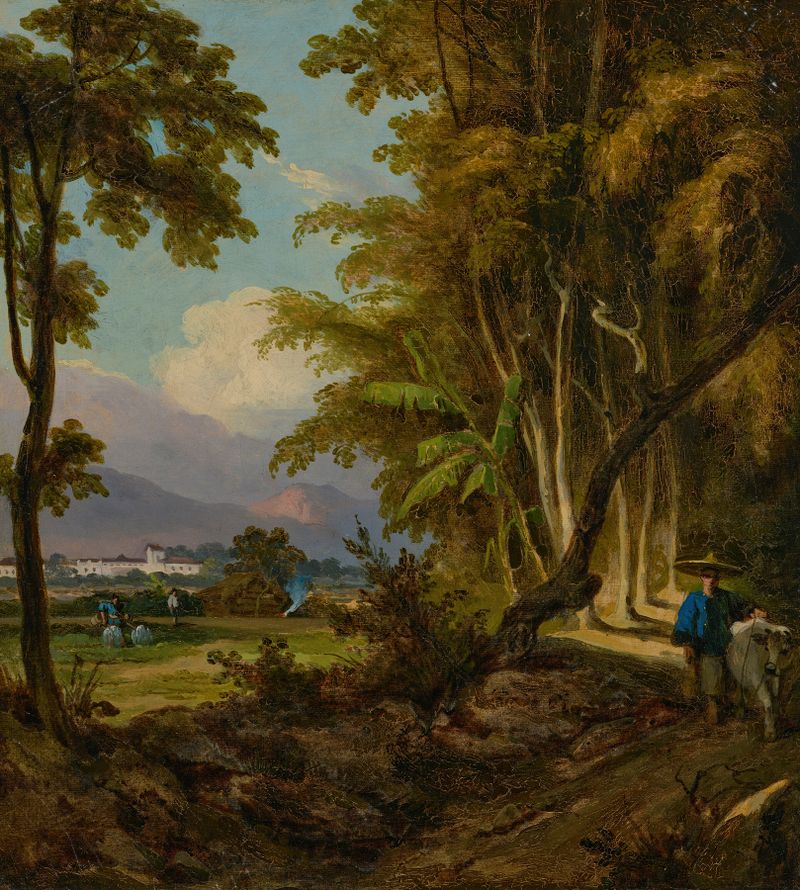
A landscape in Macau with a herdsman walking along a track
George Chinnery

Tanka boat off Macao
George Chinnery
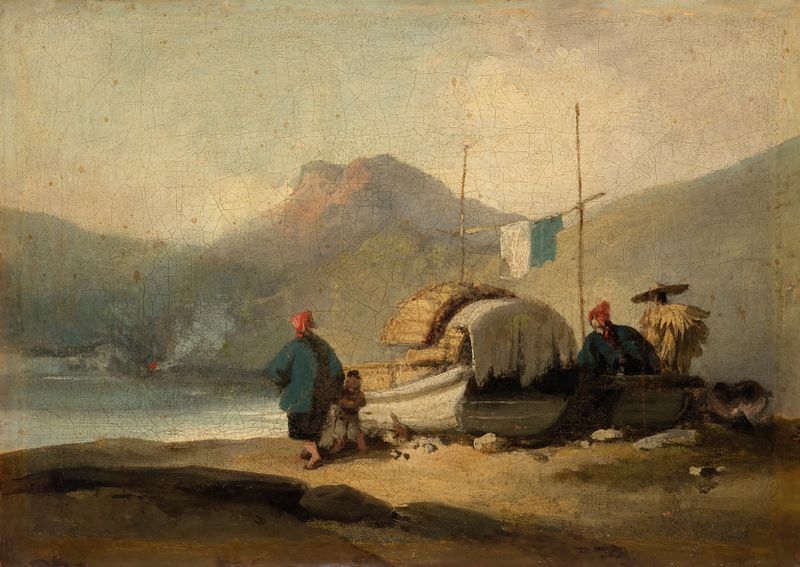
Chinese Scene, Boats by Lake
George Chinnery
More Architecture Art
Browse all →
The statue of Liberty
Frédéric Auguste Bartholdi

View of Houses in Delft, Known as ‘The Little Street’
Johannes Vermeer

View of Houses in Delft, Known as ‘The Little Street’
Johannes Vermeer

The Cathedral in Rouen. The portal, Grey Weather
Claude Monet

The yellow house
Vincent van Gogh

The Church in Auvers-sur-Oise, View from the Chevet
Vincent van Gogh