
View in Southern India, with a Warrior Outside his Hut — History & Facts
In the quietude of a warrior’s humble dwelling, the weight of history and identity reverberates through the stillness of the moment. It is an invitation to reflect on the complexities of creation within the canvas of life. Look to the center, where the warrior stands resolute outside his modest hut, an embodiment of strength amidst simplicity. The earthy tones of ochre and deep greens envelop the scene, drawing the eye to the textured surface of the hut, contrasting with the vibrant foliage that frames the backdrop.
The play of light highlights the warrior’s stance, his posture exuding both calm and readiness, while gentle shadows whisper of the life that pulses around him. The painting unveils layers of meaning—the warrior symbolizes the intersection of tradition and resilience, while the hut represents a sanctuary of existence. The juxtaposition of the raw nature surrounding him and the intimate space he occupies evokes a sense of solitude, yet also speaks to his connection to the land. These nuances invite contemplation on the quiet battles fought in daily life, the interplay of strength and vulnerability. In 1815, the artist captured this scene amidst a flourishing period of artistic exploration in colonial India.
George Chinnery, living in Madras at the time, was influenced by the vibrant culture and diverse landscapes around him. His work during this era reflects a deep engagement with the local subjects and their lives, a testament to the evolving dialogue between East and West in the world of art.
More Artworks by George Chinnery
Browse all →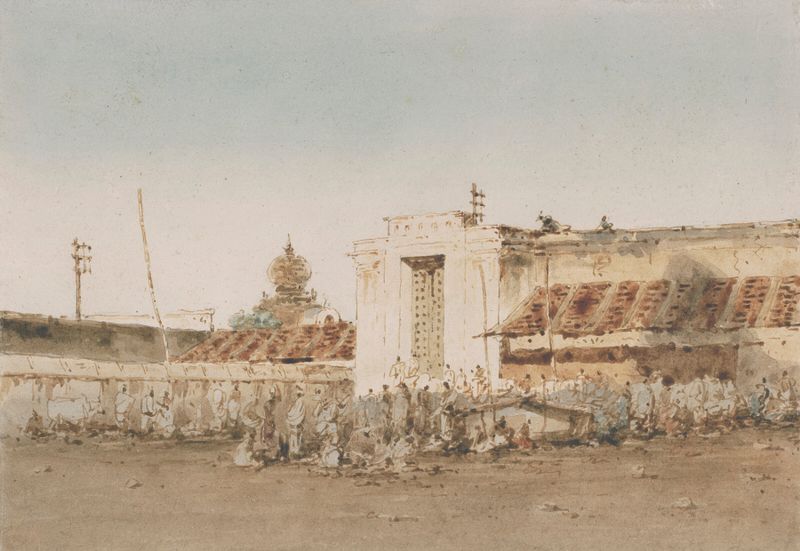
The entrance to ‘the Honourable East India Company’s pagoda’, Madras
George Chinnery
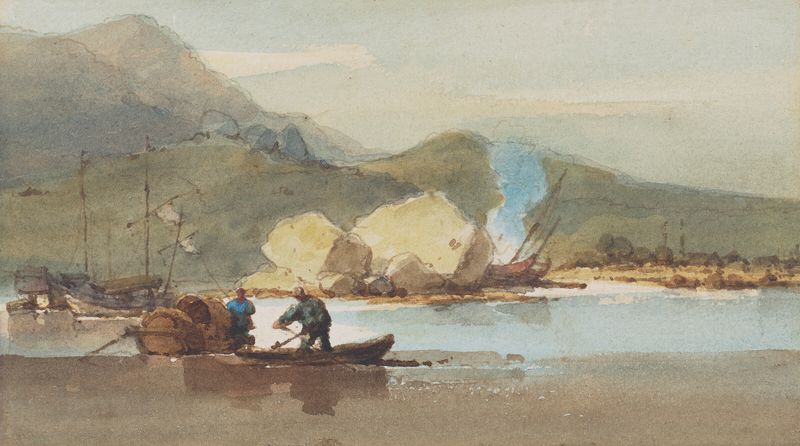
Junks and Tanka boats in a bay, with a beached junk and cooking fire beyond
George Chinnery
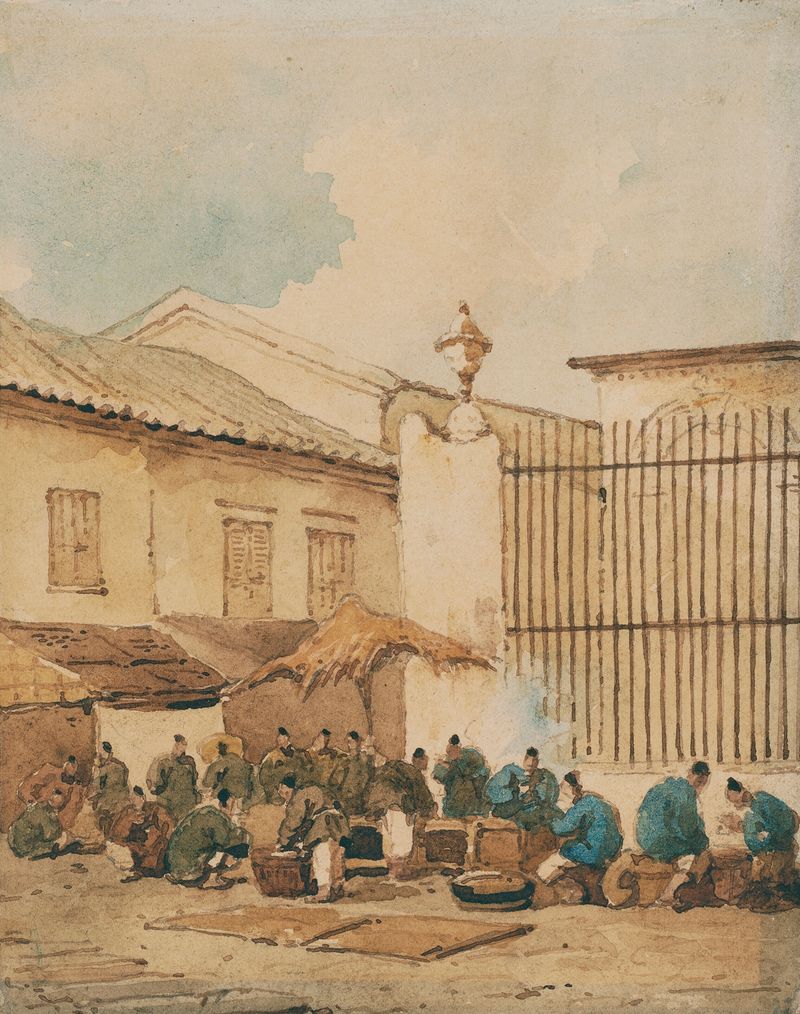
A market outside the railings of St. Dominic’s Church, Macau
George Chinnery

Temple by the Lake
George Chinnery

A River in Ceylon
George Chinnery
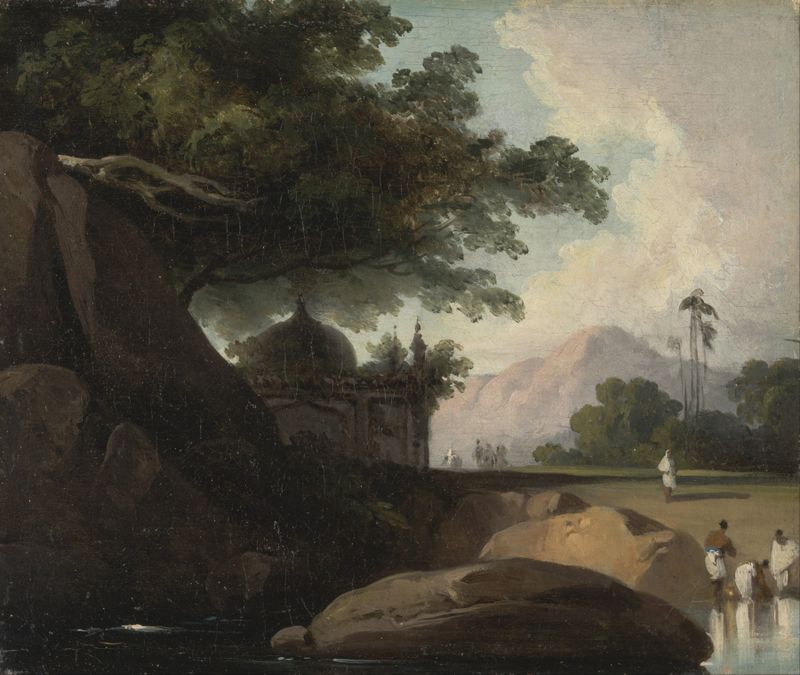
Indian Landscape with Temple
George Chinnery

Madras, a street scene
George Chinnery
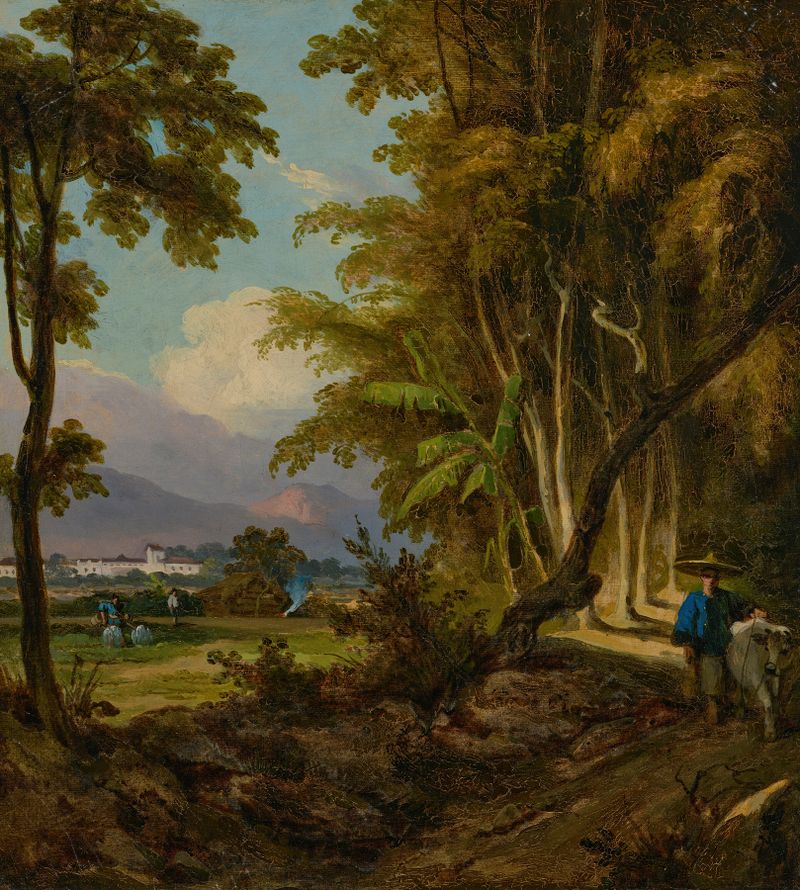
A landscape in Macau with a herdsman walking along a track
George Chinnery

Tanka boat off Macao
George Chinnery
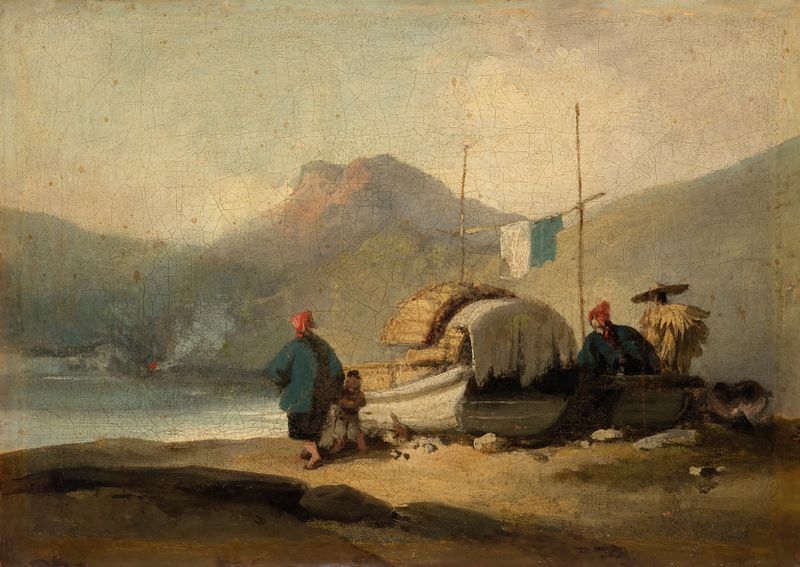
Chinese Scene, Boats by Lake
George Chinnery





