
Temple in Luxor. From the journey to Egypt — History & Facts
In the essence of transformation, how does a single brushstroke immortalize the fleeting moments of a vibrant culture? Focus first on the dominating structure in the foreground, where the ancient temple rises majestically against an expansive sky. Notice the warm ochres and earthy browns that bring the stone to life, contrasting beautifully with the soft blues and whites of the cloud-streaked horizon. The interplay of light reveals intricate details in the carvings, inviting the viewer into a sacred space that feels both timeless and ephemeral. Delve deeper into the shadows cast by the temple’s towering columns.
Each shadow tells a story of the past—a reminder of those who walked these grounds centuries ago, their whispers echoing through the stone. The delicate brushwork in the foreground captures the lush palm trees, hinting at the life that thrives amidst ancient ruins. Here lies a juxtaposition of permanence and fragility, manifesting a yearning for continuity through artistry. In 1903, during a transformative period in Ciągliński's life, he traveled to Egypt, drawn by its rich history and culture.
This painting emerged from his experience as a Polish artist fascinated by the Eastern aesthetic, reflecting the broader Western interest in exotic locales at the turn of the century. The work serves not only as a visual record but also as a personal artifact, echoing the artist's own journey of discovery amidst the storied sands of time.
More Artworks by Jan Ciągliński
Browse all →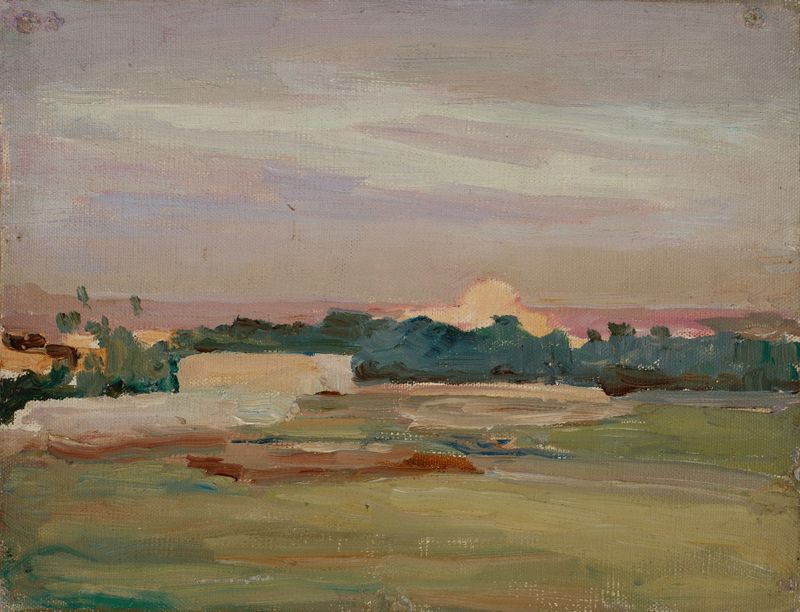
The Sirocco
Jan Ciągliński
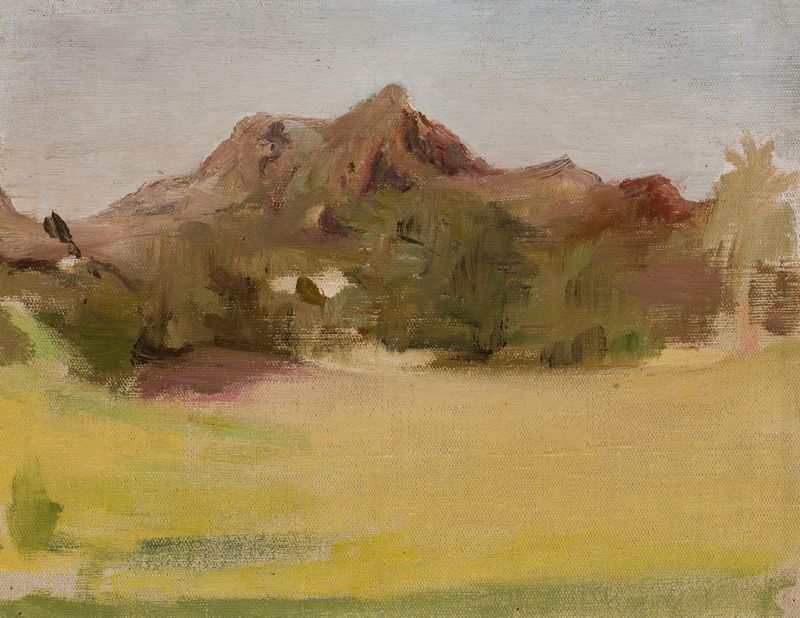
Mountain landscape. From the journey to India
Jan Ciągliński
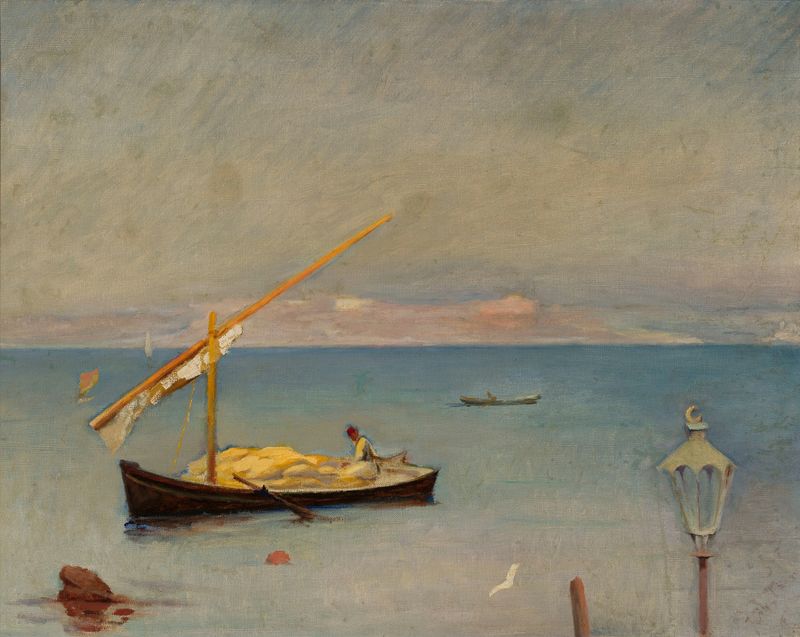
At Bosporus
Jan Ciągliński
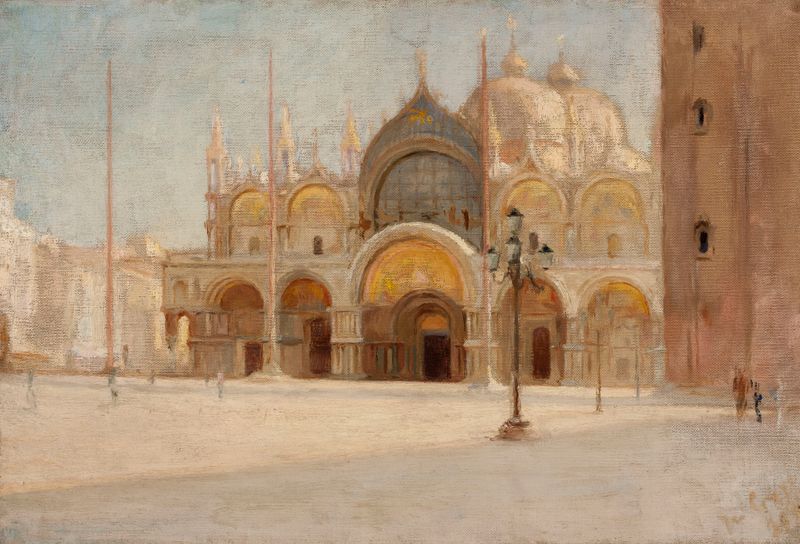
St Mark’s Square in Venice
Jan Ciągliński
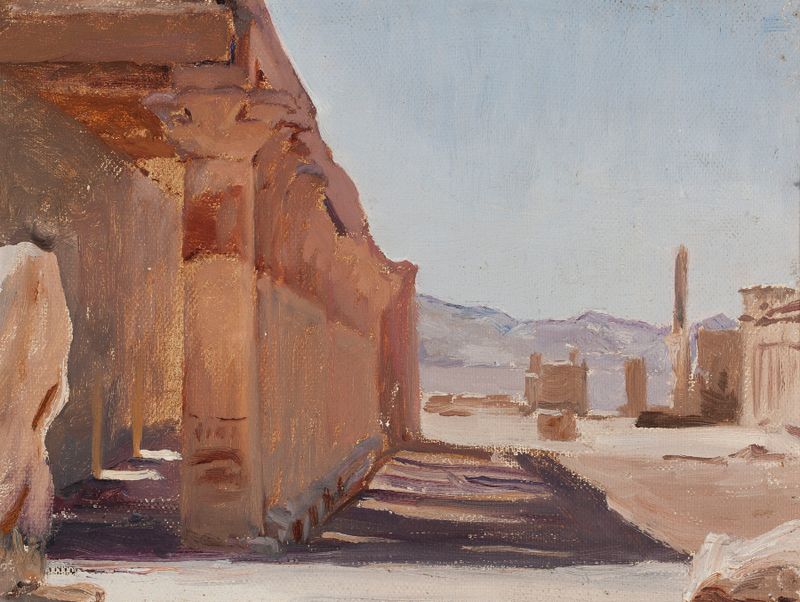
Temple. From the journey to Egypt
Jan Ciągliński
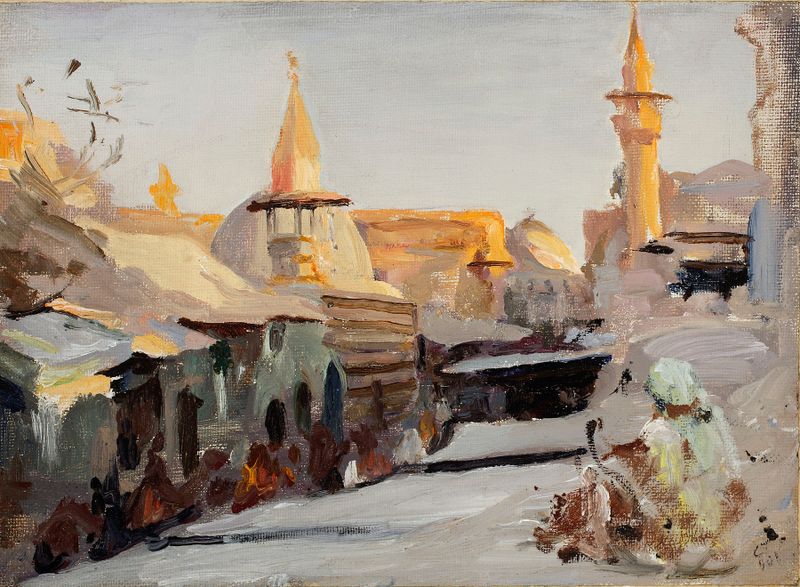
Street in Damascus. From the journey to Palestine
Jan Ciągliński
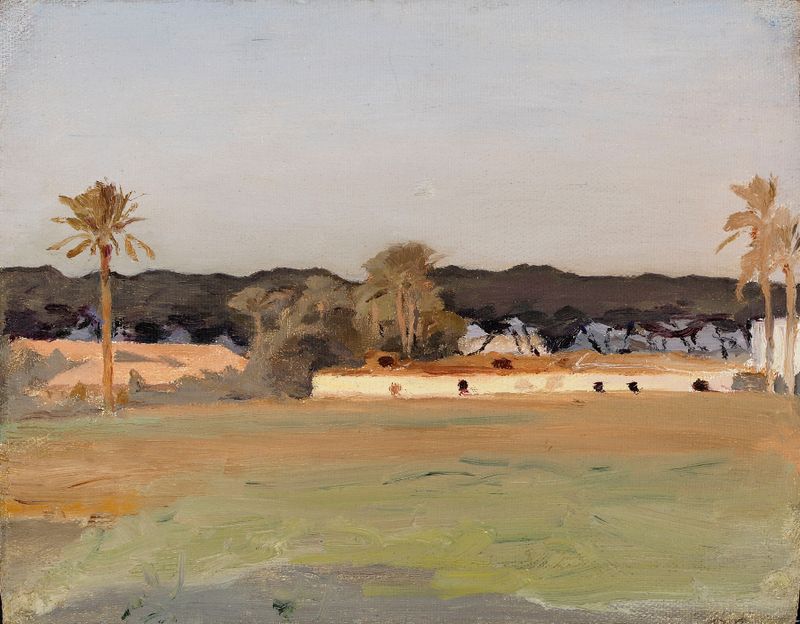
Evening. From the journey to Egypt
Jan Ciągliński
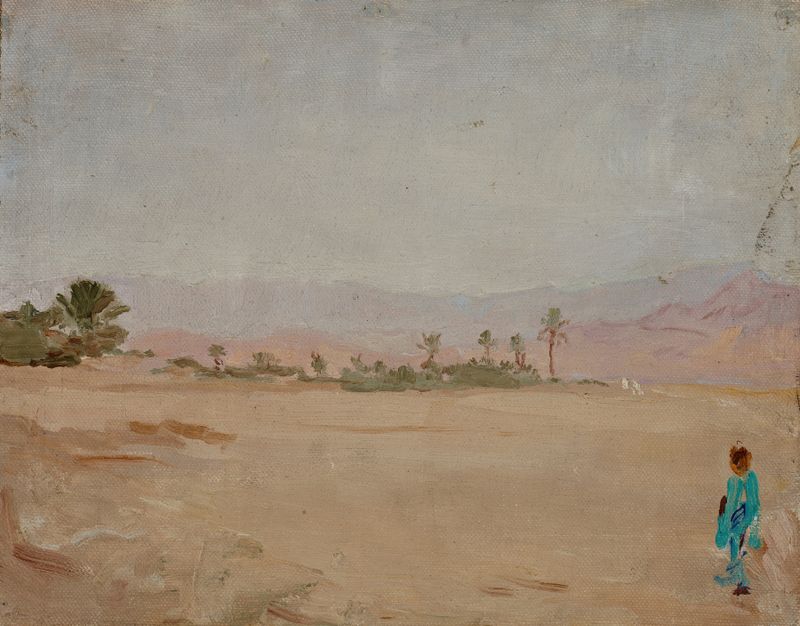
Sahara (Desert)
Jan Ciągliński
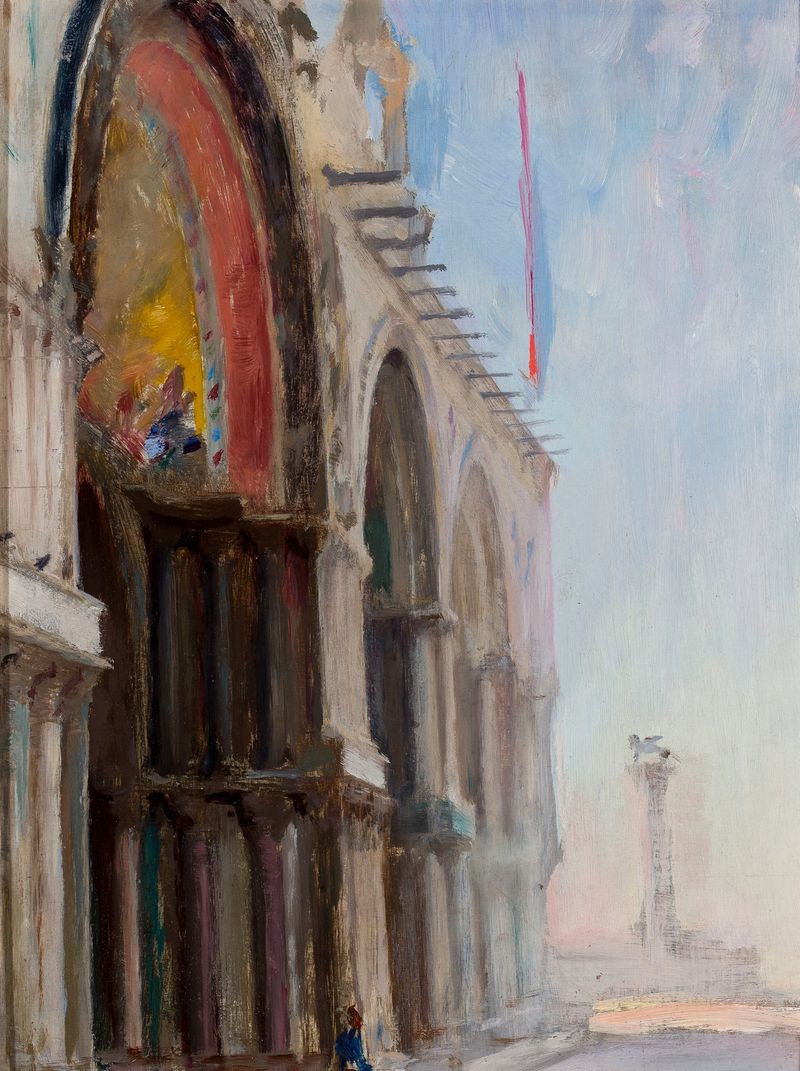
Venice – San Marco. From the journey to Italy
Jan Ciągliński
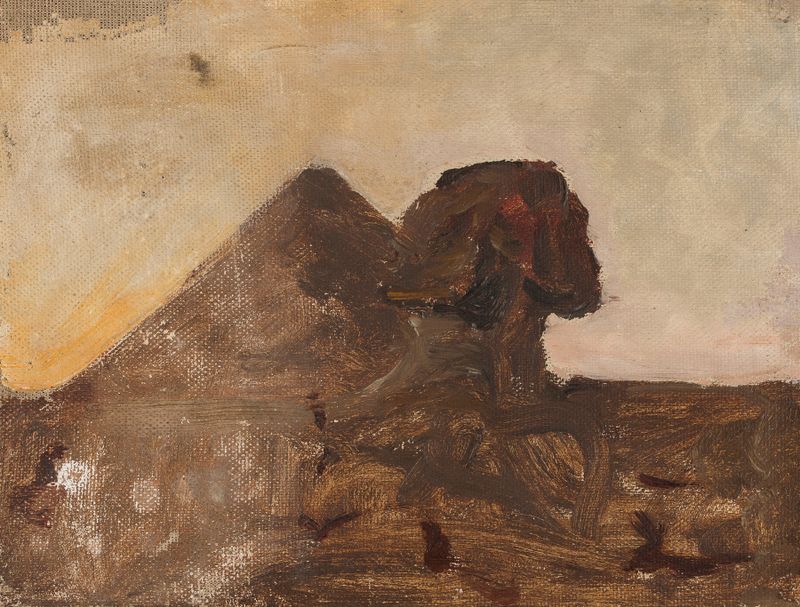
Evening in the desert – Sphinx and pyramid. From the journey to Egypt
Jan Ciągliński
More Architecture Art
Browse all →
The statue of Liberty
Frédéric Auguste Bartholdi

View of Houses in Delft, Known as ‘The Little Street’
Johannes Vermeer

View of Houses in Delft, Known as ‘The Little Street’
Johannes Vermeer

The Cathedral in Rouen. The portal, Grey Weather
Claude Monet

The yellow house
Vincent van Gogh

The Church in Auvers-sur-Oise, View from the Chevet
Vincent van Gogh