
Tenjinbashi bridge — History & Facts
In the stillness of existence, a bridge stands as an emblem of connection—a threshold between worlds, whispering tales of awakening and longing. Look to the foreground to find the Tenjinbashi Bridge, elegantly arched against the shimmering water below. The artist skillfully uses soft blues and muted greens to create a serene atmosphere, while the delicate brushstrokes evoke a sense of gentle movement, as if the scene breathes. Notice how the light dances upon the surface of the water, illuminating the bridge’s form and highlighting the intricate details of its structure, inviting the viewer to traverse its path. Yet, beneath this tranquil facade lies a tension—the contrast of the bridge’s solid permanence against the ephemeral nature of the water beneath.
This duality reflects the human experience: bridging life’s struggles with the beauty that emerges from them. The subtle ripples in the water seem to echo the passage of time, reminding us that every moment is fleeting, yet profoundly impactful. The golden accents whisper of hope and rebirth, suggesting that even the darkest pain can lead to a shimmering awakening. Akamatsu Rinsaku created this piece in 1947, during a time of post-war reflection in Japan.
Emerging from the shadows of conflict, the artist found inspiration in the resilience of nature and the human spirit. This era marked a significant shift in Japanese art, as artists began to explore themes of renewal and hope, seeking to capture the essence of a nation in the process of healing.
More Artworks by Akamatsu Rinsaku
Browse all →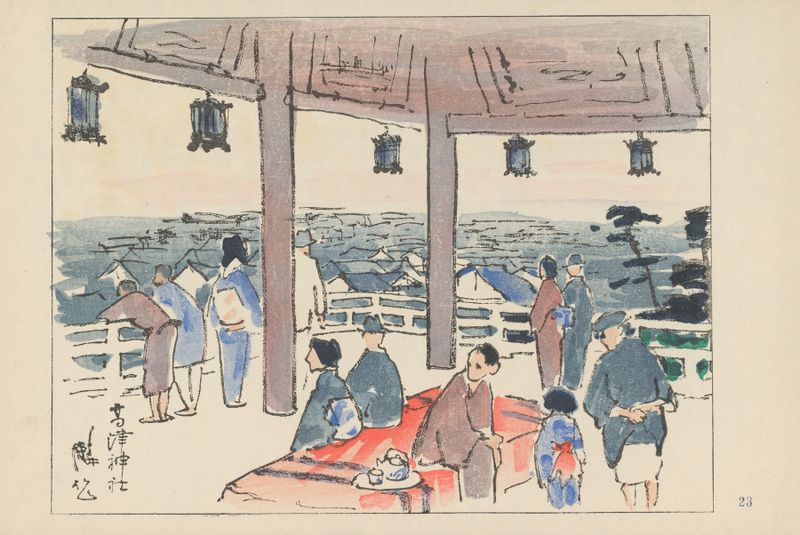
Kozu shrine dedicated to Nintoku Emperor
Akamatsu Rinsaku
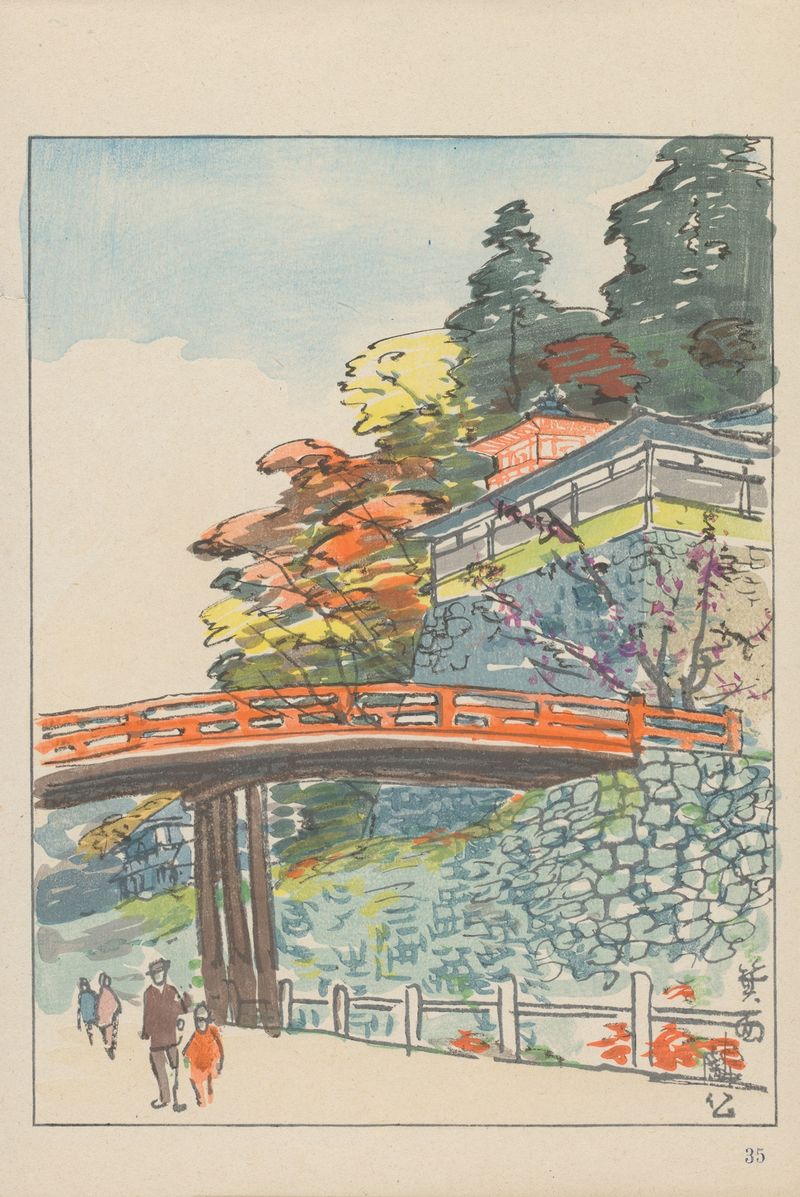
Minoo, National Park
Akamatsu Rinsaku
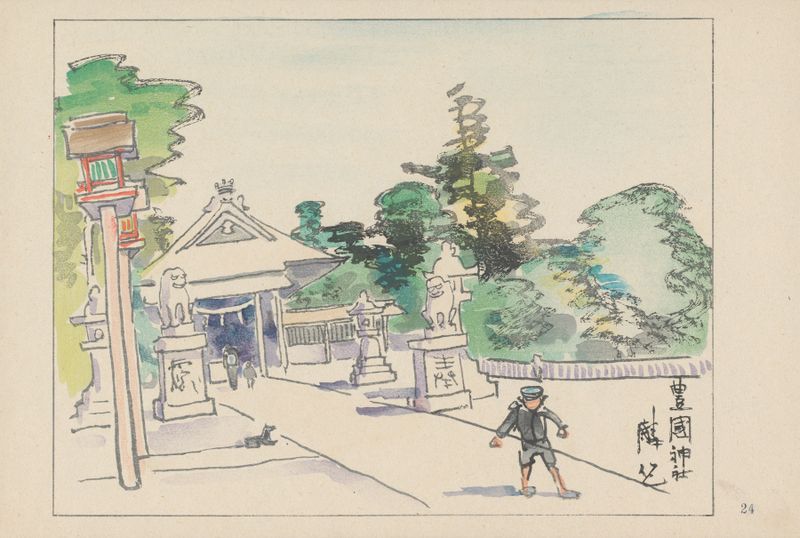
Toyokuni shrine dedicated to Toyotomi Hideyoshi
Akamatsu Rinsaku

Tsumura betsuin, the agency of Nishi-honganji
Akamatsu Rinsaku
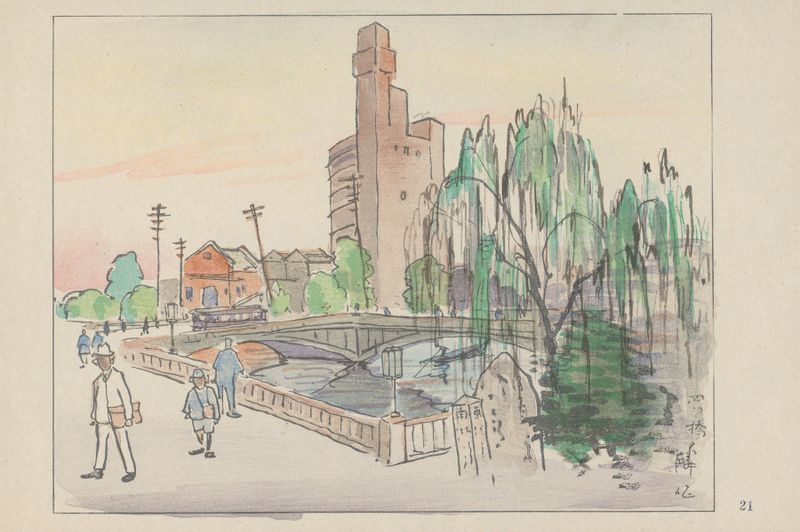
Yotsubashi, four joint bridges
Akamatsu Rinsaku
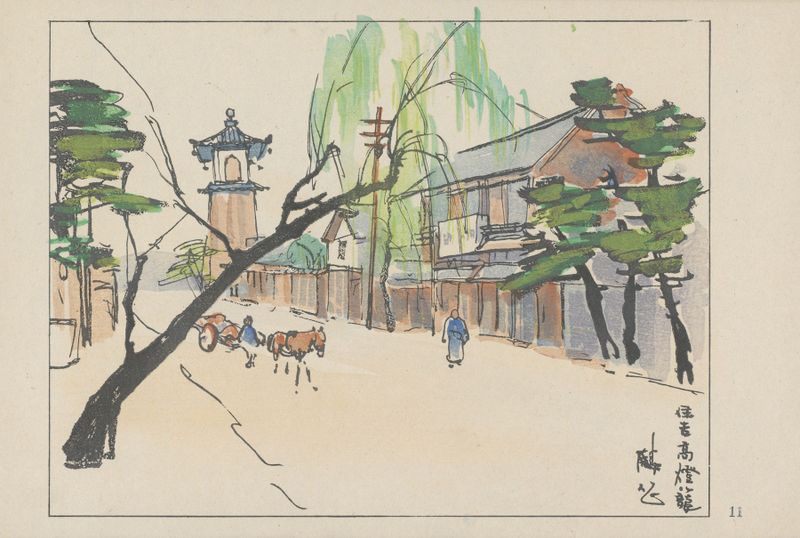
The high lanton at Sumiyoshi, a light house in older time
Akamatsu Rinsaku
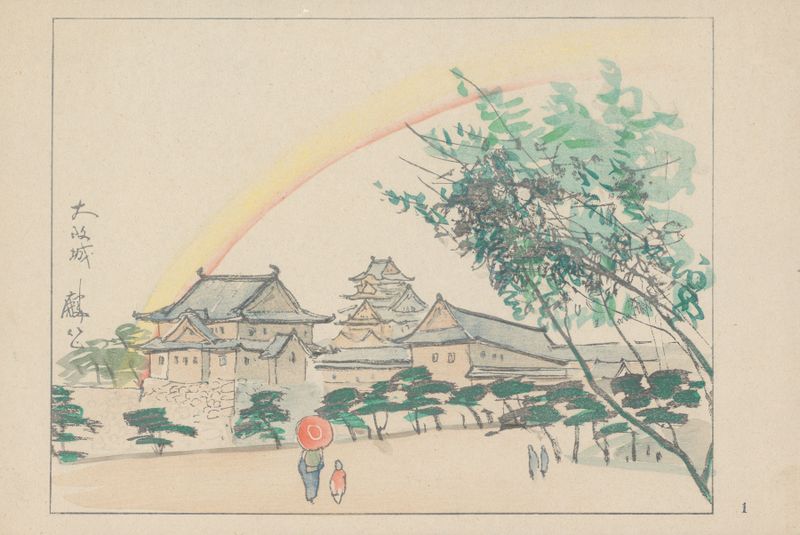
Osaka Castle, built by Toyotomi Hideyoshi in 1585 A.D
Akamatsu Rinsaku
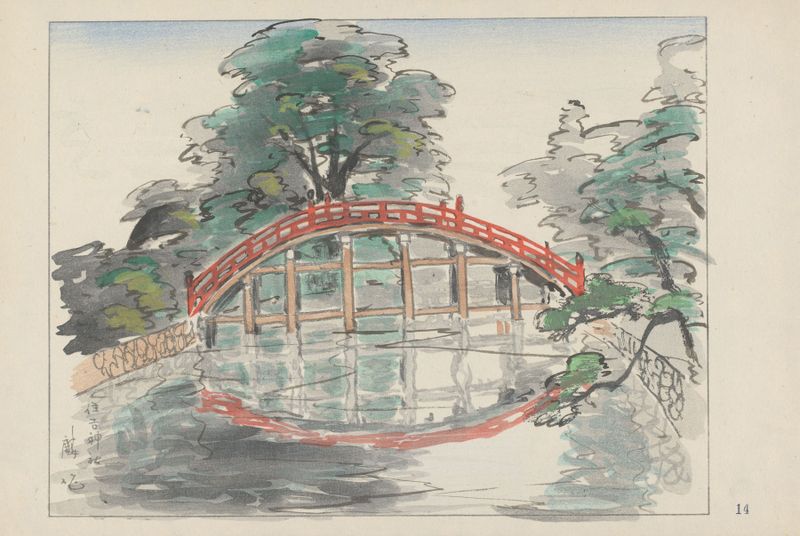
Sumiyoshi Shinto shrine
Akamatsu Rinsaku
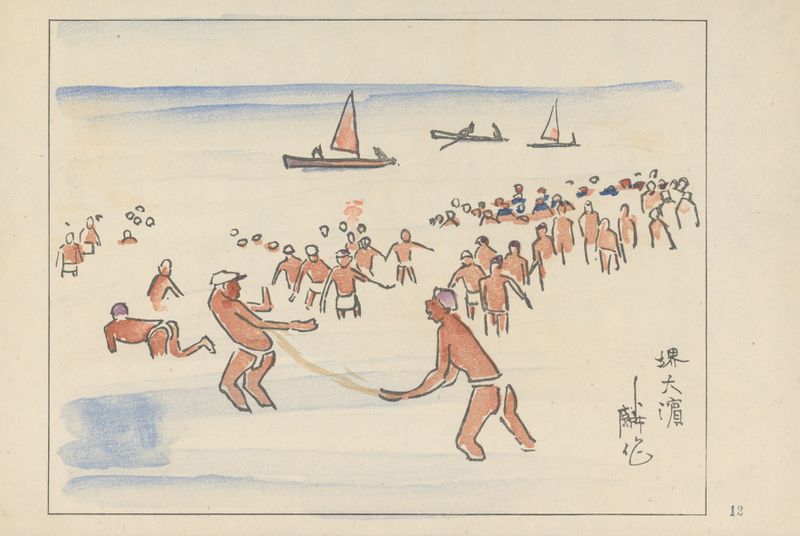
Sakai Ohama, swiming beach
Akamatsu Rinsaku

Kawaguchi, the estuary of Yodo river
Akamatsu Rinsaku
More Architecture Art
Browse all →
The statue of Liberty
Frédéric Auguste Bartholdi

View of Houses in Delft, Known as ‘The Little Street’
Johannes Vermeer

View of Houses in Delft, Known as ‘The Little Street’
Johannes Vermeer

The Cathedral in Rouen. The portal, Grey Weather
Claude Monet

The yellow house
Vincent van Gogh

The Church in Auvers-sur-Oise, View from the Chevet
Vincent van Gogh