
The Acropolis, Athens — History & Facts
Can paint confess what words never could? The shadow of history lingers over the ruins, whispering secrets of betrayal and glory, entwined like ivy on ancient stone. Look to the center of the canvas, where the Acropolis stands, a proud sentinel against the encroaching dusk. The soft glow of the setting sun bathes the Parthenon in warm gold, while cool shadows deepen the crevices of its weathered façade. Notice how the artist captures the contrast between light and dark, revealing the tension of ages past—a civilization once vibrant, now a silent witness to its own decline. Each brushstroke encapsulates a moment, from the meticulously rendered columns that evoke majesty to the fragmented terrain that hints at neglect and decay.
The almost haunting tranquility juxtaposed with the rich history evokes a sense of loss, suggesting that the glory of Athens, once a beacon of culture, has been dimmed by betrayal, both from within and without. The scene is full of emotion, inviting contemplation on what remains after the fall—the beauty, the memories, and the haunting echoes. Hermann David Salomon Corrodi created this work during a period marked by fascination with ancient Greece and its ruins. While the exact date remains undetermined, it reflects the late 19th century's cultural movement, as artists and intellectuals sought inspiration in classical themes amidst the backdrop of modernity.
At that time, the world was grappling with rapid change, and Corrodi's painting serves as both an homage and a lament for a past that resonates deeply in a shifting present.
More Artworks by Hermann David Salomon Corrodi
Browse all →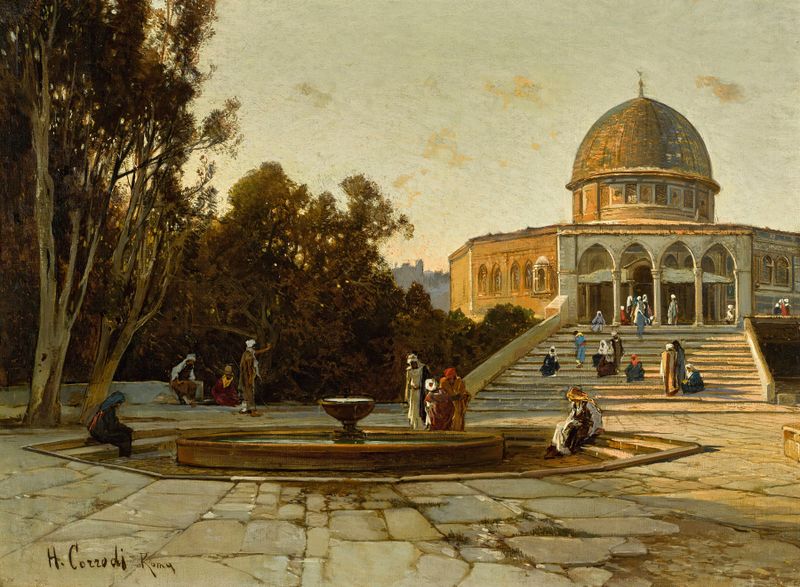
The Dome Of The Rock, Jerusalem
Hermann David Salomon Corrodi

The Galata Bridge, Constantinople
Hermann David Salomon Corrodi
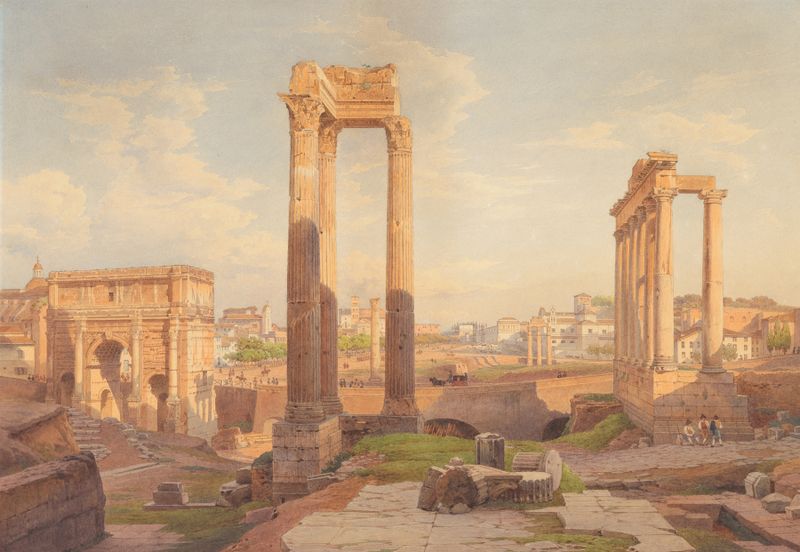
Forum Romanum
Hermann David Salomon Corrodi
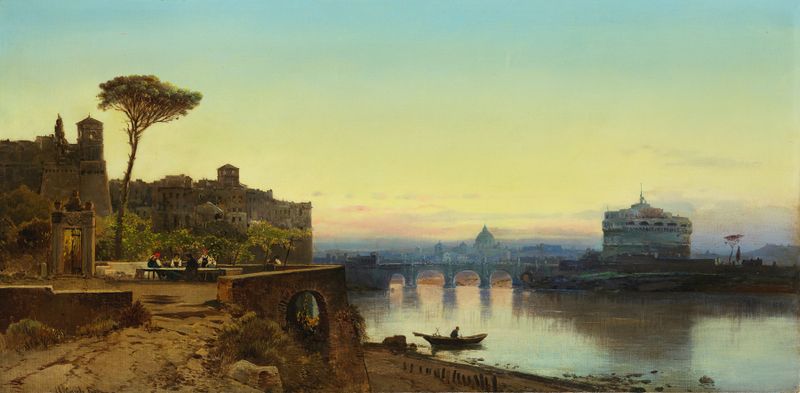
Blick über den Tiber auf die Engelsburg
Hermann David Salomon Corrodi

Prayer Before Jerusalem
Hermann David Salomon Corrodi
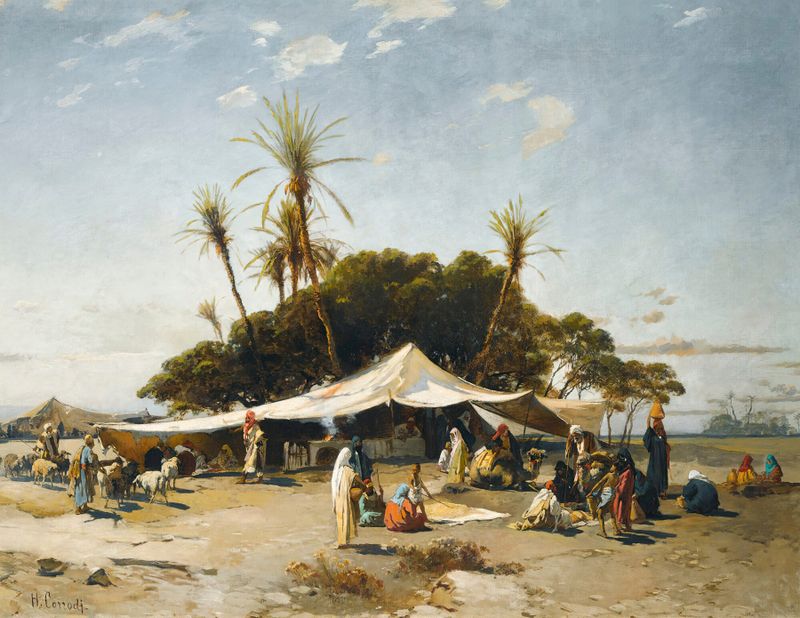
A camp in the desert
Hermann David Salomon Corrodi
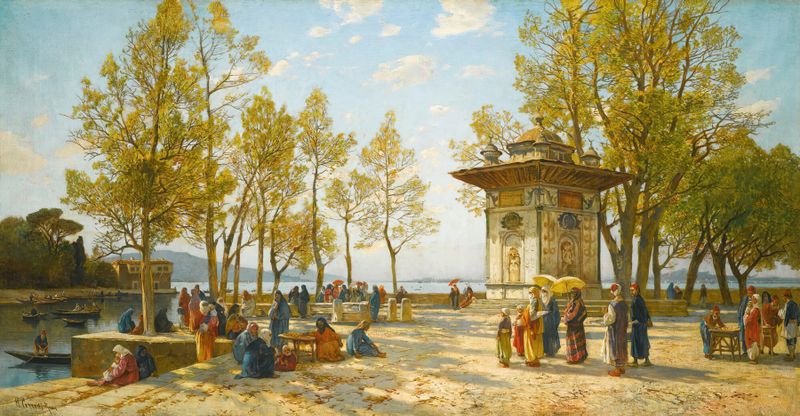
The Fountain Of The Sweet Waters Of Asia, On The Bosphorus
Hermann David Salomon Corrodi

A Bedouin Camp At Dusk
Hermann David Salomon Corrodi
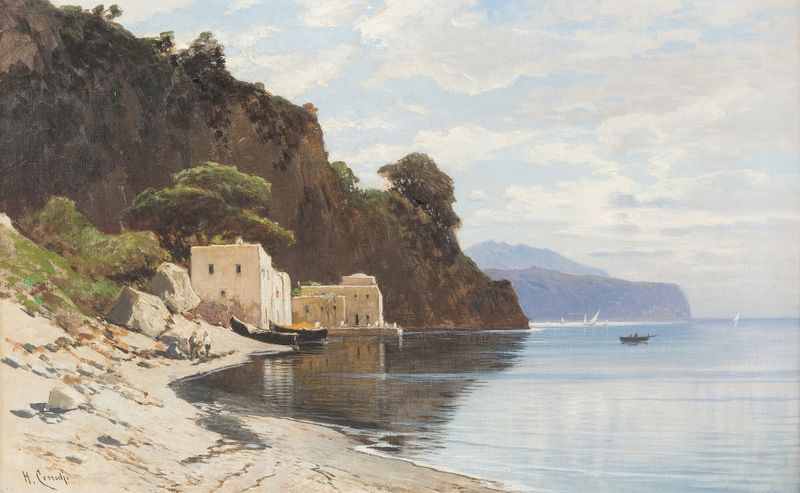
At the Amalfi coast
Hermann David Salomon Corrodi

An oasis encampment
Hermann David Salomon Corrodi
More Architecture Art
Browse all →
The statue of Liberty
Frédéric Auguste Bartholdi

View of Houses in Delft, Known as ‘The Little Street’
Johannes Vermeer

View of Houses in Delft, Known as ‘The Little Street’
Johannes Vermeer

The Cathedral in Rouen. The portal, Grey Weather
Claude Monet

The yellow house
Vincent van Gogh

The Church in Auvers-sur-Oise, View from the Chevet
Vincent van Gogh