The action of Commodore Dance and the Comte de Linois off the Straits of Malacca, 15 February 1804 — History & Facts
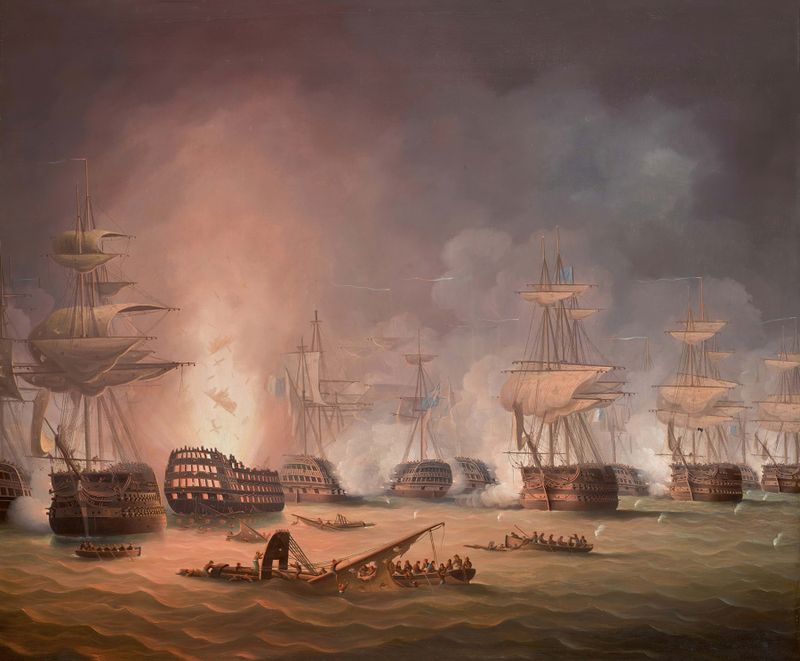
What secret hides in the quiet of the canvas? Beneath the surface of naval conflict, the stillness of water can conceal the tempest of human ambition and rivalry. Look to the center where two ships engage in a delicate dance of maneuvering; their sails billow against the horizon, painted in varying shades of blue and gray. Notice how the light catches the edges of the vessels, highlighting their intricate rigging and the tension in every taut rope. The artist’s brush strokes evoke a sense of movement, drawing the eye across the scene, balancing the chaos of battle with the calm of the surrounding sea. Amidst the naval grandeur lie hidden tensions.
The contrasting colors of the ships—one a stark white and the other a muted brown—speak to divergent national identities and allegiances. Waves lap gently at their hulls, symbolizing the fragile nature of power on the ever-changing tides of fate. The distant land, hinted at in soft brush strokes, looms as a reminder of the broader world beyond this fleeting encounter—echoing themes of discovery and conflict, of ambition and consequence. Thomas Buttersworth painted this notable scene during a period of fervent naval engagements in the early 19th century, a time when the age of sail was nearing its twilight.
The maritime world was becoming increasingly international, with the rise of empires and exploration defining the landscape. As such, the composition reflects not only the artist’s skills in maritime detail but also the larger narratives of power that defined both his life and the political climate of the time.