
The Bombardment Of Algiers, 27 August 1816 — History & Facts
Where does light end, and longing begin? In the vast expanse of The Bombardment of Algiers, 27 August 1816, a delicate interplay of brilliance captures the viewer’s breath, invoking awe and reflection. Look to the left where the ships emerge from a shroud of smoke, their sails billowing against a bruised sky. The artist meticulously details the tumultuous waves, swirling and foaming, each brushstroke pulsating with energy. Notice how the warm hues of the setting sun blend seamlessly with the cool gray of the distant cityscape, creating a chiaroscuro effect that heightens the drama.
The juxtaposition of conflict and beauty is palpable as the colors tell a story that is not merely about destruction, but also the resilient spirit of both man and nature. Amidst this chaos, small, poignant details emerge, revealing deeper layers of meaning. The expressions on the sailors’ faces evoke a sense of urgency and determination, yet a shadow of uncertainty looms over their actions. The contrast between the vibrant, fiery sky and the dark, foreboding silhouettes of the city reflects the duality of conquest and consequence, urging viewers to consider the impact of war on both the victors and the vanquished. This piece was created during a time when Thomas Buttersworth was deeply entrenched in maritime themes, capturing the blend of historical events and the natural world.
The exact date of the painting remains elusive, yet it was likely produced in the early 19th century, when the Napoleonic Wars had shifted the European landscape dramatically. At this juncture, naval power and its implications were on the forefront of public consciousness, prompting Buttersworth to immortalize such pivotal moments through his art.
More Artworks by Thomas Buttersworth
Browse all →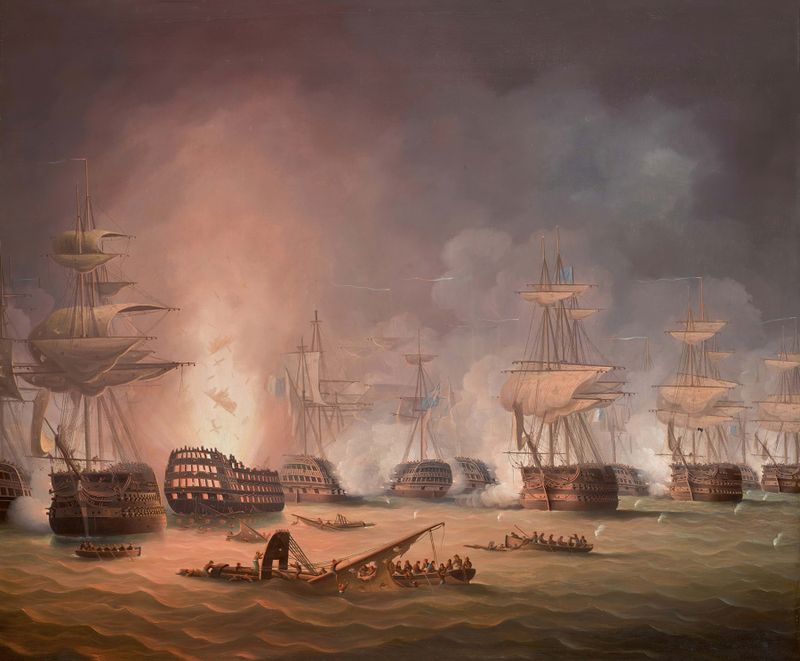
The Battle of the Nile, 1 August 1798
Thomas Buttersworth
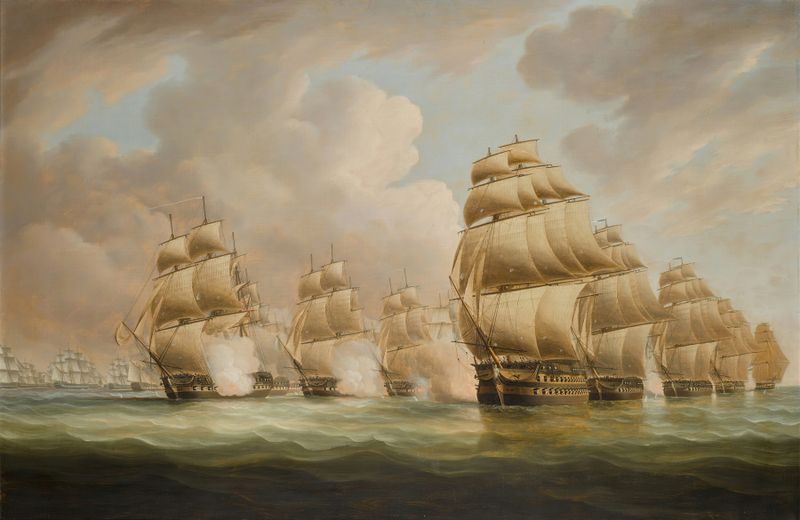
The action of Commodore Dance and the Comte de Linois off the Straits of Malacca, 15 February 1804
Thomas Buttersworth
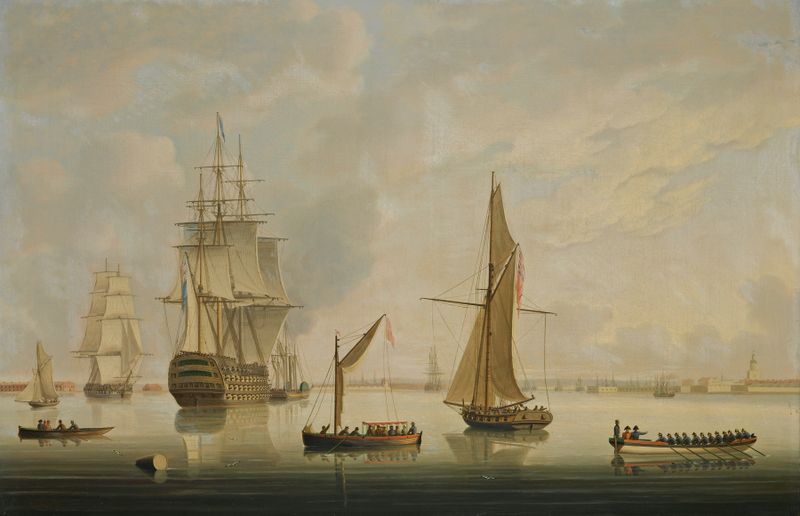
A British Man-Of-War Being Towed Into Portsmouth Harbour By A Steam Tug
Thomas Buttersworth
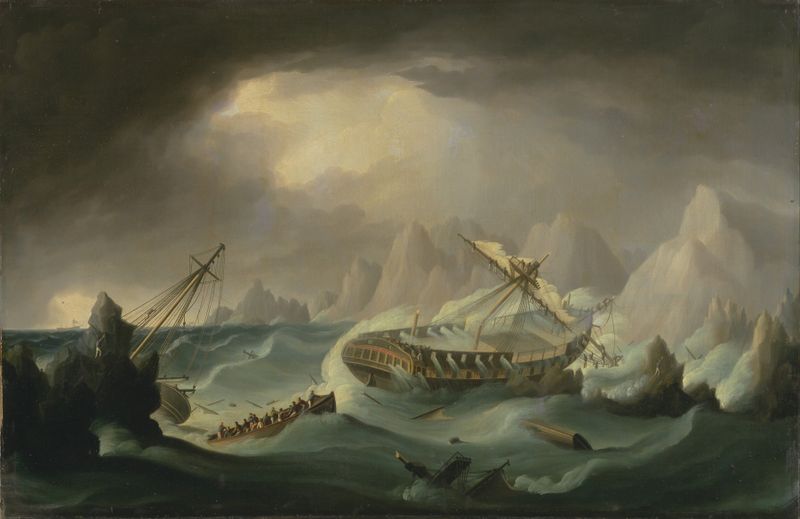
Shipwreck off a Rocky Coast
Thomas Buttersworth
More Historical Art
Browse all →
The Night Watch Militia Company of District II under the Command of Captain Frans Banninck Cocq
Rembrandt van Rijn

Lincoln Memorial
Henry Bacon

The Third of May 1808
Francisco de Goya

Isaac and Rebecca, Known as ‘The Jewish Bride’
Rembrandt van Rijn

The Charge of the Mamelukes (1814)
Francisco de Goya

De vier ruiters van de apocalyps
Albrecht Dürer