
The Avenue of Birches — History & Facts
Can beauty exist without sorrow? In The Avenue of Birches, the tranquil elegance of nature stands as a testament to both joy and melancholy, inviting us to ponder this duality. Look to the left at the slender birch trunks, their white bark contrasting with the deep greens of the surrounding foliage. The gentle arching of their branches creates a natural canopy, inviting the viewer into this serene space. Notice how the sunlight filters through the leaves, casting soft, dappled shadows on the path that winds beneath.
Hackaert's meticulous brushwork allows every blade of grass and fluttering leaf to come alive, while the harmonious palette evokes a sense of calm and wonder. Beneath this serene exterior lies a contrast that deepens the narrative. The path, though inviting, leads into an uncertain background where the trees thin out, hinting at an unknown beyond. The interplay of light and shadow can be interpreted as a reflection on the transient nature of beauty, reminding us that moments of peace are often ephemeral.
The birches, both delicate and resilient, symbolize the fragility of life, evoking a sense of awe mixed with a whisper of sorrow. During the period from 1660 to 1685, while he was in the Netherlands, this artist was immersed in a world transitioning from the exuberance of the Baroque to the more introspective qualities of the Dutch Golden Age. The natural world became a profound source of inspiration, as artists sought to express emotions through landscapes. Hackaert was particularly noted for capturing the poetic essence of rural environments, and this work exemplifies his mastery of integrating beauty with deeper emotional undertones.
More Artworks by Jan Hackaert
Browse all →
Forest Landscape with Stag Hunt
Jan Hackaert
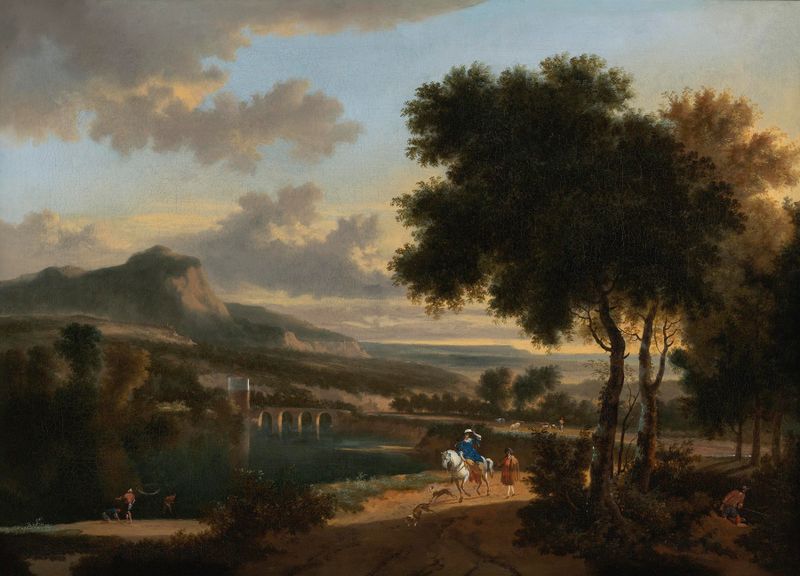
An Extensive Landscape With Travellers, Fishermen And Cattle Drovers On A Path With A Roman Bridge Beyond
Jan Hackaert
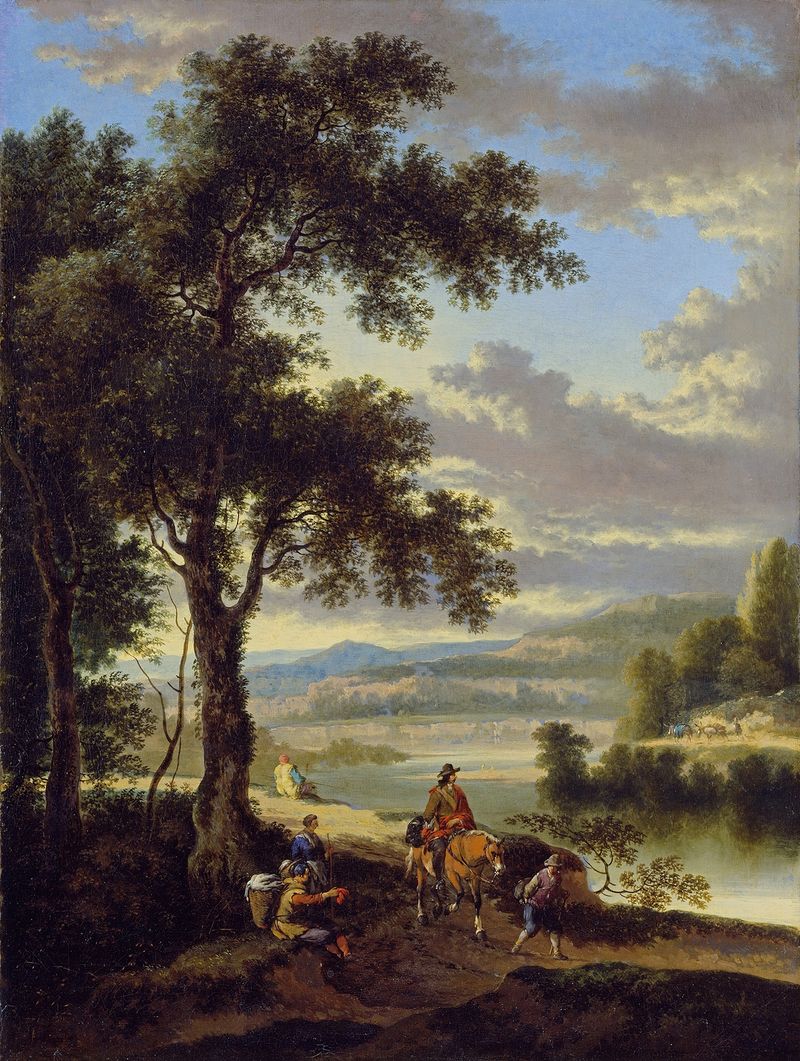
The Wooded Banks of a River
Jan Hackaert
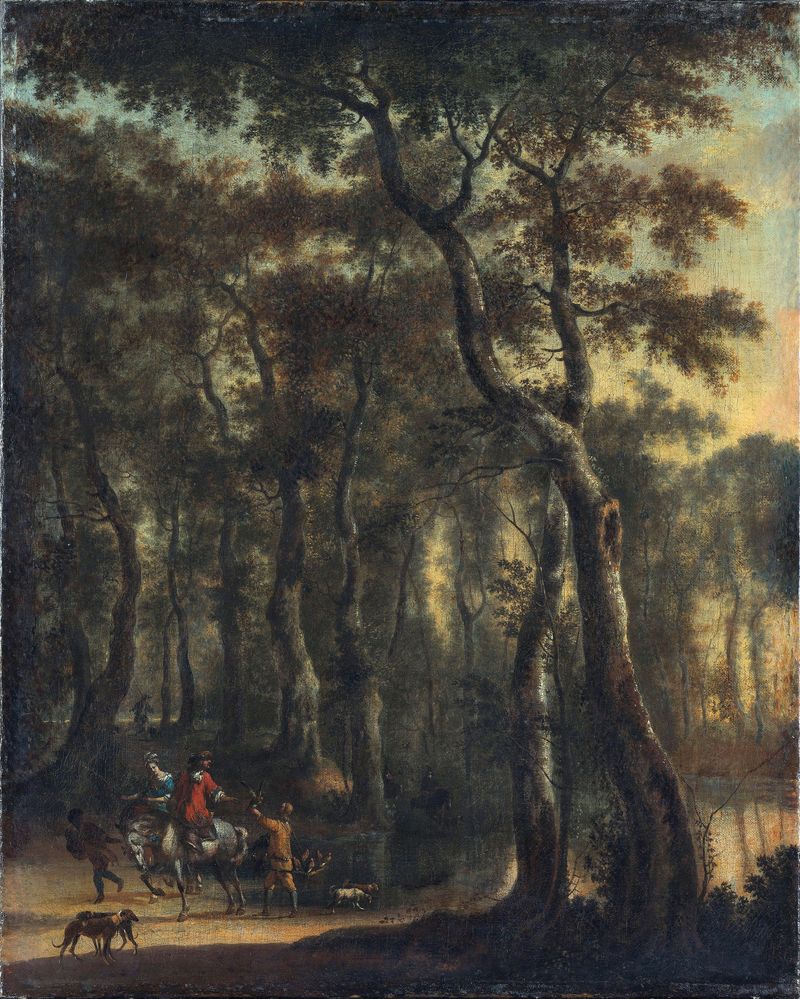
Hunters in the Woods
Jan Hackaert
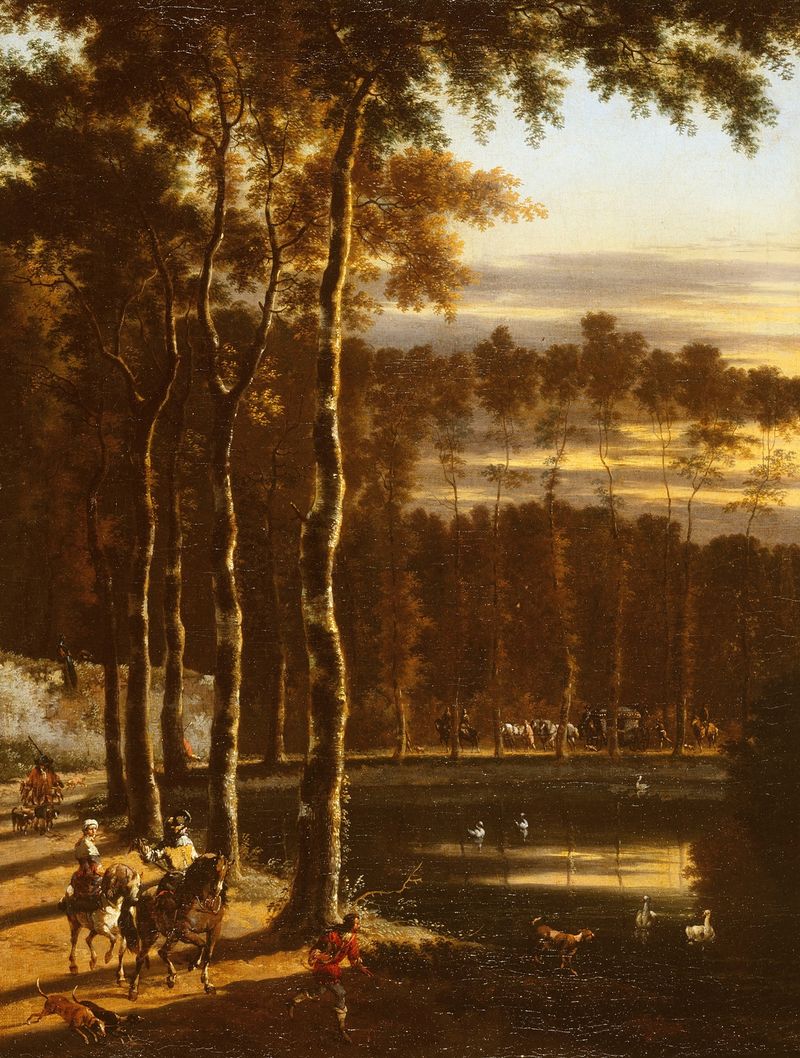
L’Allée aux frênes
Jan Hackaert
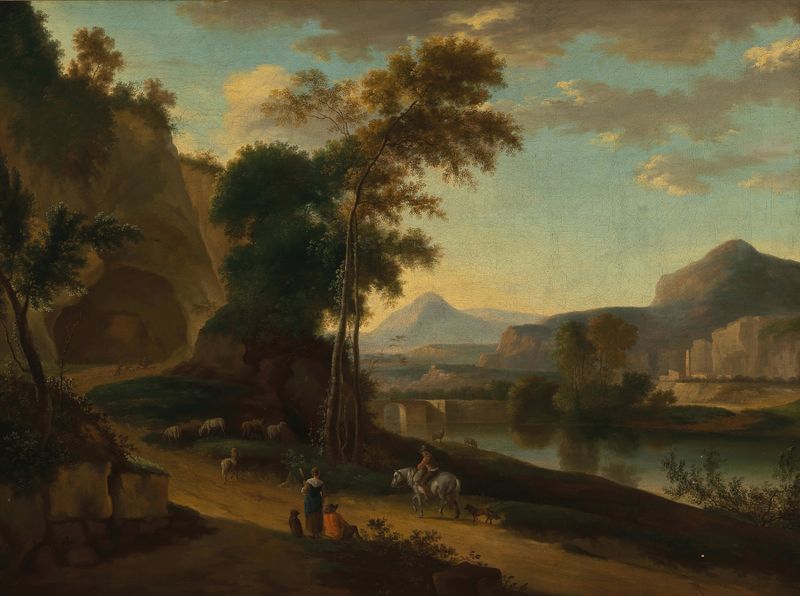
An extensive river landscape with travellers
Jan Hackaert
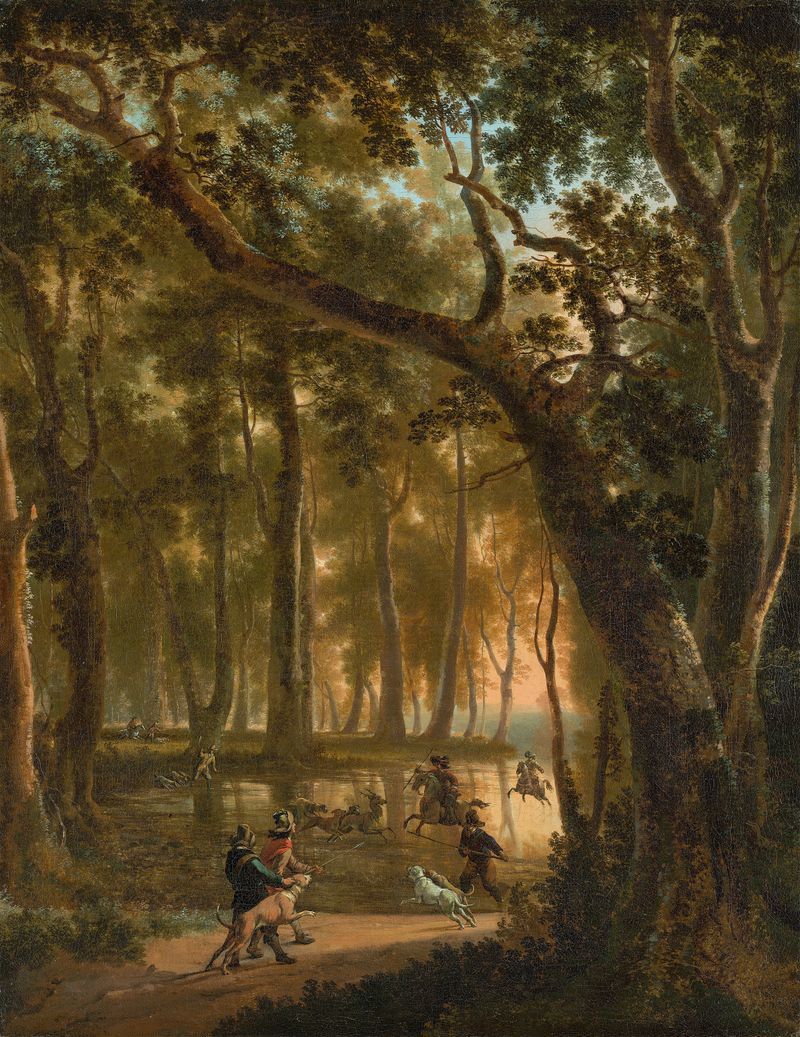
Deer Hunt in a Forest
Jan Hackaert
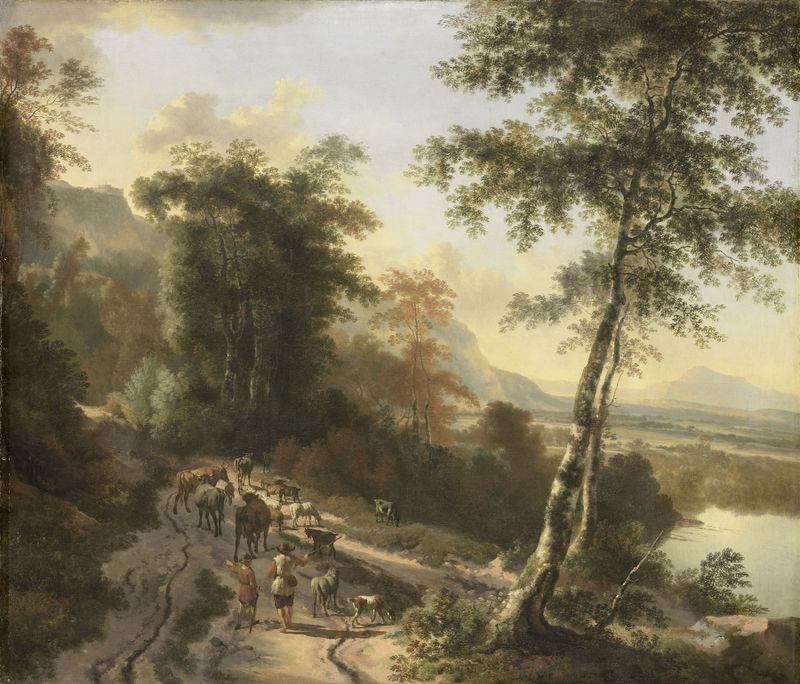
Landscape with Cattle Drivers
Jan Hackaert

Mountainous Landscape
Jan Hackaert
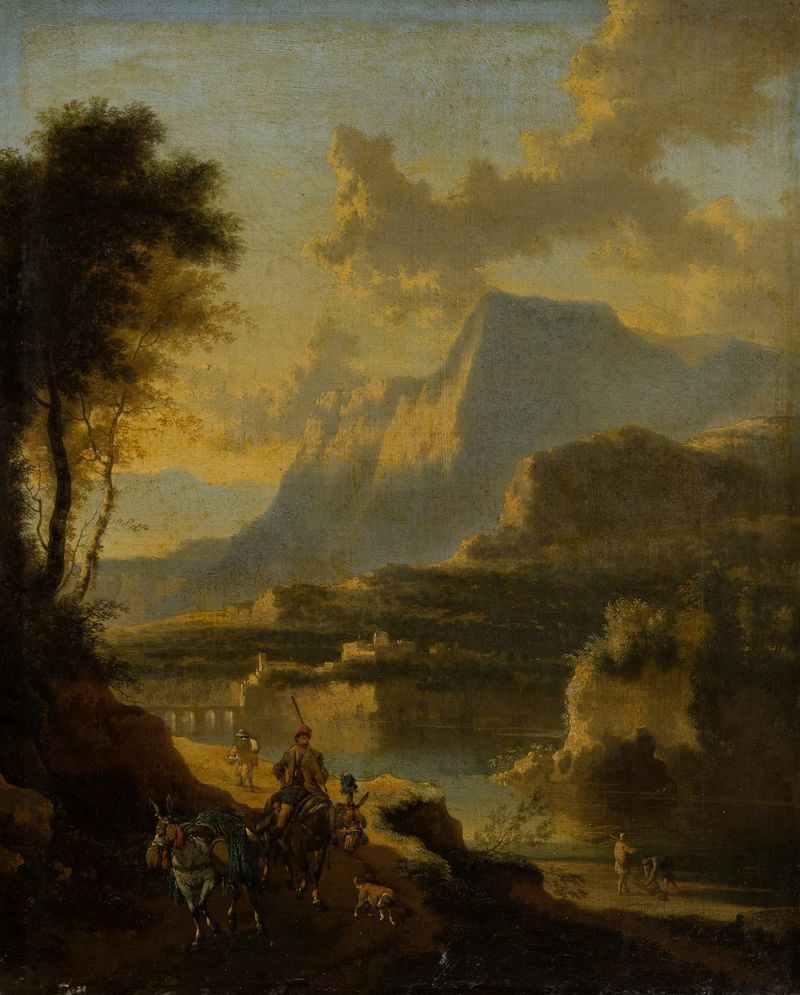
Mountainous Landscape with Rider at Sunset
Jan Hackaert





