The Bay of Naples — History & Facts
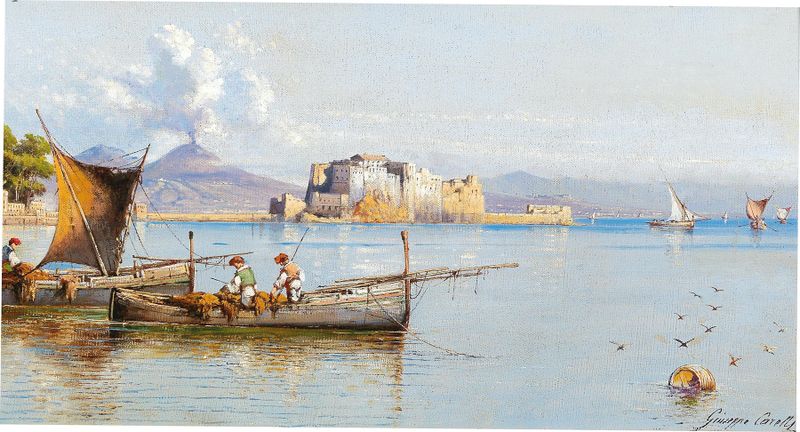
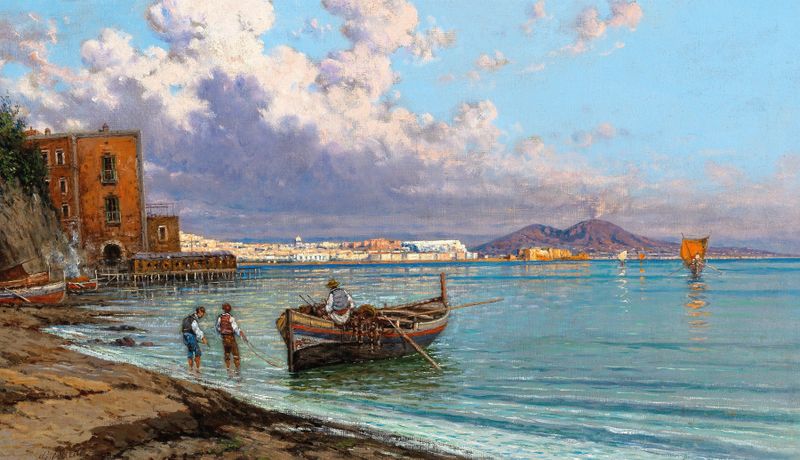
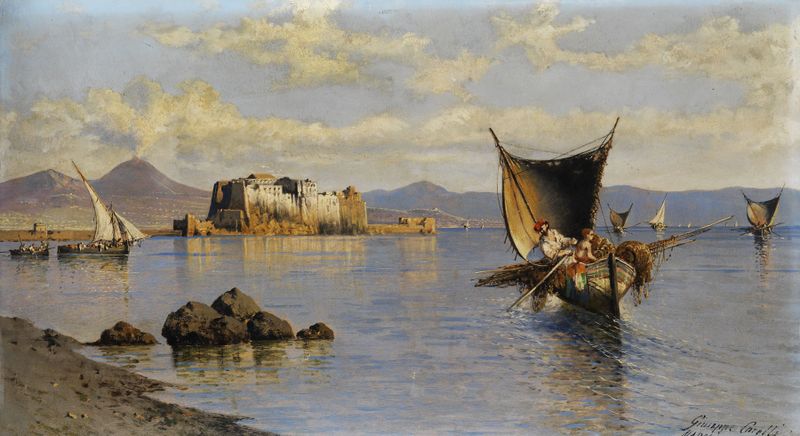
What if silence could speak through light? In The Bay of Naples, the interplay between vibrant hues and tranquil waters reveals an obsession with beauty that transcends mere representation. Look to the foreground, where the gentle curve of the coastline cradles the bay, inviting the viewer’s eye to trace its outline. Notice how the azure of the water contrasts with the warm, golden tones of the sun-soaked land. At the center, Vesuvius stands sentinel, a majestic yet looming presence, its silhouette softened by a delicate haze that hints at both allure and danger.
The artist's brushwork captures the play of sunlight on the water's surface, evoking a sense of tranquility that belies the volcano’s potential wrath. Deeper still, the scene unfolds layers of emotional tension. The lushness of the surrounding landscape speaks to nature's bounty, yet Vesuvius, with its dormant power, introduces an underlying unease. The juxtaposition of calm waters with the volcano’s ominous shadow reflects a duality of tranquility and threat, inviting contemplation on the fragility of beauty.
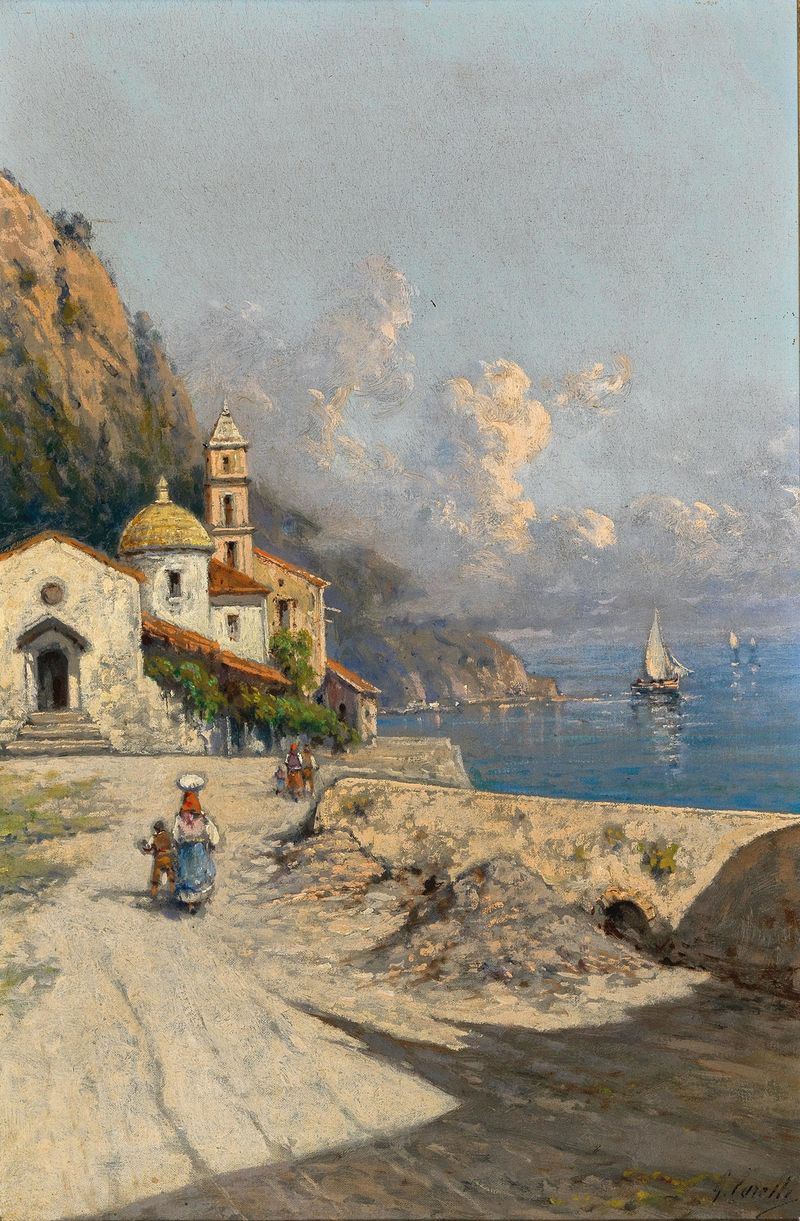
Each detail, from the intricately rendered boats to the distant figures, adds to a narrative of longing and obsession for the idyllic. Giuseppe Carelli painted this work during an era marked by romantic depictions of nature and landscape in the late 19th century. Living and creating in Italy, he was influenced by the burgeoning tourism industry that celebrated traditional scenes of the Mediterranean. This painting emerges from a context where artists sought to capture the essence of place, evoking both admiration and introspection amidst a world on the brink of modern change.