The Beach at Filey in Yorkshire, England — History & Facts
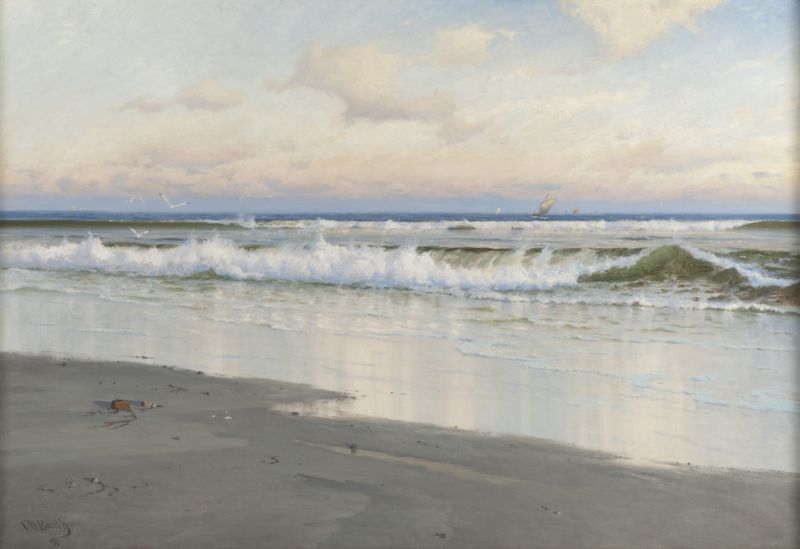
In the vast sea of existence, hope often flickers like a light on the horizon—vulnerable yet vital. Look to the gentle waves, painted in shades of azure and cerulean, where the horizon meets the sky in a embrace of tranquility. Notice how the sunlight dances upon the surface, creating a shimmering path that draws the eye, inviting one to journey into the depths of the water. The soft beige of the sandy beach contrasts beautifully with the blue, grounding the scene while inviting a sense of calm.
Each brushstroke whispers serenity, as if the artist captured a moment of stillness where time stands still. The painting encapsulates a juxtaposition of solitude and connection. The distant figures, mere silhouettes against the expansive beach, evoke a sense of introspection—each person lost in their thoughts, yet sharing a collective experience of nature's beauty. The gentle swell of the waves can be interpreted as a heartbeat, the pulse of the ocean reminding us of life's ebb and flow.
This interplay between color and emotion creates a landscape that feels at once personal and universal, allowing viewers to project their own hopes and dreams onto the canvas. Created in 1891 during a period of artistic exploration in Europe, the artist found himself engaged with the Impressionist movement, which was redefining perceptions of light and color. Living in England, he painted The Beach at Filey, capturing not just a physical location but the essence of a fleeting moment in time. As the world around him shifted with industrialization and modernity, he sought solace in nature's enduring beauty, forging a connection that speaks to us even today.