The Beach at Filey in Yorkshire, England — History & Facts
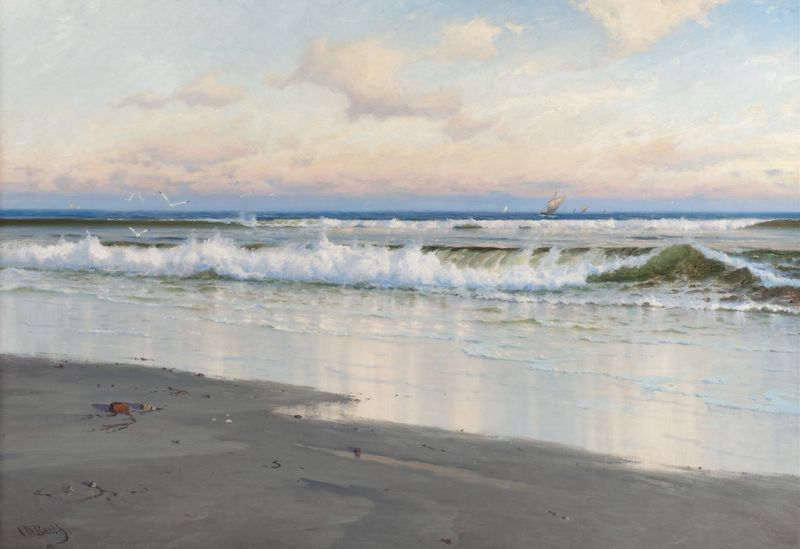
Who listens when art speaks of silence? In The Beach at Filey in Yorkshire, England, the stillness of a vast shoreline invites contemplation of the tides of time and change, whispering of the revolution in the artist's heart. Look to the left, where the gentle curve of the sandy beach unfurls, a soft golden hue blending with the deep blues of the sea. Notice how the light dances on the water’s surface, capturing a fleeting moment of tranquility. The composition draws your gaze along the shoreline, where small figures dot the landscape, their movements almost imperceptible against the expansive backdrop.
The painter’s technique mirrors the subtlety of nature — soft brushstrokes create a harmonious blend of colors that evoke a sense of serenity and isolation. Delve further into the interplay of light and shadow, revealing the complexities of human emotion nestled within this idyllic scene. The distant figures, seemingly at ease, contrast sharply with the vast emptiness of the beach, hinting at an underlying solitude shared by those who seek solace in the natural world. Each ripple in the water, each grain of sand, reflects not merely the beauty of the landscape but also the quiet pressures of change, a silent revolution brewing beneath the surface. In 1891, Baarth captured this serene beach scene during a period marked by personal exploration and artistic evolution.
Living in England, he was influenced by the burgeoning impressionist movement that encouraged artists to embrace spontaneity and the emotional weight of their surroundings. It was a time when the world, much like the beach, was on the cusp of transformation, and this work embodies that delicate balance between stillness and the inevitable tide of change.