
The Beach at Saint-Mammès — History & Facts
What if beauty was never meant to be finished? In the delicate brushstrokes of a serene riverside, a moment exists, suspended in both time and innocence, inviting contemplation of life’s fleeting nature. Look to the lush greens on the left, where trees nearly brush the water, their reflections dancing gently in the river's surface. The sky, a soft canvas of blues and whites, acts as the backdrop for this idyllic scene, where the sunlight pours over the sandy beach, illuminating figures engaged in peaceful leisure. Notice how the palette harmonizes — the earthy tones contrast beautifully with the vibrant hues, revealing Sisley’s ability to capture not just a landscape, but a feeling of tranquility. In the midst of this idyllic setting, hidden within the layers of paint, lies a tension between stillness and movement.
The figures, though stationary, echo a sense of fleeting joy, their innocence juxtaposed against the ever-changing natural backdrop. The rippling water hints at an undercurrent of time, flowing relentlessly, reminding us that moments like these, though beautiful, are ephemeral. Alfred Sisley painted this piece in 1884 while residing in France, amidst the growing Impressionist movement. This was a period marked by a desire to break free from traditional artistic constraints, reflecting a broader shift in society.
Having settled in the suburbs of Paris, Sisley found both inspiration and solace at places like Saint-Mammès, where nature served as a canvas for his exploration of light and atmosphere.
More Artworks by Alfred Sisley
Browse all →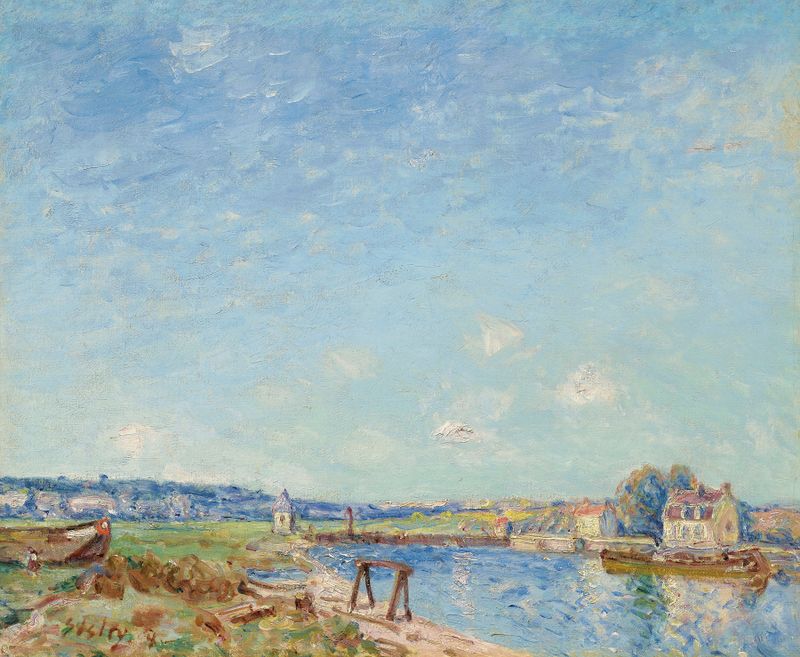
Le Loing à Saint-Mammès
Alfred Sisley
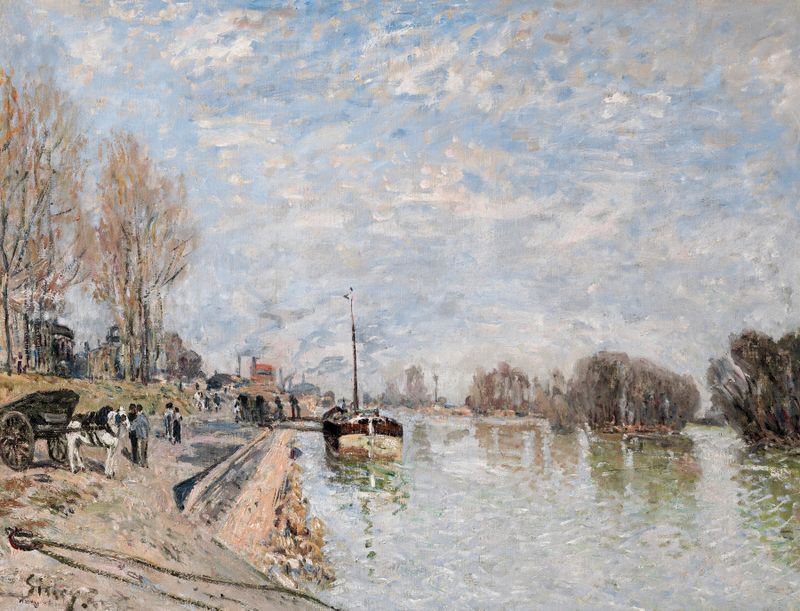
La Seine à Suresnes
Alfred Sisley
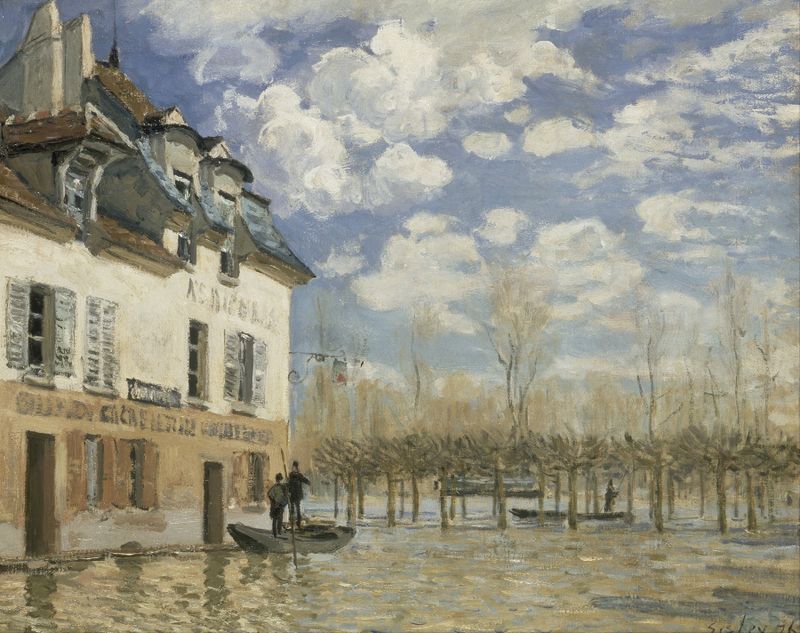
Boat in the Flood at Port Marly
Alfred Sisley
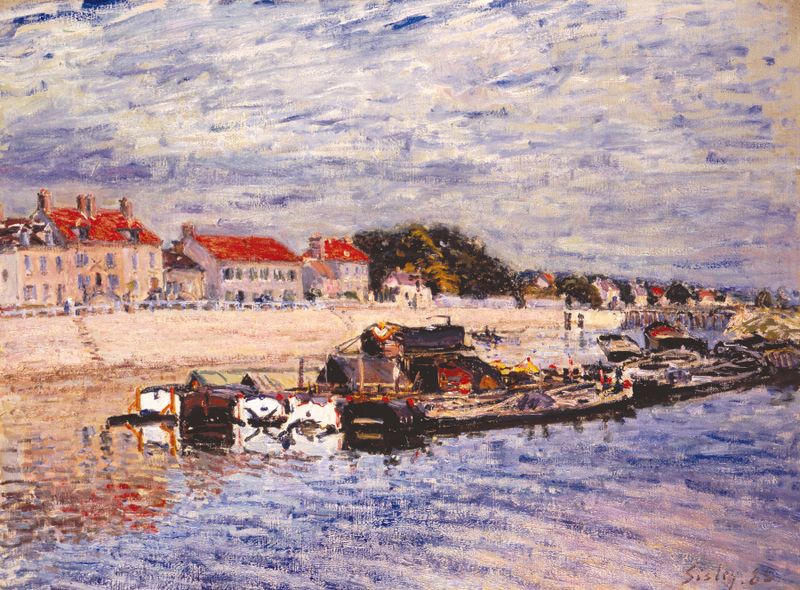
Barges on the Loing at Saint-Mammès
Alfred Sisley

L’allée des peupliers au bord du Loing
Alfred Sisley

Molesey Weir, Hampton Court
Alfred Sisley
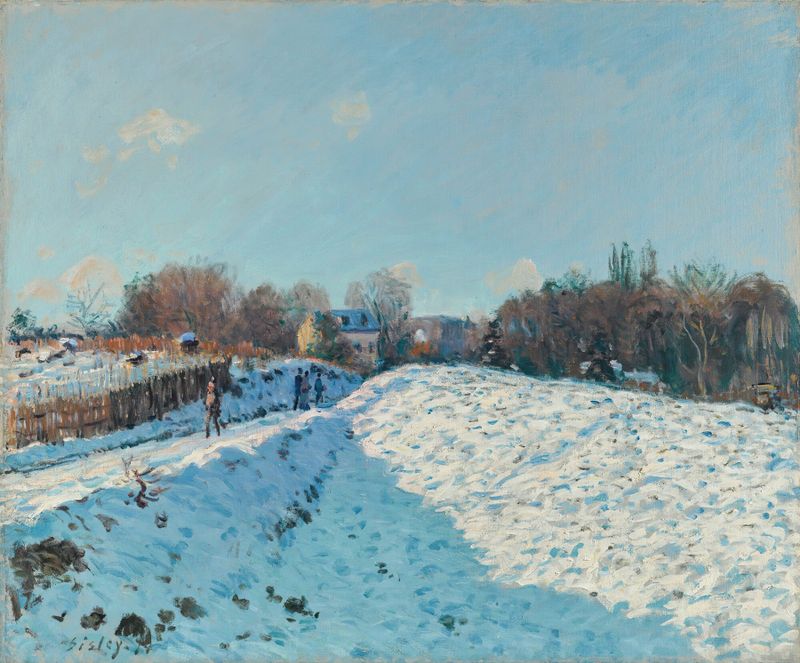
Effet De Neige À Louveciennes
Alfred Sisley
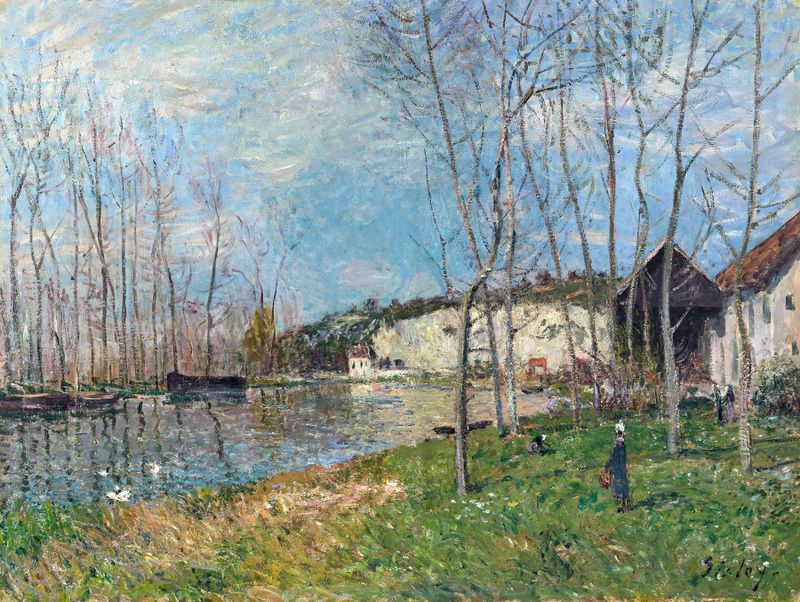
Printemps au bord du Loing
Alfred Sisley
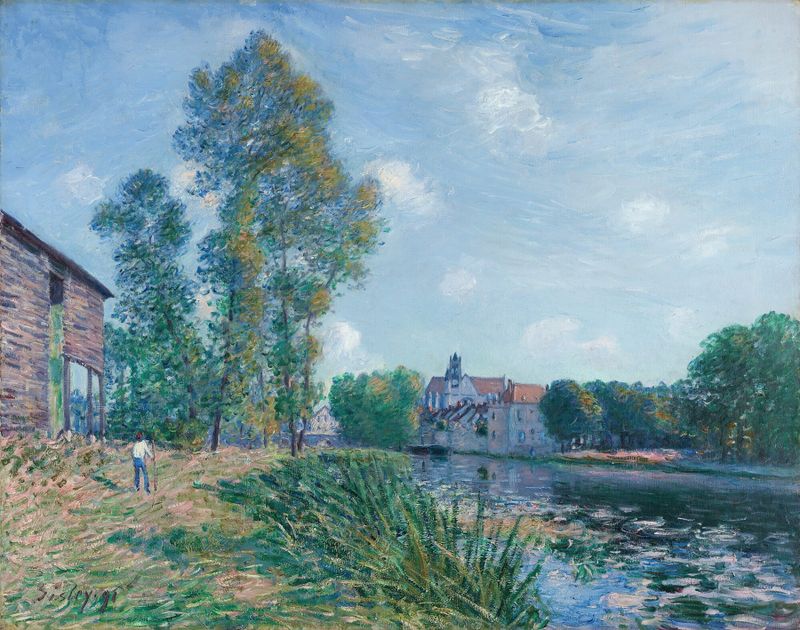
Le Loing À Moret, En Été
Alfred Sisley
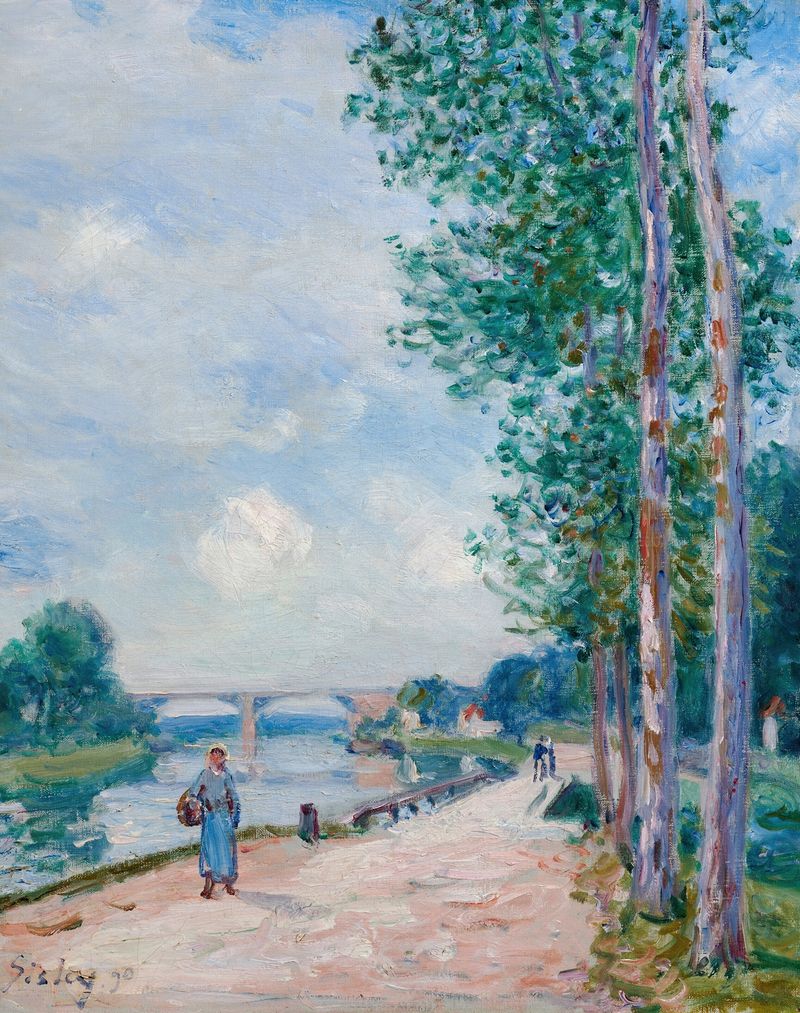
Les bords du Loing près de Moret
Alfred Sisley





