
The Beach at Scheveningen with Returning Fisherman — History & Facts
In the gentle embrace of twilight, the loneliness of the shore speaks volumes in its stillness. The rhythmic dance of waves whispers secrets to the sand, as a solitary figure trudges homeward, burdened by the weight of the day’s toil. The air is thick with a palpable sense of yearning—an unvoiced connection between man and the sea. Look to the left at the distant horizon, where the sun dips low, casting a golden hue over the rolling waves.
The muted palette of warm ochres and cool blues seamlessly blends, creating an inviting yet melancholic atmosphere. Notice how the brushstrokes delicately capture the textures of the fisherman’s weathered skin, revealing a life shaped by struggle and perseverance. Each wave seems to cradle his solitary form, while the starkness of the beach amplifies his isolation. The juxtaposition of the vibrant sky against the muted foreground highlights the fisherman’s existential solitude.
The deepening shadows evoke a sense of impending night, mirroring the heaviness in the man’s heart. Each element—the lapping water, the solitary vessel, and the distant figures—contributes to a narrative of longing and resilience, transforming the seemingly mundane moment into a poignant exploration of human experience. Pieter Bout created this compelling work in 1677, during a time when the Dutch Golden Age was thriving. Living in a world defined by commerce and maritime exploration, Bout’s representation of daily life often reflected deeper emotional truths.
The fishing village scene resonates with the artist’s understanding of both the beauty and hardships faced by those who made their living from the sea.
More Artworks by Pieter Bout
Browse all →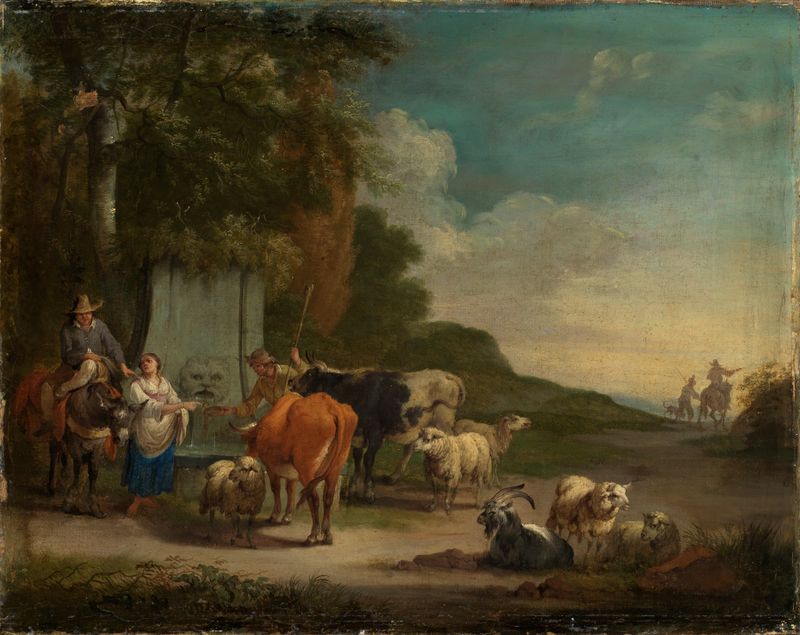
Landschaft mit Hirten und Herde am Brunnen
Pieter Bout
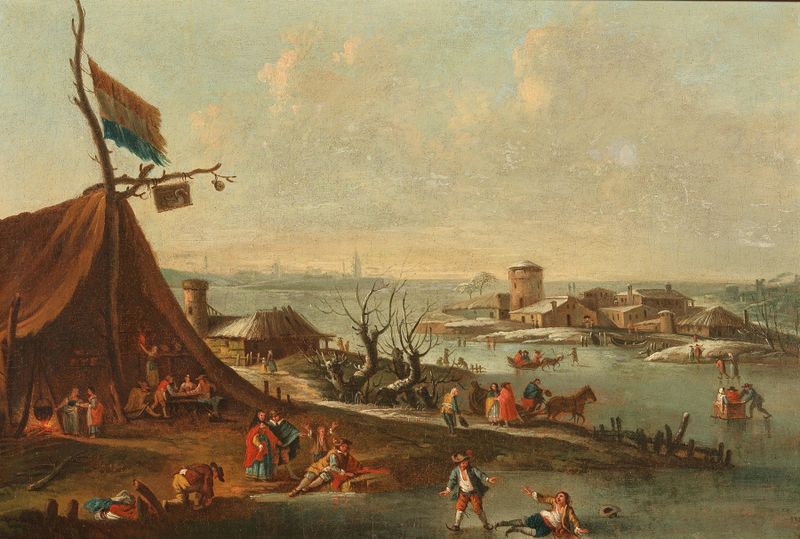
A winter harbour scene with ice-skaters
Pieter Bout

The visit of William III of Orange to Dordrecht in 1672
Pieter Bout
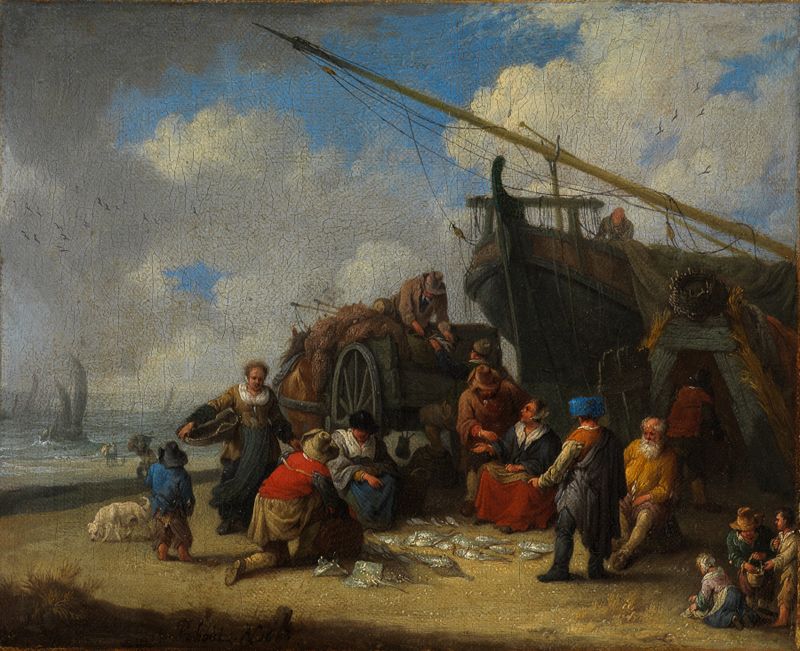
Fischmarkt am Strand
Pieter Bout
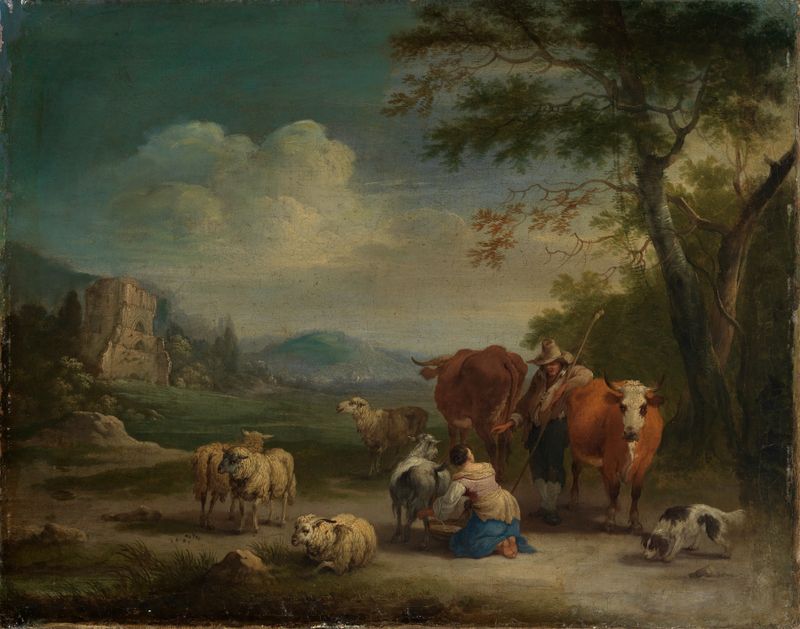
Landschaft mit Hirten und gotischer Burgruine
Pieter Bout

A Landscape With A Barge Being Towed Along A Canal
Pieter Bout
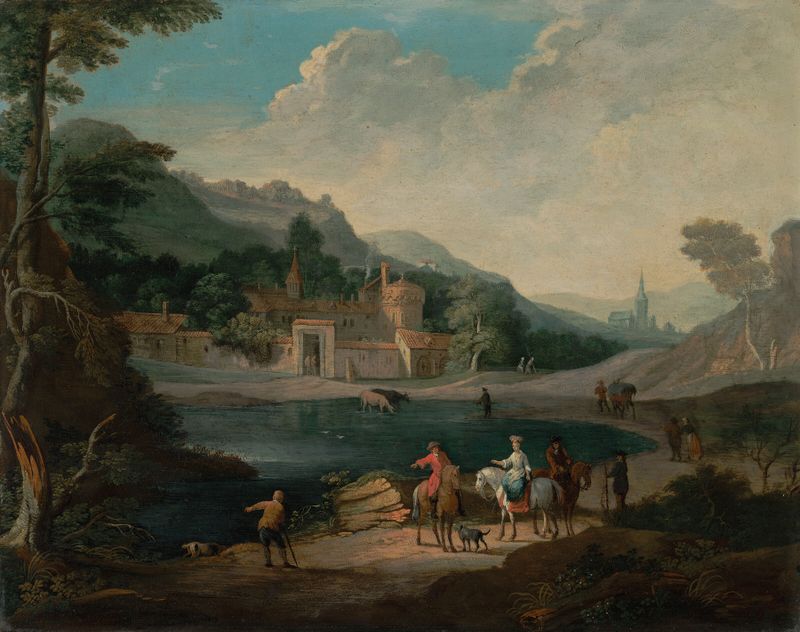
An elegant couple beside a lake
Pieter Bout
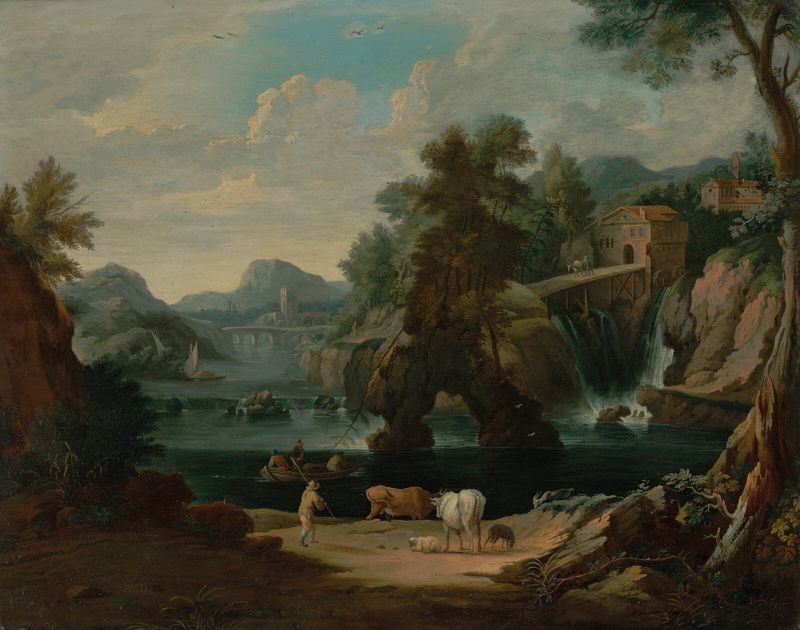
A cowherd beside a cascading river
Pieter Bout

The port of Ripa Grande in Rome with merchants conversing
Pieter Bout





