
A Landscape With A Barge Being Towed Along A Canal — History & Facts
In the quiet embrace of a landscape, we encounter a moment steeped in nostalgia and yearning, where the passage of time is both acknowledged and gently resisted. Look to the center, where the barge glides serenely along the canal, its gentle procession leading the viewer’s eye deeper into the tranquil scene. The muted hues of greens and browns evoke a sense of calm, while the delicate strokes capture the rippling water’s reflection and the soft rustle of trees. Notice how the light dances across the canvas, illuminating the white sails of the barge and contrasting them with the shadowy figures of the laborers towing it, their toil anchoring the moment in a fragile balance between effort and ease. Beneath the surface, the painting whispers of contrasts—the serene beauty of nature meets the industrious spirit of man, a reminder of life's fleeting nature.
The gentle movement of the water symbolizes the relentless march of time, while the stillness of the surrounding landscape invites contemplation. Each brushstroke seems to encapsulate both the stability of the land and the transience of human endeavor, creating an emotional tension that resonates with the viewer’s own experiences of longing and impermanence. In 1683, the artist captured this poignant scene while living in the Netherlands, a period marked by economic prosperity and artistic flourishing. As he painted, the world around him was undergoing transformations—canals, once lifelines for trade, became symbols of the era's advancements.
The fusion of art and life in this work reflects a deeper narrative, one that intertwines the artist’s contemporary environment with a timeless exploration of humanity’s connection to nature.
More Artworks by Pieter Bout
Browse all →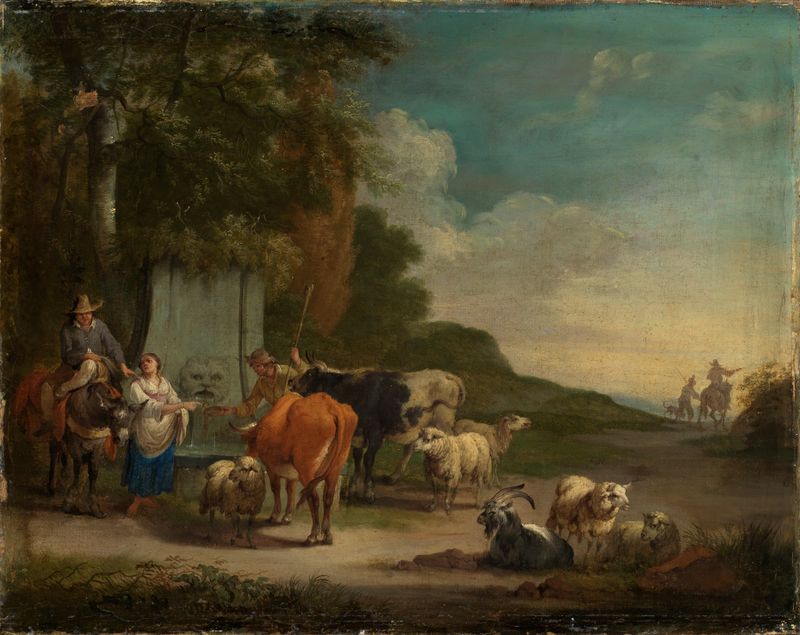
Landschaft mit Hirten und Herde am Brunnen
Pieter Bout
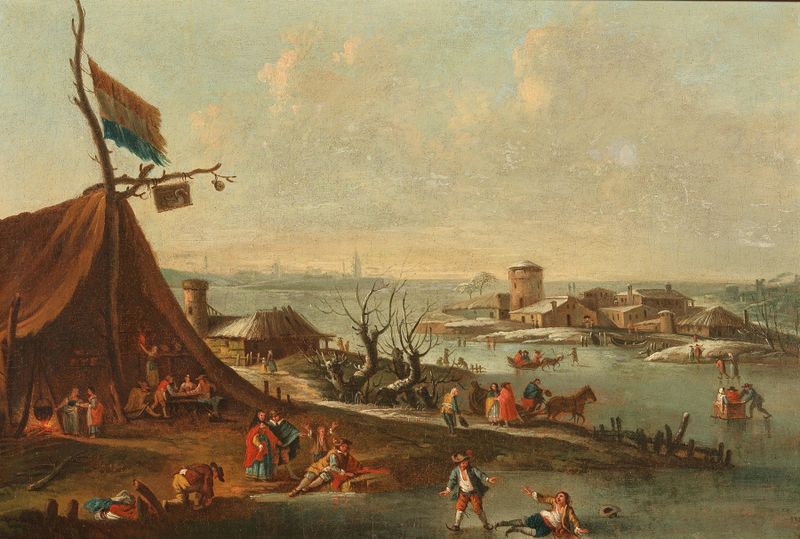
A winter harbour scene with ice-skaters
Pieter Bout

The visit of William III of Orange to Dordrecht in 1672
Pieter Bout
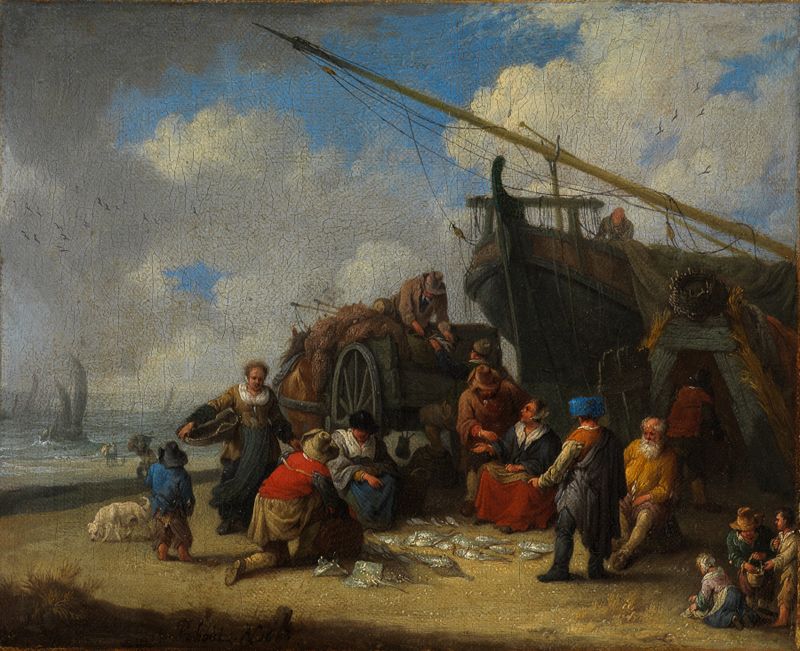
Fischmarkt am Strand
Pieter Bout
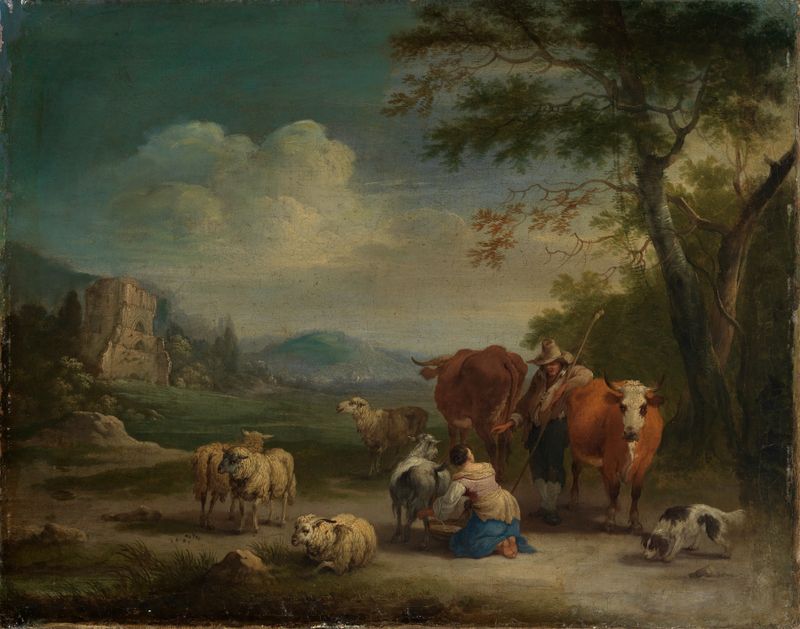
Landschaft mit Hirten und gotischer Burgruine
Pieter Bout
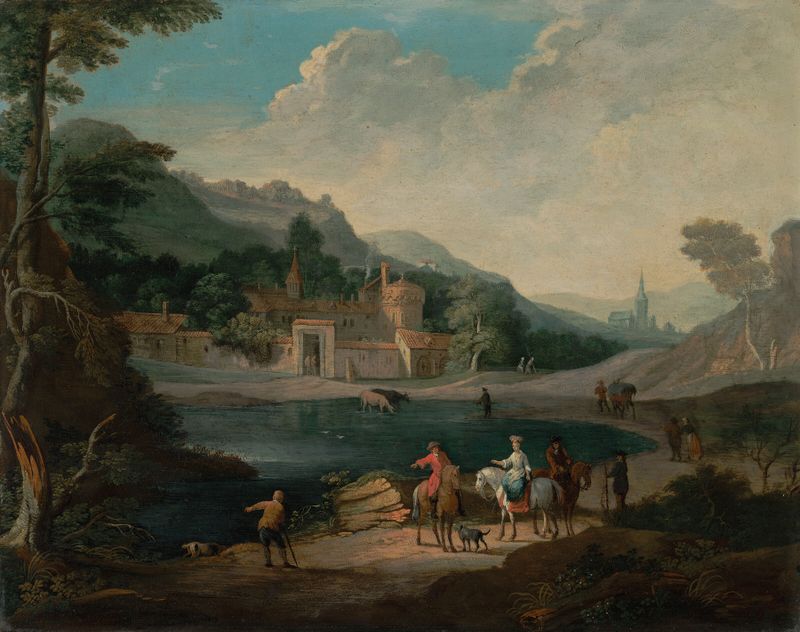
An elegant couple beside a lake
Pieter Bout
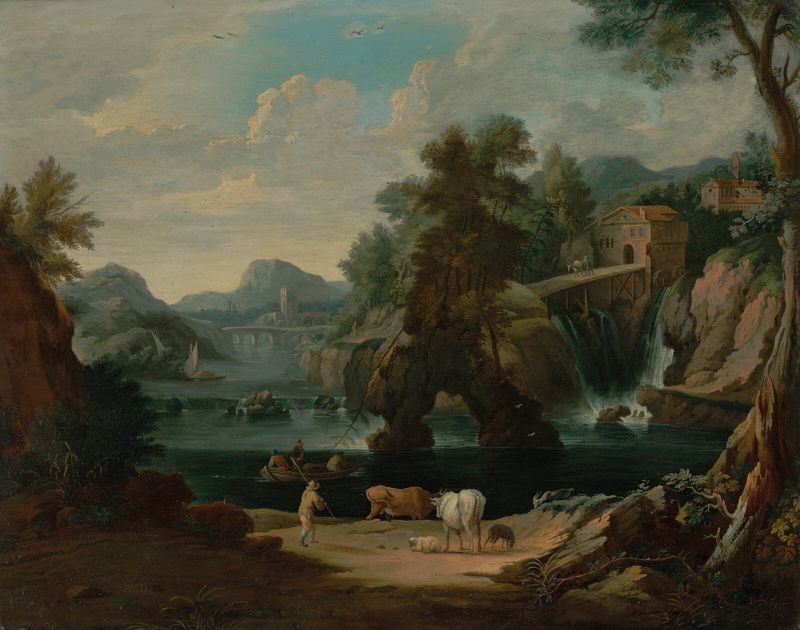
A cowherd beside a cascading river
Pieter Bout

The Beach at Scheveningen with Returning Fisherman
Pieter Bout

The port of Ripa Grande in Rome with merchants conversing
Pieter Bout





